EN
EN

How to Customize the Zinc Coating Weight of PPGI Steel Coil for Different Environmental Conditions
Rather than starting with a fixed coating designation, experienced procurement engineers first define the corrosion environment—coastal, industrial, tropical, or controlled indoor—and then back-calculate the required zinc coating weight for their PPGI steel coil order. In practice, this approach produces better long-term results than defaulting to whatever grade happens to be in stock.
Still unsure which zinc coating weight your project actually needs? The answer depends on the atmospheric corrosion category, the expected service life, and whether downstream fabrication processes like roll-forming or bending will stress the coating. Each of those factors is covered here.
Understanding Zinc Coating Weight Designations
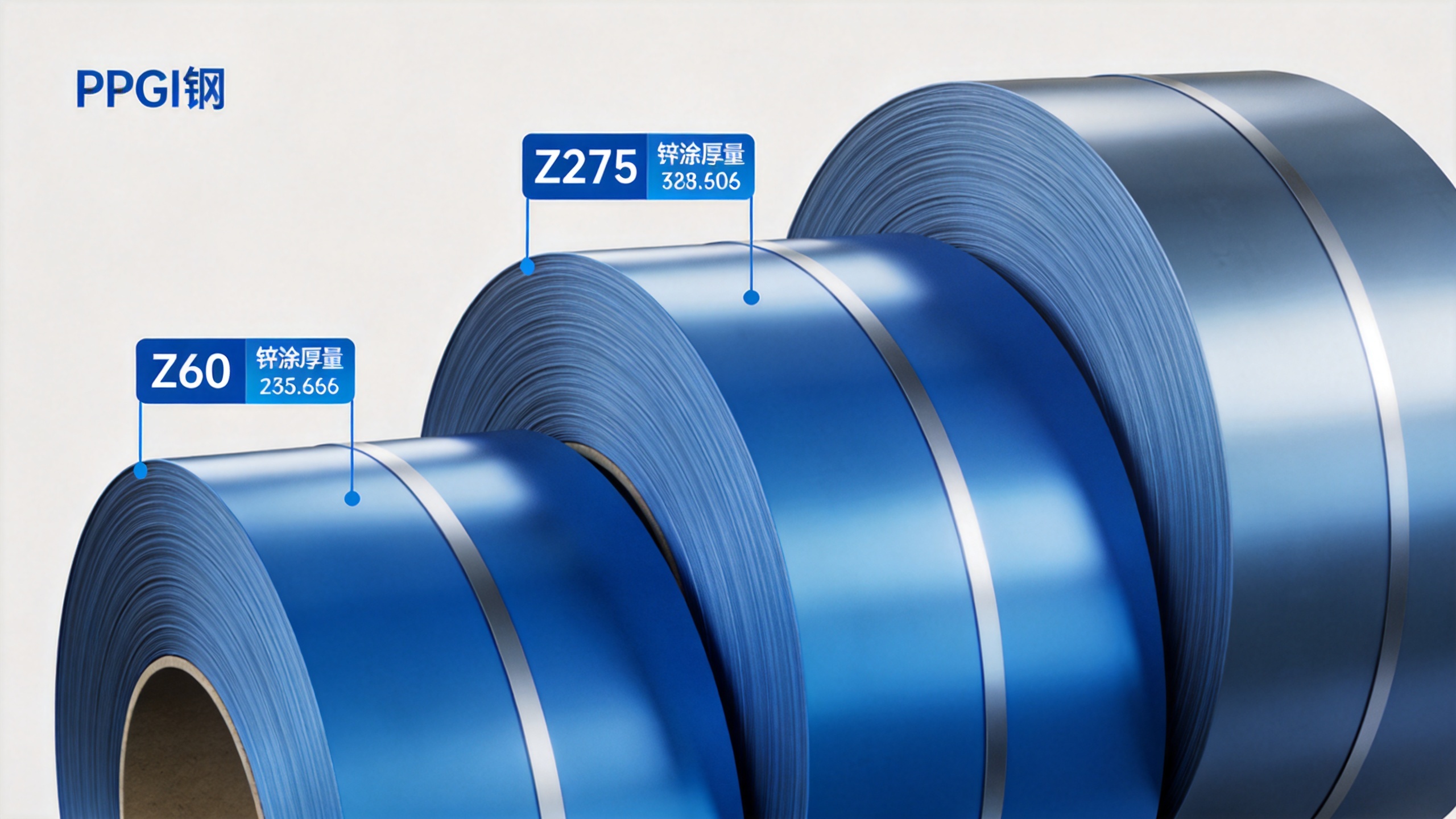
The zinc coating on prepainted galvanized steel coil is expressed as a Z-number representing the total zinc mass per square meter across both sides of the sheet. A Z275 designation means 275 g/m² total, or approximately 137.5 g/m² per side. The most common designations in commercial supply are Z60, Z80, Z100, Z120, Z140, Z180, Z200, and Z275, with higher numbers indicating a thicker zinc layer and correspondingly greater corrosion protection.
Under ASTM A755 and EN 10169—the two standards most frequently referenced in international PPGI procurement—coating weight is verified by standardized stripping or XRF measurement. When sourcing zinc coating custom PPGI steel coil, buyers should confirm which test method applies to their shipment and request the mill test report (MTR) values before accepting material.
Contrary to instinct, specifying the heaviest available zinc coating does not guarantee better performance in every case. In forming-intensive applications, a very heavy zinc layer can actually crack or delaminate at tight bend radii during roll-forming. Matching the coating weight to the actual corrosion demand—rather than over-specifying for reassurance—avoids unnecessary cost and fabrication risk.
Matching Coating Weight to Environmental Conditions
The ISO 9223 corrosion category framework is a practical reference point for selecting zinc coating weight. Environments range from C1 (very low, fully controlled indoor) to C5 (very high, industrial or coastal with high salinity). The table below shows how common Z-designations typically map to project environments:
| Environment Type | ISO Corrosion Category | Recommended Zinc Coating | Typical Application |
|---|---|---|---|
| Controlled indoor, dry | C1 | Z60–Z100 | Interior wall panels, ceilings, appliance housing |
| Urban or light industrial, moderate humidity | C2–C3 | Z100–Z140 | Commercial roofing in temperate climates, light cladding |
| Tropical or subtropical, high humidity | C3–C4 | Z140–Z180 | Warehouse roofing in West Africa, South America, Southeast Asia |
| Coastal, salt-air exposure | C4–C5 | Z180–Z275 | Industrial sheds and port facilities near ocean fronts |
| Severe industrial, chemical atmosphere | C5 | Z275 or higher | Processing plants, fertilizer storage, mining facilities |
One common roofing project mistake is specifying standard Z80 coating for a coastal tropical environment, only to find red rust spots emerging within the first rainy season. Indoor applications with controlled humidity may only need Z60 to Z100, while coastal or industrial environments typically require Z180 to Z275 to meet reasonable service life expectations.
Key Factors That Influence Your Custom Specification
Beyond the basic environment category, several project-specific factors should inform the final zinc coating weight on a zinc coating custom prepainted galvanized steel coil factory order:
1. Service Life Target
Provided the coating weight meets the requirements for the corrosion category, a Z275 coating in a C3 environment will generally outperform a Z100 coating in the same environment. That said, the cost premium must be weighed against the actual service life requirement. A 10-year temporary structure does not need the same zinc specification as a 25-year permanent industrial facility.
2. Paint System Compatibility
PPGI combines the zinc substrate with a paint topcoat, typically polyester, SMP, or PVDF. The zinc layer provides electrochemical protection at cut edges and scratches, while the paint reduces direct atmospheric attack. In high-UV tropical environments, a PVDF topcoat combined with Z180 or Z275 zinc can significantly extend service life compared to polyester paint over a lighter zinc base.
3. Forming and Fabrication Requirements
Roll-forming profiles, deep-drawn panels, or components requiring tight-radius bends put mechanical stress on the coating. For forming-intensive work, Z140 with a ductile primer and flexible topcoat often outperforms Z275 with a brittle coating system—coating integrity at the bend point matters more than raw zinc thickness. Confirm bend test results (T-bend 0T or 1T) with your supplier before specifying the heaviest available grade.
4. Cut Edge Exposure
Slit coils and profiled sheets expose bare metal at cut edges. While zinc provides some sacrificial protection at exposed edges, heavily corroded environments with frequent moisture condensation may benefit from an edge sealant or heavier zinc as part of a total anti-corrosion prepainted galvanized steel coil heavy zinc coating system.
How to Request Custom Zinc Coating Weight from a Supplier
Once you have defined your environmental conditions and service life requirements, putting those into a purchase specification is not complicated. A well-prepared zinc coating custom PPGI steel coil inquiry should include:
- Zinc coating designation: State the specific Z-grade (e.g., Z180 or Z275) or the acceptable range (e.g., Z140 minimum).
- Test standard: Specify ASTM A755, EN 10169, or JIS G3312 as the applicable standard for coating weight measurement and verification.
- Mill test report requirement: Request a heat-specific MTR confirming coating weight compliance before shipment.
- Paint system: Specify the topcoat resin type (polyester, SMP, PVDF) and dry film thickness to complete the corrosion protection system.
- Inspection provision: For critical projects, include a clause allowing third-party pre-shipment inspection (SGS, BV, or equivalent) to verify coating weight on actual production coils.
Experienced purchasing managers stop asking only about price and start asking how suppliers control zinc coating weight consistency across production batches. Batch-to-batch variation in coating weight is a real quality risk, particularly on multi-shipment projects where the first container meets spec and subsequent deliveries fall below the declared minimum.
Yuanhe Steel: Custom Zinc Coating Capability
At Shenyang Yuanhe Steel Trading Co., Ltd., we source PPGI coils from multiple certified Chinese mills and can specify customer-defined zinc coating weights from the production order stage. Whether your project requires a standard Z100 for controlled indoor use or a Z275 for heavy corrosion environments in coastal North America, Africa, or South America, our team provides technical guidance on matching the coating specification to your actual site conditions—rather than simply quoting the nearest available grade.
Pre-shipment third-party inspection coordination is available for all PPGI shipments, including coating weight verification by SGS or BV. Mill test reports covering zinc coating mass, mechanical properties, and paint adhesion results are issued with every shipment. For inquiries on custom color coated galvanized steel coil specifications or anti-corrosion prepainted galvanized steel coil options with heavy zinc coating, contact Leo Liu at [email protected] or +86-18642064006.