EN
EN

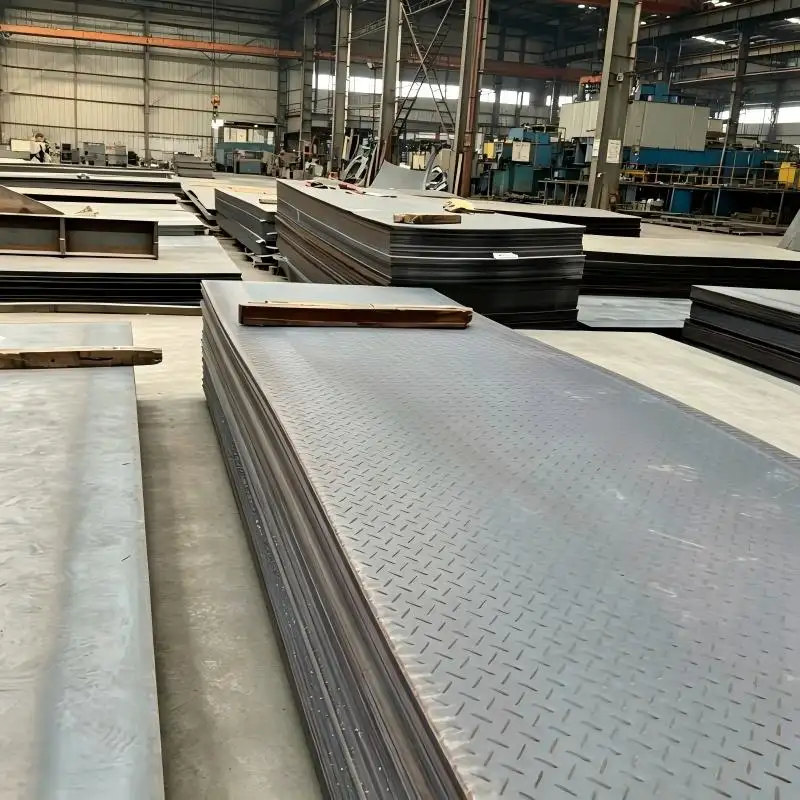
When buyers source steel coils for architectural roofing, wall cladding, or pre-painted PPGL applications, surface finish often sits near the bottom of the evaluation sheet—right behind coating weight, thickness tolerances, and base pricing. That ordering reflects traditional purchasing habits, but it overlooks a crucial reality on the roll-forming line. While standard galvalume coil offers reliable baseline corrosion resistance, the surface quality of the substrate directly dictates how the painted panel looks once installed on a building facade.
Why should raw surface quality dictate what your client sees on a completed facade? The answer comes down to coating distribution, substrate preparation, and downstream paint adhesion. Most factory spec sheets reduce these complex variables to a single, oversimplified word: "smooth."
Understanding what happens during continuous high-speed coil coating clarifies why "smooth" is rarely specific enough. When paint cures over a metallic substrate, it mirrors the microscopic profile beneath it. Micro-roughness, variations in zinc-aluminum crystal structures, or subtle weight spikes across the sheet width transfer directly into the topcoat. A high-gloss clearcoat or a matte PVDF finish cannot hide substrate flaws; it amplifies them under direct sunlight.
Defect Transmission Chain: Substrate Profile Variation → Uneven Pre-Treatment → Paint Thickness Spikes → Optical Gloss or Color Drift
What Premium Finish Actually Means in Practice
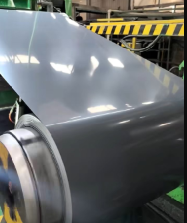
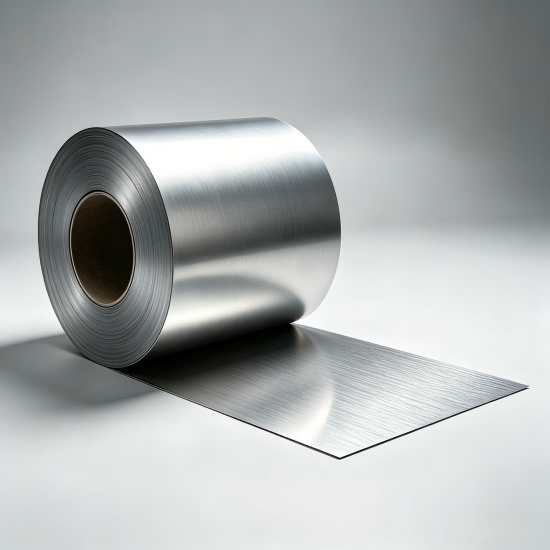
Galvalume® metal coatings—originally developed in 1972—consist of roughly 55% aluminum, 43.5% zinc, and 1.5% silicon. The high aluminum fraction creates a distinctive, fine-grained metallic face that sets galvalume apart from standard hot-dip galvanized stock. While standard GI coils show pronounced spangle patterns and physical roughness from zinc crystal growth, well-processed galvalume presents a tighter, flatter, matte-gray surface across the full coil width.
In commercial manufacturing, a true premium finish represents an interconnected set of physical attributes rather than a single metric:
- Tighter Flatness Limits: Freedom from edge waves, center buckles, or residual coil set that disrupts automated roll-forming equipment.
- Controlled Mass Distribution: Minimal deviation in coating thickness between the center strip and outer edges during high-speed hot-dipping.
- Clean Surface Topography: Total absence of dross inclusions, bare spots, roll marks, or handling scratches prior to passivation.
- Uniform Chemical Pre-Treatment: An even, continuous thin-film passivation layer applied before coiling to stop storage stain without blocking primer bonding.
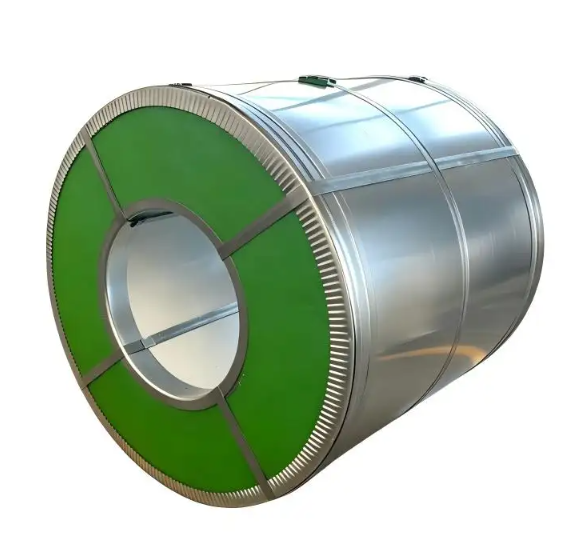
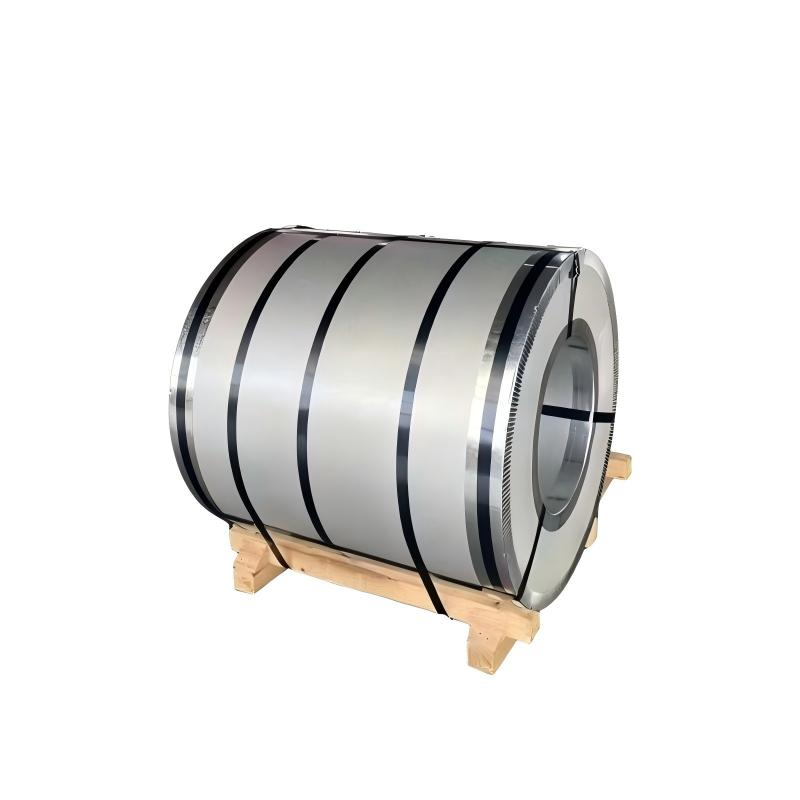
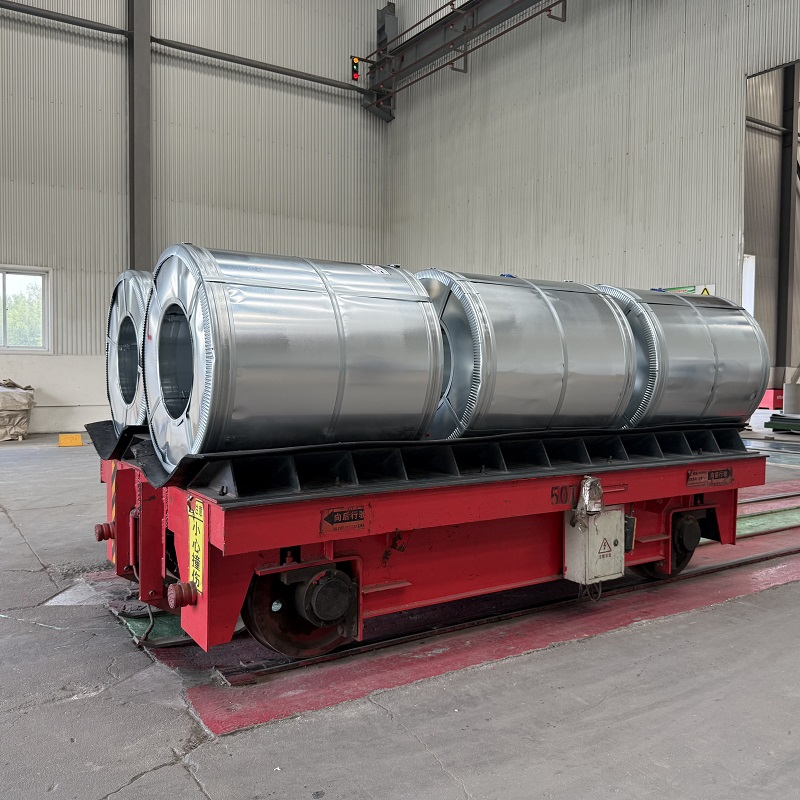
Provided the metallic coating weight meets strict ASTM A792 Class AZ150 standards, a premium finish galvalume steel coil offers a level of physical consistency that standard production runs cannot match. That exact consistency is what high-grade pre-painted panel lines depend on to deliver flawless exterior surfaces.
The Technical Link Between Substrate Smoothness and Paint Performance
High gloss readings on a finished painted panel are easily mistaken for structural paint quality. In reality, real-world weathering performance, chalking resistance, and visual depth stem from the paint resin system, dry film thickness, and substrate quality combined. A coil coating line cannot fix underlying surface variations in the base metal.
Process Flow: Raw Galvalume Coil → Chemical Wash & Pre-Treatment → Primer Application → Topcoat Curing. Substrate irregularities cause uneven chemical absorption during the pre-treatment phase.
When galvalume steel coil enters an automated pre-paint line, the metal undergoes aggressive cleaning to remove protective oils before receiving a chemical pre-treatment designed to maximize primer adhesion. If the incoming sheet carries micro-roughness swings, passivation gaps, or coating weight fluctuations, the pre-treatment layer applies unevenly.
This imbalance causes differential primer absorption across the sheet width. While this defect remains invisible on flat unpainted stock, it shows up clearly after topcoat curing as subtle gloss variation, "orange-peel" texturing, or tiny micro-craters along the panel length.
During quality control checks on incoming pre-painted galvalume stock, experienced inspectors examine panel surfaces under low-angle directional light before running physical T-bend or cross-hatch adhesion tests. The visual character under raking light reveals whether the original galvalume substrate was carefully controlled or loosely processed.
Using premium finish galvalume steel coil featuring strict Ra surface roughness controls directly yields downstream benefits:
- Consistent Gloss Readings: Uniform reflection levels across wide panel profiles without dull bands or high-gloss streaks.
- Predictable Color Profiles: Stable visual color perception across large elevations under varying daylight angles.
- Enhanced Inter-Batch Matching: Consistent surface absorption that keeps color drift within strict tolerances across multiple mill runs.
Achieving Visual Uniformity Across Large Building Facades
While bare corrosion resistance remains a primary structural metric for galvalume coil, long-term visual consistency matters just as much for commercial cladding, architectural insulated panels, and high-end residential roofing.
Real estate developers, installation contractors, and project managers sourcing PPGL materials for multi-phase commercial builds face a tough real-world hurdle: material lots produced months apart must match visually when installed side by side.
Color variation in pre-painted steel coil is measured using international ΔE (Delta-E) values, which define permissible visual deviations between a target color chip and production runs. Achieving tight color control (ΔE ≤ 0.5 for high-tier architectural applications) depends on four critical factors: color formulation and mixing, curing temperature control, film thickness accuracy, and substrate surface consistency (Ra and AZ uniformity).
A premium finish galvalume steel coil manufactured with low Ra roughness values and precise AZ coating weight distribution gives paint applicators a stable, reliable canvas. For project owners, this careful preparation means fewer visible panel-to-panel color mismatches across wide curtain walls, reduced optical distortion under direct sunlight, and an exterior facade that resists patchy chalking over decades of UV exposure.
Integrated Supply Chains and Sourcing Best Practices
Sourcing pre-painted coils from integrated manufacturing setups—where galvalume metallic coating and color painting take place within a single quality-controlled production chain—gives buyers a distinct quality advantage. Integrated operations allow mill technicians to tune the base galvalume surface topography specifically for the targeted paint chemistry.
When metallic coating and color coating happen at isolated, uncoordinated facilities, base coils often meet broad industry tolerances while still creating subtle visual defects in the finished painted panel.
To protect project aesthetics and avoid line downtime, procurement teams sourcing galvalume steel coil as a substrate for PPGL lines should mandate key operational metrics upfront:
| Sourcing Metric | Specification Guidance |
|---|---|
| Coating Mass Standards | Specify exact AZ coating classes (such as AZ150 per ASTM A792 or EN 10346 equivalents) verified by multi-spot weight tests. |
| Surface Roughness Limits | Define strict average roughness (Ra) target ranges suited for your specific primer and paint chemistry. |
| Passivation Options | Request verified chromate-free passivation layers with explicit dry-film coverage targets to ensure optimal paint bonding. |
| Spangle-Free Surface Confirmation | Require extra-smooth, zero-spangle processing to eliminate crystal shadow transfer through thin paint topcoats. |
| Color Tolerance Commitments | Establish binding ΔE limits for multi-batch orders slated for multi-phase construction projects. |
Experienced procurement specialists treat raw surface quality as a top-tier structural specification alongside coating weight and tensile strength. Partnering with established manufacturing specialists like Yuanhe Steel helps buyers align base metal production with end-use performance expectations.
With deep manufacturing capabilities and integrated supply chain management, Yuanhe Steel delivers premium finish galvalume steel coil engineered to meet demanding structural and aesthetic specifications across international markets.