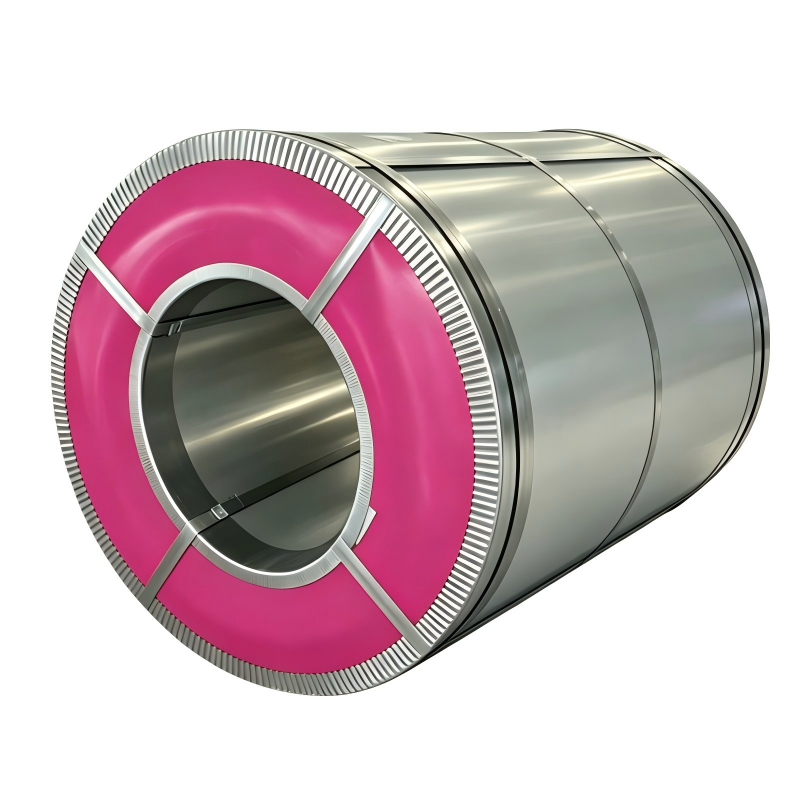
What Are PPGI Steel Coils?
PPGI steel coils—short for Pre-Painted Galvanized Iron coils—are manufactured by applying factory-grade organic color coatings onto a hot-dip galvanized steel substrate. The zinc base layer provides barrier and cathodic protection for the underlying steel, while the paint system adds a second line of defense against corrosion, UV radiation, and mechanical wear. PPGI steel coils arrive ready for fabrication, eliminating the need for on-site surface treatment or painting and significantly reducing installation labor costs compared to plain galvanized alternatives.
For construction project managers sourcing roofing and cladding materials across Africa, South America, North America, and Europe, understanding PPGI steel coils is a foundational procurement step. Whether you are sourcing for a warehouse complex, a residential development, or a commercial facade project, the right PPGI steel coils specification starts with matching coating weight, paint system, and base metal grade to your climate zone and structural requirements—not the other way around. Rather than starting with a price target, seasoned procurement teams first define the exposure environment and then back-calculate the coating weight and paint system type that the application demands.
Key Product Characteristics of PPGI Steel Coils
PPGI steel coils are defined by several interrelated technical parameters that affect both long-term performance and unit cost. Buyers who understand these parameters can make specification decisions confidently rather than relying on supplier defaults.
Zinc Coating Weight: The galvanized substrate coating ranges from Z20 to Z275 g/m², determining the base corrosion resistance of the finished coil. Provided the coating weight is specified to match the exposure environment—coastal and tropical zones generally require Z180 or above—PPGI steel coils can deliver reliable long-term protection against surface corrosion.
Base Metal Thickness: Available from 0.09 mm to 1.5 mm, enabling applications from light decorative panels to load-bearing roofing profiles. Structural roofing systems typically specify 0.4–0.8 mm depending on span and wind or snow load requirements.
Hardness and Temper: Mid-hard temper is standard for most cold-forming and roll-forming operations, balancing formability with mechanical performance for profiled roofing sheet production.
Paint System Type: Standard polyester (PE) coatings cover most inland construction applications. High-durability polyester (HDP) and SMP systems are specified for tropical or high-UV environments. PVDF coatings deliver the highest UV and chemical resistance and are used in premium architectural facade applications. For PPGI steel coils destined for high-UV or coastal markets, the paint system choice is one of the most consequential specification decisions.
Color Range and Batch Consistency: PPGI steel coils are available across a wide RAL palette and customer-matched colors. Color consistency across production batches—measured by ΔE tolerance—is a critical procurement parameter for projects requiring multiple container deliveries over extended timelines.
International Standard Compliance: In compliance with ASTM A755/755M, EN 10169, JIS G3302 (SGCC, DX51D+Z), and GB/T 12754 standards for prepainted steel coil products, the dimensional and mechanical parameters must meet defined specification ranges, enabling consistent cross-border procurement for global construction projects.
Common Applications for PPGI Steel Coils
What makes PPGI steel coils a widely specified material across construction and manufacturing markets?
The straightforward answer is versatility: PPGI steel coils cover residential and commercial roofing sheets, wall cladding panels, fascia systems, fence enclosures, prefabricated building panels, and consumer appliance components—each requiring different coating weights and paint systems but sharing the same core galvanized-and-painted production process.
Roofing Systems: PPGI steel coils are the dominant material for metal roofing in emerging construction markets. For warehouse, shed, and industrial facility roofing in West Africa and South America, 0.4–0.6 mm PPGI steel coils with Z80–Z120 coating and standard PE finish cover most inland applications. Higher-humidity coastal projects require upgraded coating specifications.
Wall Cladding and Facade Panels: PPGI steel coils are cold-formed into profiled panels for commercial building facades and industrial shed cladding. Color uniformity across large installations is critical—ordering PPGI steel coils in multiple shipments without specifying the same paint formula batch can result in visible color variation across roof panels that is only noticeable after full installation.
Prefabricated and Modular Construction: Lightweight PPGI steel coils support the growing prefabricated building segment, where fast installation timelines require pre-finished materials that arrive ready to fix without additional surface treatment on site.
Home Appliances: Thinner-gauge PPGI steel coils (0.09–0.5 mm) with smooth, uniform surface finish serve refrigerator panels, air conditioning units, and washing machine casings—applications with tight cosmetic and surface quality requirements.
Solar Energy Mounting and Furniture Panels: PPGI steel coils find increasing use as backing material in solar panel framing systems and as surface sheet for commercial and residential furniture panels, expanding application demand beyond traditional construction sectors.
How to Select the Right PPGI Steel Coils for Your Project
Still unsure how to specify PPGI steel coils for your next construction or fabrication project? The answer largely depends on three variables: the climate conditions at the installation site, the forming operations the coil will undergo downstream, and the project's multi-shipment color consistency requirements.
Choosing between a standard GI coil and PPGI steel coils comes down to whether the long-term color retention, corrosion protection, and reduced on-site labor cost justify the higher unit price for your specific project context. For most roofing and cladding applications in high-UV or humid environments, the lifecycle cost advantage of PPGI steel coils over plain galvanized is measurable and well-supported by industry performance data.
Define Your Climate Zone First: Inland, low-humidity environments can tolerate lower coating weights (Z60–Z120) and standard PE paint systems. Coastal or tropical zones require Z180–Z275 and a higher-durability paint system such as HDP or SMP to achieve acceptable service life from PPGI steel coils.
Match Paint System to UV Exposure: High-UV markets in Sub-Saharan Africa, equatorial South America, and coastal regions commonly experience premature paint chalking or fading within two to three years when standard PE systems are used on PPGI steel coils in conditions they were not designed for. Specify SMP or HDP for these environments.
Require Batch Consistency for Multi-Shipment Projects: For construction programs that source PPGI steel coils across multiple container deliveries over months, specify paint formula batch requirements explicitly in the purchase order. Color variation between batches, while within standard tolerance for individual shipments, can produce visible differences when panels from separate deliveries are installed side by side.
Confirm Standard Compliance for Your Target Market: Buyers sourcing PPGI steel coils for North American projects should confirm ASTM A755 compliance; European specifications typically require EN 10169; JIS G3302 and GB/T 12754 are standard references for Asian and export projects. Verifying compliance documentation before shipment avoids disputes at customs clearance.
Align Base Metal Specification with Downstream Processing: For steel fabricator operations—roll-forming, stamping, or slitting—confirming that PPGI steel coils' base metal properties align with a standard hr coil sheet specification ensures compatibility with existing production equipment and forming parameters, reducing setup waste and tooling wear.
Sourcing PPGI Steel Coils: What Industrial Buyers Should Know
For construction companies and engineering contractors importing PPGI steel coils from China, this category offers a cost-effective route to specification-grade roofing and cladding materials—provided the supply chain is managed to maintain coating consistency, lead time reliability, and documentation completeness across shipments.
Construction and infrastructure activity across Africa, South America, and other emerging markets is driving sustained demand for quality-coated roofing and cladding products. Delays in PPGI steel coils delivery directly impact project timelines, making lead time transparency and ready-stock availability key factors when evaluating suppliers. Suppliers who maintain stock of commonly demanded PPGI steel coils specifications—standard widths, high-volume colors, and regular coating weights—support faster delivery cycles for repeat buyers managing ongoing construction project pipelines.
A wide color palette with controlled ΔE tolerance across production batches is particularly relevant for large construction projects that extend over multiple procurement cycles. Consistent color between deliveries from the same supplier reduces the risk of visible panel mismatch during installation—a practical quality assurance requirement that procurement specifications should include explicitly, not assume.
For buyers in regulated markets, verifying that PPGI steel coils comply with the applicable international standard—ASTM, EN, JIS, or GB—and that mill test reports covering mechanical properties and coating specifications are provided per shipment is essential for project documentation, customs clearance, and downstream warranty management. Whether you are a construction project manager evaluating PPGI steel coils for an upcoming roofing package, a building materials distributor assessing new stock lines, or a steel fabricator qualifying a coil source for roll-forming production, the specification decisions made at the procurement stage determine the material's on-site performance and downstream fabrication outcomes.
 EN
EN