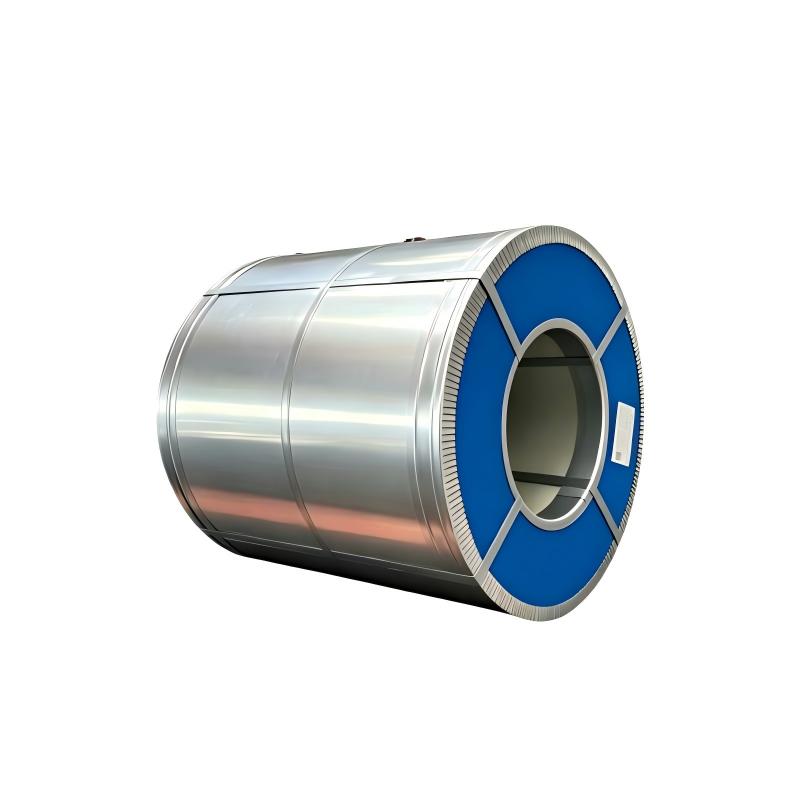
What Are PPGL Steel Coils?
PPGL Steel Coils — Pre-Painted Galvalume Steel Coils — are produced by applying organic color coatings onto a galvalume substrate composed of approximately 55% aluminum and 43.4% zinc alloy. Unlike standard PPGI (Pre-Painted Galvanized Iron), which uses a pure zinc coating base, PPGL benefits from the aluminum-zinc alloy's lower density, higher heat reflectivity, and superior long-term corrosion resistance, making it well-suited for outdoor construction in coastal, tropical, and high-UV environments.
Understanding the full steel supply chain helps clarify where PPGL sits among available coated products. The term "HRC steel meaning" refers to Hot-Rolled Coil, the primary upstream raw material from which downstream coated products are derived. From HRC, gi steel coil production involves hot-dip galvanizing to add a zinc layer; PPGL takes this further by substituting an aluminum-zinc alloy substrate before the prepaint process applies primer and topcoat layers. The result is a finished product with a multi-layer coating structure — substrate, chromate conversion layer, primer, and color topcoat — engineered for direct installation in demanding building envelope applications.
Key Technical Specifications
Our PPGL Steel Coils are available across a broad specification range to accommodate diverse construction and manufacturing requirements:
Thickness: 0.09 mm – 1.5 mm
Coating Weight: Z20 – Z275 (aluminum-zinc alloy)
Hardness: Mid hard — suitable for cold roll forming, profile shaping, and moderate bending operations
Color: Full RAL palette, customizable to project and architectural specifications
Applicable Standards: GB, JIS G3302 SGCC, ASTM A653, EN — supporting multi-standard procurement for international buyers
Material Grades: DX51D+AZ and related galvalume substrate grades
Lead Time: 6 – 14 days from order confirmation
Origin: Liaoning, China
In compliance with ASTM and JIS standards for prepainted galvalume steel coil, coating weight and paint adhesion specifications must meet defined performance benchmarks, which helps ensure consistent mechanical and surface quality across production batches. Buyers specifying material for export projects can request mill test certificates aligned to ASTM A653, JIS G3302, EN 10346, or GB standards depending on their destination market requirements.
Common Applications
PPGL Steel Coils serve a broad range of construction and industrial applications where both structural performance and surface aesthetics are required over extended outdoor service life. As a material that combines the galvalume substrate's corrosion resistance with a durable organic paint system, PPGL is specified across the following categories:
Roofing systems: Corrugated roofing sheets, standing seam panels, ribbed profiles, tile-effect sheets, and sandwich panel facings for residential, commercial, and industrial buildings
Wall and facade cladding: Exterior wall panels, clean-room partition panels, removable ceiling boards, and decorative facade elements requiring color consistency and weather resistance
Pre-engineered buildings (PEB): Lightweight roof and wall panels for fast-build steel structures in warehousing, logistics, and industrial facilities
Home appliances: Outer casings for refrigerators, washing machines, and air conditioning units where surface finish quality and formability are specified
Agricultural and cold-storage facilities: Building envelopes where condensation management, chemical resistance, and long-term paint retention are critical performance requirements
For buyers in West Africa, coastal South America, Southeast Asia, and North America, PPGL's performance in high-humidity and high-UV environments makes it a practical alternative to standard PPGI in construction projects with extended outdoor exposure requirements.
How to Choose the Right PPGL Specification
Rather than starting with a default coating weight or a standard color option, experienced procurement engineers first define the end-use environment — coastal proximity, annual humidity range, UV intensity, and expected building lifespan — and then back-calculate the required aluminum-zinc coating weight and paint system. This application-first approach prevents under-specification in demanding climates and avoids over-specification in sheltered or mild-environment projects.
Still unsure whether PPGL or standard PPGI is the right choice for your next roofing or cladding project? The answer depends largely on your project's environmental exposure conditions. When corrosion resistance is the primary performance requirement, the galvalume base in PPGL delivers better heat reflectivity and cut-edge protection in coastal and tropical environments compared to the pure zinc base in PPGI. If color aesthetics and long-term UV stability are equally important alongside corrosion protection, PPGL with a high-durability paint system may be the better specification for your application.
One recurring procurement mistake in tropical or coastal roofing projects is specifying standard GI coils with lower zinc coating weights, only to find rust formation at panel edges and cut surfaces within the first rainy season. Paint system type — standard polyester (PE), high-durability polyester (HDP), SMP, or PVDF — is a key differentiator that significantly affects UV resistance, color retention, and long-term surface integrity. Provided the coating weight and paint system are matched to the specific climate and application, PPGL coils can deliver reliable surface performance across the product's intended service life.
For contractors managing mid-scale construction projects, minimum order quantity requirements can create inventory pressure when specific colors or coating weights are required in volumes below supplier MOQs. Working with a supplier that holds ready stock of commonly specified PPGL widths, coating weights, and RAL colors enables procurement teams to order closer to actual project requirements, reducing excess inventory risk and shortening material-to-site lead times.
Quality Assurance and Procurement Documentation
Procurement teams sourcing PPGL coils for specification-sensitive construction projects face a common challenge: sample approval does not necessarily reflect full-batch consistency. A buyer may approve a PPGL coil sample with excellent bending test and adhesion results, yet find coating adhesion variability at cut edges across the full production batch. This gap between sample performance and production consistency is why requesting mill test certificates for each production batch — covering coating weight, tensile strength, and paint adhesion results — is recommended practice for quality-critical orders.
Multi-standard compliance is also a practical consideration for buyers managing projects across multiple markets. PPGL coils compliant with both ASTM A653 and JIS G3302 can serve North American and Asian-specification projects from the same supplier relationship, reducing sourcing complexity. For European market requirements, EN 10346-compliant documentation provides the technical traceability needed for project approval processes.
Why Source PPGL Steel Coils from a Trusted Supplier
Over the years, buyers importing PPGL coils for construction projects in Africa, South America, and North America have increasingly prioritized suppliers with transparent production capability, consistent coating quality, and multi-standard documentation. Sourcing from a self-produced ppgl coil manufacturer with direct mill relationships provides procurement teams with more reliable control over specification accuracy, batch-to-batch consistency, and lead time predictability compared to intermediary supply chains.
A customized prepainted galvanized steel coil factory with flexible scheduling can accommodate non-standard slit widths, specific coating weight combinations, and project-matched RAL colors within commercially viable order quantities and lead times. This flexibility matters particularly for construction projects in emerging markets where material specifications must align with both international standards and local installation requirements.
PPGL coils also offer strong UV degradation resistance compared to standard painted steel, retaining color vibrancy and surface integrity over prolonged outdoor exposure in tropical and high-UV markets. For roofing, facade, and cladding applications across West Africa, coastal South America, Southeast Asia, and similar regions, PPGL Steel Coils represent a material choice that balances technical performance, color flexibility, international standards compliance, and supply chain practicality for construction procurement teams evaluating coated steel options.
 EN
EN