EN
EN

Why stable surface PPGL coil avoids uneven secondary coating issues
2026/08/07
Discover why stable surface PPGL coil prevents uneven secondary coating issues and how uniform coating PPGI steel coil ensures consistent product quality.
2026/08/06
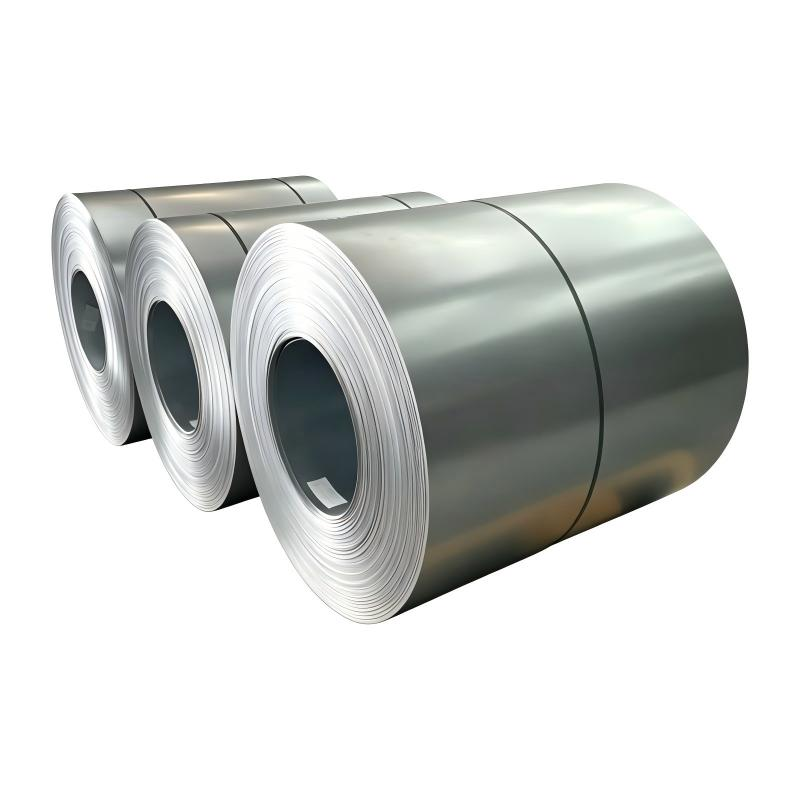
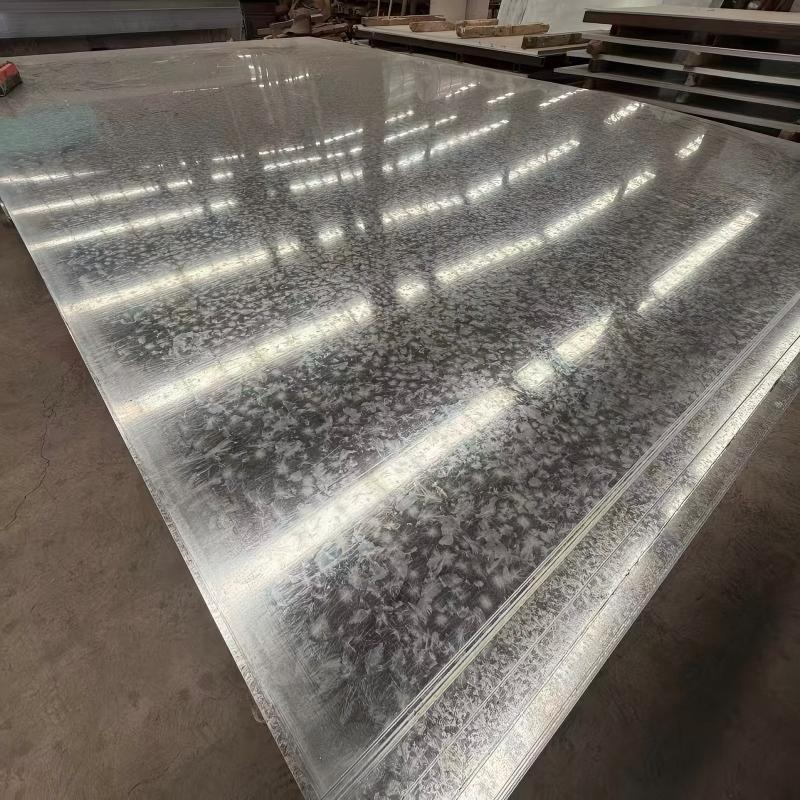
Custom fabrication gi coil processing transforms master coils into finished sheets with precise dimensions tailored to project specifications. Unlike standard cut-to-length operations that produce fixed sheet sizes, a bespoke gi coil service accommodates non-standard lengths, width tolerances, and edge conditioning requirements that off-the-shelf material cannot meet. The process begins with uncoiling the master GI coil, feeding it through a leveler to remove coil set and cross-bow, and then cutting it to the specified length using either rotary shears or flying shear systems. For custom fabrication gi coil orders, the critical parameters include length tolerance (typically plus or minus 2 mm for standard precision, or plus or minus 0.5 mm for high-precision applications), width tolerance, flatness classification, and surface protection requirements. Buyers who source bespoke gi coil sheets directly from manufacturers with in-house cutting capabilities benefit from shorter lead times and better dimensional control than those who rely on third-party processors.
When placing an order for custom fabrication gi coil sheets, buyers must define several dimensional parameters that collectively determine the suitability of the finished product. Length is the most obvious specification, but the tolerance band applied to that length is equally important. A bespoke gi coil order should specify whether the length tolerance is plus-only (oversize only), minus-only, or bilateral, as this affects how the sheets fit into downstream assembly processes. Width specification should include not only the nominal width but also the edge condition: mill edge (unsheared), trimmed edge (sheared to exact width), or rounded edge (deburred for safety and handling). Thickness tolerance must reference the appropriate standard — ASTM A653 for North American projects or EN 10143 for European projects — and should specify whether the tolerance applies to the base metal only or includes the zinc coating. Flatness is another critical parameter, particularly for sheets that will be further processed or used in visible applications. The following table summarizes typical dimensional specifications for custom fabrication gi coil orders.
The quality of a custom fabrication gi coil product depends heavily on the cutting equipment employed. Modern cut-to-length lines for GI coil processing typically feature CNC-controlled rotary shear systems that achieve cutting speeds of 30 to 60 meters per minute while maintaining length accuracy within plus or minus 1 mm. For higher precision bespoke gi coil requirements, some facilities use static shear presses that cut the sheet while it is stationary, achieving tolerances as tight as plus or minus 0.3 mm. The leveling section is equally important — roller levelers with 17 to 21 rolls can reduce residual stress in the GI coil material, producing sheets that remain flat after cutting without spring-back. Edge trimming capabilities, when integrated into the cut-to-length line, allow the manufacturer to produce bespoke gi coil sheets with clean, burr-free edges that meet the surface quality requirements of downstream painting or forming operations.
A robust quality control protocol for custom fabrication gi coil processing should include both inline and offline inspection. Inline systems typically employ laser length measurement at the shear exit, providing real-time feedback to the CNC controller for length compensation. Offline inspection involves sampling finished sheets at defined intervals — typically every 50th sheet — and measuring length, width, thickness, flatness, and edge quality using calibrated instruments. For bespoke gi coil orders with stringent requirements, some manufacturers provide a dimension inspection report with each delivery, listing actual measurements for a statistical sample of sheets. Flatness measurement deserves particular attention because GI coil material that has been improperly leveled may exhibit edge waviness, center buckle, or cross-bow after cutting. The Streckmetall method, which measures the wave height relative to sheet length, provides a quantifiable flatness index that buyers can specify in their purchase orders.
A warehouse construction project in the Middle East provides a practical illustration of custom fabrication gi coil sourcing. The project required 12-meter-long corrugated roofing sheets — a non-standard length that exceeded the capability of most local processors. The general contractor initially attempted to source standard 6-meter sheets and splice them on-site, but this approach created leak-prone joints and increased installation labor by 30 percent. By engaging a manufacturer offering bespoke gi coil cutting services with a 13-meter maximum cut length capability, the contractor obtained single-piece sheets that eliminated splicing entirely. The custom fabrication gi coil supplier also provided pre-cut sheets with project-specific labeling, arranged in delivery sequence matching the roof installation plan. This reduced on-site material handling time by 40 percent and eliminated cutting waste. The key lesson from this project is that specifying the exact required length, rather than adapting to standard sizes, can yield significant total project cost savings that far exceed the per-unit premium for custom cutting.
When evaluating a supplier's capability to produce custom fabrication gi coil sheets, buyers should verify several operational aspects. Confirm the maximum coil weight and width the cut-to-length line can handle, as this determines whether the supplier can process the full range of GI coil sizes. Ask about the line's length tolerance capability and request sample measurement data from a recent production run. Verify that the supplier has calibrated measuring instruments and a documented inspection procedure. Manufacturers like Shenyang Yuanhe, which operate dedicated flattening, slitting, and cutting workshops alongside their coil production lines, can offer integrated custom fabrication gi coil services with shorter communication chains and better quality traceability than multi-tier supply arrangements. For projects requiring bespoke gi coil sheets with certified dimensions, requesting a pre-production sample sheet cut to the exact specification before committing to the full order is a prudent risk management step.
Frequently Asked Questions
What is the minimum order quantity for custom fabrication GI coil sheets?
Minimum order quantities vary by supplier but typically range from 5 to 20 tons for custom fabrication gi coil processing. Some manufacturers with flexible cutting lines may accept smaller orders, particularly for bespoke gi coil sheets that use standard-width master coils. Buyers should confirm the MOQ and any setup charges before placing an order.
How precise can the length tolerance be for custom cut GI sheets?
Standard precision cut-to-length lines achieve length tolerances of plus or minus 2 mm. High-precision systems using static shear presses can maintain plus or minus 0.5 mm or better. For bespoke gi coil applications requiring extremely tight tolerances, buyers should specify the tolerance band explicitly and request measurement data from the production run.
Can I request custom sheet lengths longer than standard coil dimensions?
The maximum sheet length is limited by the cut-to-length line's shear capacity and the available uncoiling and feeding equipment. Typical maximum cut lengths range from 6 to 13 meters. Custom fabrication gi coil suppliers with extended-length capabilities can be identified by confirming their equipment specifications before placing an order.
Typical Dimensional Specifications for Custom GI Coil Sheet Orders
|
Parameter |
Standard Precision |
High Precision |
Notes |
|
Length Tolerance |
+/- 2.0 mm |
+/- 0.5 mm |
Measured at shear exit |
|
Width Tolerance |
+/- 1.5 mm |
+/- 0.5 mm |
After edge trimming |
|
Flatness (I-unit) |
<= 5 |
<= 2 |
Streckmetall method |
|
Edge Burrs |
<= 0.1 mm |
None visible |
Visual + tactile check |
|
Squareness |
<= 1 mm/m |
<= 0.5 mm/m |
Diagonal difference |
2026/08/07
Discover why stable surface PPGL coil prevents uneven secondary coating issues and how uniform coating PPGI steel coil ensures consistent product quality.
2026/08/07
Learn what equipment conducts precision slitting on prepainted galvanized steel coil for precision cut and custom fabrication PPGI steel coil production.
2026/08/06
Learn why custom fabrication PPGI steel coil and thin gauge PPGI steel coil with adjustable thickness enable lightweight construction flexibility.
2026/08/06
Learn how to prevent paint cracking during bending PPGI steel coil sheets with stable paint PPGI steel coil selection, T-bend testing and process control.
2026/08/06
Discover how thin gauge PPGI steel coil and formable PPGI steel coil reduce construction load, enable lightweight design and maintain structural integrity.
2026/08/06
Explore which construction projects prefer matt finish PPGI roof sheet and colour coated steel coil for glare reduction and architectural aesthetics.
Covering green transformation, product comparison, selection guide, and industry empowerment, helping you fully grasp the dynamics of the color steel industry.

Global climate action and Belt and Road cooperation are driving the color steel industry’s shift toward green, sustainable development.

Comparing PPGI and PPGL across performance, durability, and applications to help you select the optimal coated steel for your project.
A practical guide to selecting and applying color steel coils, ensuring optimal performance, durability, and cost-effectiveness for your projects.
Industry forum drives digital and green transformation, empowering steel sector development through innovation and collaboration.