EN
EN

How to customize length size of precision cut GI coil finished sheets
2026/09/11
Learn how to specify precision cut GI coil sheets in custom lengths — tolerance selection, coating integrity, and ordering tips.
2026/08/20
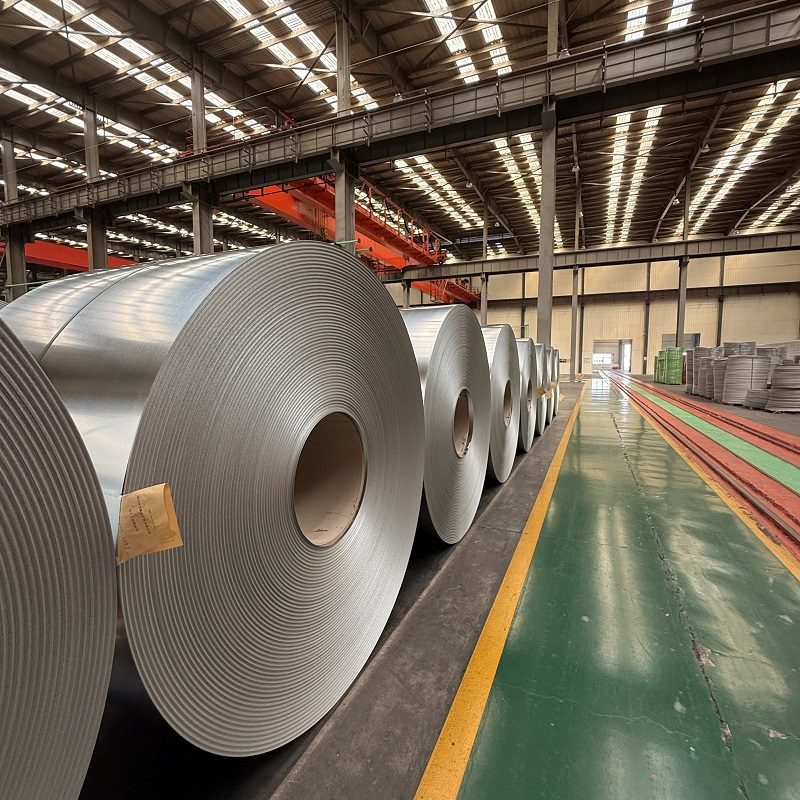
Modern metal processing has undergone a fundamental transformation over the past decade. Automated stamping lines, robotic roll forming systems, and computer-controlled cutting equipment now dominate production floors across the global steel fabrication industry. This shift demands raw materials that meet increasingly stringent dimensional requirements. High precision tight tolerance PPGL coil has emerged as a critical input for these operations, where even minor deviations in thickness, width, or flatness can trigger tooling damage, line stoppages, and significant scrap generation.
Industry insights from processing facilities across Southeast Asia, the Middle East, and Central Asia reveal that strict tolerance control directly correlates with downstream manufacturing efficiency. Facilities that specify tighter PPGL coil tolerance grades consistently report lower scrap rates and longer tooling life.
Tolerance refers to the acceptable deviation from nominal dimensions during manufacturing. The key dimensional parameters include thickness, width, and flatness. Each parameter directly impacts how the material performs when fed into automated processing equipment.
For advanced applications, thickness tolerance typically ranges within plus or minus 0.02 mm for thicknesses up to 1.5 mm, compared to standard commercial tolerances of plus or minus 0.05 mm or wider. While this difference may seem marginal, automated stamping operations feature tight die clearances engineered to 0.03 mm precision. A 0.05 mm deviation can easily cause incomplete cuts, burr formation, or severe die damage.
Width tolerance is equally critical. Automated roll forming lines use guide systems that position the strip within a narrow corridor. When width varies beyond specification, the strip may wander, resulting in profile distortion or edge waviness in the finished product.
Dimensional requirements for prepainted galvalume steel are governed by rigorous international standards, including ASTM A792, ASTM A924, JIS G3317, and EN 10169. Utilizing high-grade galvalume substrates like DX51D+AZ ensures full compliance with international engineering demands. Furthermore, zinc-aluminum coating weights—ranging from AZ50 to AZ150—add dimensional variability that must be carefully managed during advanced strip rolling and finishing operations.
Manufacturing facilities investing in tight tolerance PPGL coil for stamping applications typically see scrap rate reductions of 40 to 60 percent compared to commercial grade alternatives.
An automotive parts manufacturer in Thailand recently transitioned from commercial tolerance material to high precision tight tolerance PPGL coil for an automated stamping line producing vehicle brackets. The operation utilizes a 400-ton progressive die press running at 60 strokes per minute.
Before the switch, the facility experienced frequent die jamming due to thickness variation at coil splice points. Scrap rates averaged 6.8 percent, and die maintenance intervals were required every 120,000 strokes. After upgrading to coils with thickness tolerance controlled within plus or minus 0.02 mm, the operational results improved dramatically:
Scrap rate fell to 2.1 percent
Die maintenance intervals extended to 350,000 strokes
Line uptime increased from 78 percent to 92 percent
Annual tooling cost savings reached approximately 42 percent
This case study demonstrates the direct economic impact of dimension control in modern automated processing environments.
Producing reliable material requires a sophisticated quality control infrastructure. Advanced facilities utilize inline thickness gauging via X-ray measurement technology, continuous width monitoring, and flatness scanning at the recoiler. Every master coil undergoes rigorous dimensional verification before dispatch, accompanied by traceable test certificates.
Reliable manufacturers maintain robust inventories exceeding 10,000 metric tons to guarantee consistent supply for automated processing clients who require predictable material characteristics batch after batch. Short lead times of 6 to 14 days ensure that high-volume production schedules remain uninterrupted across international markets.
Beyond primary dimensional accuracy, coil preparation dictates performance on the factory floor. Proper edge trimming eliminates micro-cracks that propagate during high-speed stamping, while precise tension control during recoiling prevents coil set and crossbow. Additionally, uniform oil film application ensures consistent lubrication during complex forming operations.
The industry-wide transition toward tighter dimensional control will only accelerate as smart factory infrastructure expands. Industry 4.0 manufacturing environments rely on real-time dimensional feedback loops to dynamically adjust processing parameters. However, these digital systems require highly consistent input material to function effectively; fluctuating dimensions quickly overwhelm adaptive control systems.
Manufacturers investing in advanced automation must specify material tolerances that match their equipment capabilities. Utilizing automated stamping PPGL coil solutions unlocks the full potential of high-speed production lines, minimizing costly downtime and maximizing profitability.
Shenyang Yuanhe Steel leverages extensive manufacturing expertise, advanced rolling technologies, and a robust global supply chain to deliver exceptional coil solutions tailored to the most demanding automated processing environments worldwide.
For thicknesses up to 1.5 mm, thickness tolerance can be tightly controlled within plus or minus 0.02 mm. This level of precision requires specialized cold-rolled substrate processing, precise coating control, and comprehensive inline X-ray measurement systems.
Tighter thickness tolerance reduces mechanical shock on stamping dies by ensuring consistent material engagement with the die surface. When thickness variation is minimized, die stress distribution remains uniform, extending maintenance intervals by two to three times compared to standard commercial grade material.
Tolerance requirements are specified under ASTM A792 and A924 for American standards, JIS G3317 for Japanese standards, EN 10169 for European standards, and corresponding GB standards for Chinese manufacturing requirements.
What specific thickness and width tolerances are currently required for your automated production lines?
2026/09/11
Learn how to specify precision cut GI coil sheets in custom lengths — tolerance selection, coating integrity, and ordering tips.
2026/09/11
Learn why premium finish galvalume steel coil delivers better paint adhesion and visual consistency in finished building products. Request specs today.
2026/09/10
Learn why heavy coating galvalume steel coil provides superior corrosion resistance in harsh coastal settings and saves long-term maintenance costs.
2026/09/10
Learn how to test the bending performance of formable galvalume steel coil samples using T-bend testing to prevent cracking and scrap.
2026/09/10
Discover how multi specification galvalume steel coil simplifies purchasing, boosts productivity, and lowers costs for metal fabricators.
2026/09/10
Discover why hot dipped galvanized steel and hot dip galvanized checkered plate offer ideal corrosion resistance and strength for road guardrails.
Covering green transformation, product comparison, selection guide, and industry empowerment, helping you fully grasp the dynamics of the color steel industry.

Global climate action and Belt and Road cooperation are driving the color steel industry’s shift toward green, sustainable development.

Comparing PPGI and PPGL across performance, durability, and applications to help you select the optimal coated steel for your project.
A practical guide to selecting and applying color steel coils, ensuring optimal performance, durability, and cost-effectiveness for your projects.
Industry forum drives digital and green transformation, empowering steel sector development through innovation and collaboration.