EN
EN

Why GI Sheet Is Widely Used in Temporary Workshop Construction
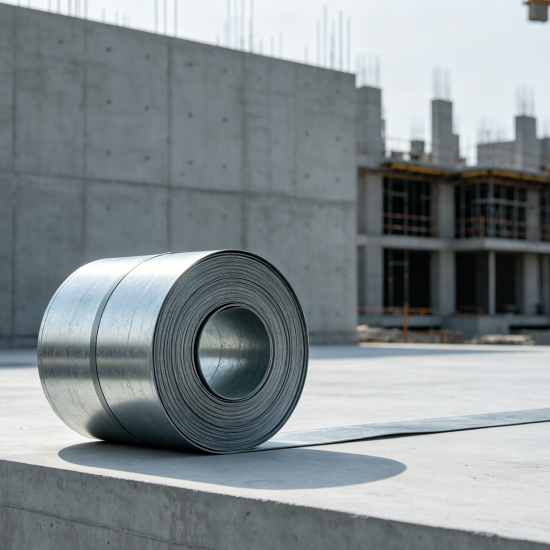
Walk through any active industrial site in Africa, South America, or Southeast Asia, and you will almost certainly see the same material forming the walls and roof of the temporary workshop nearby: GI sheet. That near-universal presence is not an accident. Over decades of field experience, site engineers and procurement managers have converged on galvanized iron sheet as the default choice for temporary workshop structures—and the reasons are practical, not arbitrary.
This article breaks down exactly why gi sheet dominates this application, what specifications actually matter for temporary construction, and where buyers sometimes go wrong when specifying the material.
What Makes GI Sheet the Default Material for Temporary Workshops?
A temporary workshop has very specific requirements that differ from permanent buildings. The structure needs to go up fast, perform reliably for a defined period (often one to five years), resist weathering without expensive maintenance, and ideally be dismantled and relocated without significant material loss. GI steel sheet covers all four bases in a way that few other materials can match at a comparable price point.
The zinc coating at the heart of GI sheet's performance works through two mechanisms simultaneously: physical barrier protection and cathodic (sacrificial) protection. The barrier layer blocks moisture and oxygen from reaching the steel substrate. Just as significant, even if the surface is scratched or cut (which is common during workshop construction and use), the surrounding zinc continues to protect the exposed steel through electrochemical action. This combination of protection mechanisms is what makes gi sheet so reliable in the rough handling conditions typical of temporary construction sites.
Cost-Effectiveness for Structures With a Defined Lifecycle
When a construction company builds a temporary site office or a production workshop that will be used for two to four years and then removed, the economics of the material decision change significantly compared to a permanent structure. Overspending on premium coated products means capital tied up in a building with a short planned service life. Underspending on uncoated or thin-coated steel risks premature corrosion, early structural failure, and replacement costs that exceed the original material savings.
GI sheet occupies the right position in this cost-performance spectrum. At standard coating weights between Z180 and Z275 (180 to 275 grams of zinc per square meter, total both sides), GI steel sheet provides adequate corrosion protection for most temporary structure environments without the price premium of heavier galvanized or alloy-coated alternatives. For procurement teams managing project budgets, this predictability matters.
One pattern that comes up repeatedly in field evaluations: buyers who initially focus only on the per-sheet price often end up spending more in total by specifying a lighter coating grade (Z100 or below) to save on unit cost, only to find surface rust developing within the first rainy season. The right approach is to define the site's environmental exposure first—humidity level, proximity to saltwater, presence of industrial chemicals—and then select the minimum coating weight that meets that exposure class. For most inland temporary workshops with moderate humidity, Z180 to Z275 is the appropriate range.
Fast Installation and Minimal Site Preparation
Ask any site foreman why they prefer GI sheet for a temporary workshop, and the first answer is typically the same: it goes up quickly. GI sheets arrive pre-cut to manageable sizes, are light enough to handle without heavy lifting equipment, and fix directly onto standard steel framing with self-drilling screws. A four-person crew can enclose a medium-sized workshop in a single day using corrugated GI panels—a timeline that is impossible to match with concrete block, fiber cement, or timber cladding.
The material's formability also contributes. GI steel sheet can be cut on-site with basic tools, bent to accommodate non-standard angles, and overlapped at joints to provide weather sealing without specialized sealant systems. For temporary structures where dimensional precision is secondary to speed and adaptability, this flexibility is a genuine operational advantage.
Standard GI sheet thicknesses for workshop cladding range from 0.40mm to 0.80mm for wall panels, with roofing sheets typically specified at 0.50mm to 1.0mm to handle wind and point loading from maintenance foot traffic. The corrugated profile—the most common form for temporary structures, adding structural rigidity far beyond what the base metal thickness alone would suggest, allowing lighter gauges to span distances that would require heavier flat sheet.
Reusability and End-of-Life Value
Temporary workshop construction often involves structures that will be relocated rather than demolished. GI steel sheet panels can be unbolted, transported, and re-erected on a new site with minimal degradation of function, provided the original fastening holes are not over-tightened and the panels are stored horizontally to prevent distortion. This reusability is a factor that timber, brick, or fiber cement cannot match.
Even when GI sheet has reached the end of its usable service life, it retains scrap steel value. The zinc coating does not meaningfully reduce recyclability. Zinc is itself a valuable material, so the residual value of decommissioned GI panels offsets a portion of the original procurement cost. Over the full lifecycle of a temporary workshop program spanning multiple site deployments, this end-of-life value becomes a meaningful line item in total cost calculations.
When to Consider GI Perforated Sheet
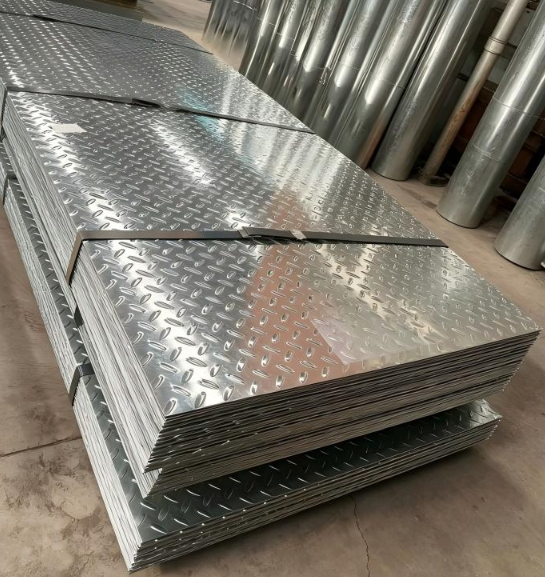
Some temporary workshop applications, particularly those requiring ventilation without compromising weather protection. In those cases, gi perforated sheet for wall sections or high-level louvres. Perforated GI panels allow airflow for heat-intensive production areas while maintaining the same corrosion resistance and structural characteristics as solid sheet. The perforation pattern and open-area percentage can be specified based on the airflow requirement, making gi perforated sheet a practical solution for workshops handling welding, paint spraying, or other processes that generate fumes or heat.
The structural calculation for perforated panels differs from solid sheet: the effective load-bearing cross-section is reduced in proportion to the open area, so specification needs to account for the reduced section modulus. For most standard workshop cladding applications, this is not a limiting factor at typical perforation percentages of 20% to 40% open area.
Specifying GI Sheet for a Temporary Workshop: Key Parameters
| Parameter | Typical Range | Guidance for Temporary Workshops |
|---|---|---|
| Base metal thickness | 0.12mm – 1.5mm | 0.40–0.60mm for walls; 0.50–1.0mm for roofing |
| Zinc coating weight | Z60 – Z350 | Z180–Z275 for standard inland sites; Z275+ for coastal or humid environments |
| Profile | Corrugated, trapezoidal, flat | Corrugated offers a superior strength-to-weight ratio for temporary structures |
| Width | 600mm – 1100mm | Match to framing module spacing to minimize waste |
| Steel grade | DX51D, SGCC | SGCC or DX51D+Z for general construction use |
Sourcing GI Sheet for Temporary Construction Projects
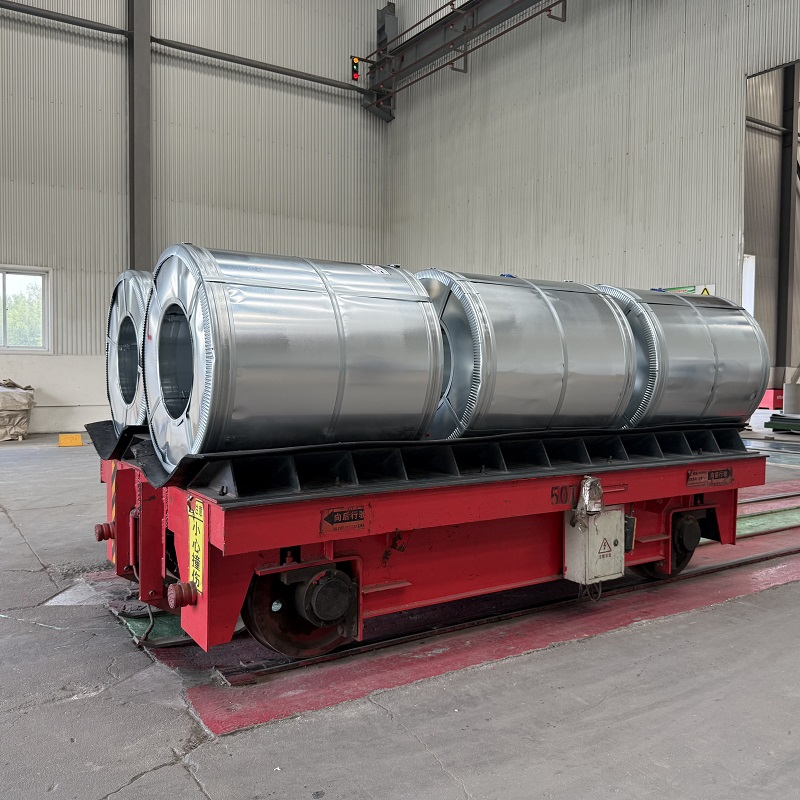
For construction companies and project managers sourcing GI sheet from Chinese suppliers, the key quality verification steps are coating weight confirmation via mill test report, base metal thickness measurement against specification tolerance, and surface inspection for spangle uniformity and coating adhesion. Suppliers with documented quality inspection processes and the ability to provide third-party inspection reports significantly reduce the risk of receiving under-spec material.
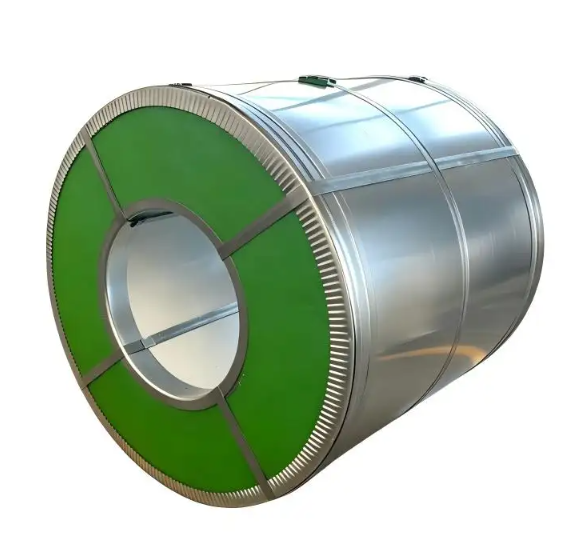
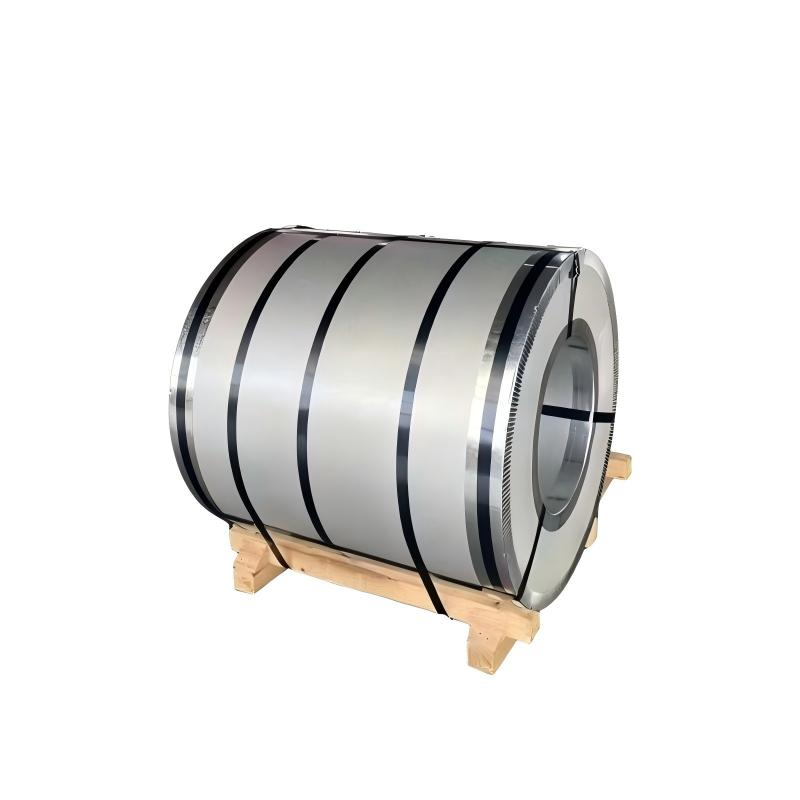
Shenyang Yuanhe Steel Trading Co., Ltd. specializes in GI coils and related coated flat steel products, supplying engineering contractors and construction companies across North America, Africa, South America, and Europe. The company's focus on coated steel—including standard GI steel sheet and Galvalume options—means its specification guidance is calibrated for actual construction use requirements rather than one-size-fits-all product listings. Custom-slit coil widths are available to reduce on-site waste when standard sheet widths do not match framing modules.
For buyers evaluating whether standard GI or Galvalume is the right choice for their temporary workshop environment, particularly in coastal or high-humidity regions where GI's zinc-only protection may be marginal. In that situation, a direct technical consultation with a supplier who carries both product classes can save significant rework cost later.
Conclusion
The widespread use of GI sheet in temporary workshop construction reflects a well-established material logic: the combination of corrosion resistance, low cost, fast installation, structural versatility, and reusability matches the specific demands of temporary structures better than any comparably priced alternative. The key variable that separates successful applications from premature failures is correct coating weight specification for the site environment—not the lowest-cost grade available, but the minimum grade that genuinely meets the exposure conditions.
For procurement teams and site engineers specifying materials for the next temporary workshop project, starting with the environment and working backward to the coating specification is the approach that consistently delivers the right outcome.