EN
EN

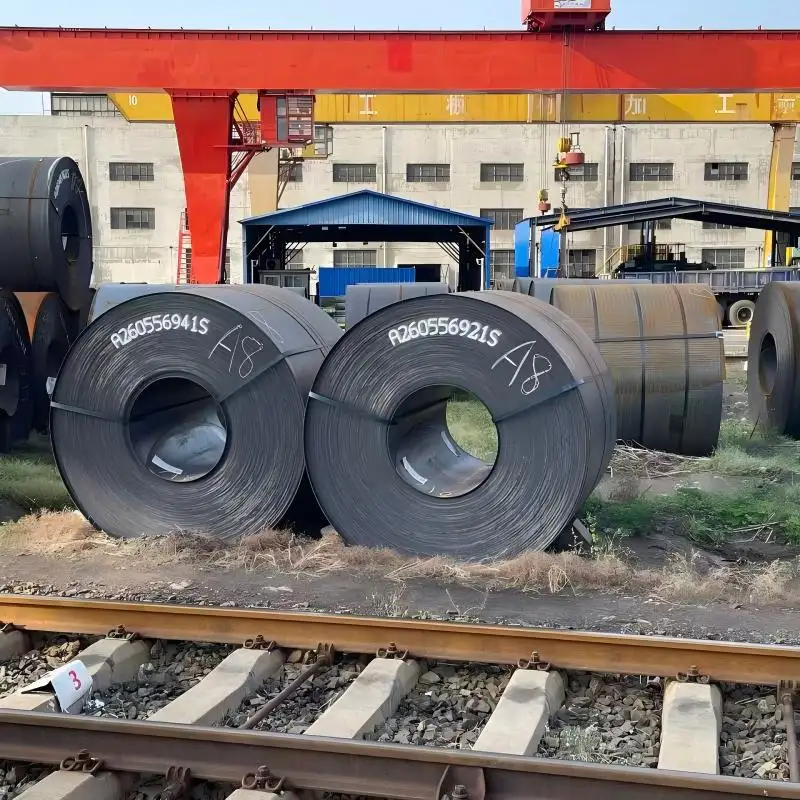
Why Galvalume Steel Coil Resists Salt Spray Better Than Galvanized Coil
As a procurement engineer who has specified coated steel coils for roofing and cladding projects in coastal West Africa, South America, and the Gulf region, one pattern I have noticed repeatedly is this: teams that specify standard galvanized coil for marine-adjacent applications typically revisit that decision within two or three years. The rust spots appear first at the cut edges, then spread across the flat panels. What looked like a cost-effective choice at the quotation stage becomes a warranty problem in the field.
The underlying issue is not poor manufacturing — it is a mismatch between coating chemistry and environmental demand. If you are sourcing steel coil for any project within roughly 10–15 kilometres of a coastline, or for structures exposed to industrial salt-spray environments, understanding the performance difference between galvalume steel coil and standard galvanized coil is not a technical nicety. It is a procurement-critical decision.
What Is Galvalume Steel Coil?
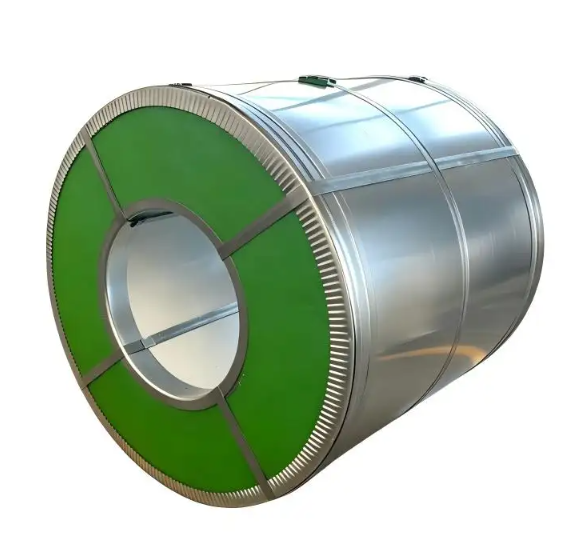
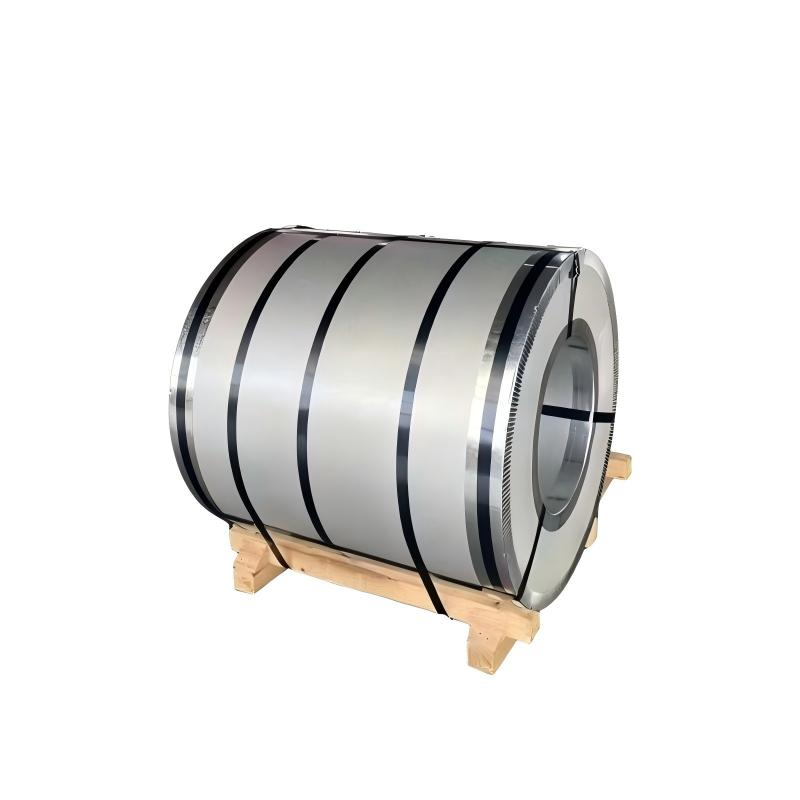
Galvalume is a continuously hot-dip coated steel product in which the coating consists of 55% aluminum, 43.5% zinc, and 1.5% silicon by weight. The product was originally developed by Bethlehem Steel in 1972 and is now governed by ASTM A792 in North America, with equivalent specifications under JIS G3321 and EN 10346 in other markets.
Internationally, AZ150 is the most commonly specified designation, indicating a minimum 150 g/m² total coating weight (both sides combined). Heavier grades such as AZ185 are available for more aggressive environments. The three-component alloy is not a simple mixture: the aluminum and zinc interact in a way that delivers two distinct protective mechanisms working in combination.
What Is Standard Galvanized Steel Coil?
Galvanized steel coil — often abbreviated as GI coil — uses a pure zinc coating applied by hot-dip galvanizing, governed by ASTM A653 (G designation in North America) or EN 10346 (Z designation in Europe). Common specifications include Z275 (275 g/m²) and Z180 (180 g/m²), with Z90 and Z120 used for lighter-duty or interior applications.
Zinc is an excellent galvanic protector. When bare steel is exposed at a cut edge or scratch, zinc sacrifices itself to protect the underlying substrate — a well-understood electrochemical mechanism that gives galvanized coil its long track record in building and construction. Galvanized coil is not a poor product; it is appropriate for many inland and low-humidity environments. The limitation emerges when chloride ion concentration in the environment increases — which is exactly what happens at coastlines and in salt-spray industrial zones.
The Core Performance Difference in Salt Spray Environments
Under ASTM B117 neutral salt spray (NSS) test conditions — the standard laboratory method for accelerated corrosion evaluation — the performance gap between galvalume and galvanized coil becomes clearly measurable.
| Parameter | Galvalume Steel Coil (AZ150) | Galvanized Steel Coil (Z275) |
|---|---|---|
| Coating composition | 55% Al, 43.5% Zn, 1.5% Si | ~100% Zn |
| Governing standard | ASTM A792 / EN 10346 | ASTM A653 / EN 10346 |
| ASTM B117 flat-panel performance (indicative) | Typically exceeds 1,000–1,500+ hours before red rust | Typically 500–1,000 hours before red rust at comparable coating weight |
| Primary protective mechanism | Aluminum barrier layer + zinc galvanic protection | Zinc galvanic protection |
| Cut-edge behavior | Zinc phase provides galvanic protection at exposed edges | Zinc provides galvanic protection, but depletes faster in high-chloride environments |
| Relative corrosion resistance (laboratory salt spray) | Approximately 2–4× higher than Z275 galvanized | Baseline reference |
These numbers require a brief qualification. Salt spray test hours are a relative ranking tool, not a direct predictor of service life in years. A material that performs well in ASTM B117 does not necessarily maintain that advantage in all real-world conditions — the test accelerates corrosion under controlled circumstances that rarely match field complexity. What the data does confirm is that galvalume coil consistently outranks galvanized coil of comparable weight in chloride-exposure tests, and that advantage is reproducible across independent test laboratories and international standard specifications.
Why the Dual-Mechanism Coating Matters
The reason galvalume steel coil outperforms galvanized in salt spray comes down to coating chemistry. Standard galvanized coil relies entirely on zinc's galvanic behavior — zinc is electrochemically active relative to steel, so it oxidizes preferentially and protects the substrate. This mechanism works well, but in high-chloride environments zinc is consumed faster. Once the zinc layer is depleted to a critical minimum thickness, corrosion of the base steel accelerates.
Galvalume's aluminum content adds a second protective mode: barrier protection. The aluminum forms a stable, adherent oxide layer that physically blocks chloride ions from reaching the steel substrate. Aluminum does not offer the same galvanic protection as zinc — it is not sacrificial in the same electrochemical sense — but it resists dissolution in saline environments far better than zinc does. The 1.5% silicon in the coating acts as an adhesion promoter, preventing coating delamination during forming and handling.
In practice, when a galvalume coil is exposed to coastal salt spray, the aluminum layer slows chloride penetration while the zinc phase handles galvanic protection at exposed cut edges or surface defects. The two mechanisms complement each other in a way that neither zinc alone nor aluminum alone can replicate. Seasoned procurement engineers working on projects near coastlines or in salt-laden industrial environments often start their specification process by defining the expected chloride exposure class, and then back-calculate whether AZ150 is sufficient or whether AZ185 is warranted — rather than defaulting to the lowest-cost coating weight available.
When to Specify Galvalume Coil vs. Galvanized Coil
It would be inaccurate to say galvalume is the right choice in every case. Galvanized coil remains cost-effective and appropriate in a range of applications — particularly inland, moderate-humidity environments where chloride ion concentration is low. The premium for galvalume over equivalent galvanized typically runs 5–15% depending on specification and market, and that premium is not uniformly justified for interior steel framing, protected substructure components, or short-lifecycle temporary structures.
Where galvalume steel coil becomes the more defensible specification decision:
- Coastal and marine environments: Any roofing, wall cladding, or structural application within 15–20 km of a saltwater coastline. This is the primary driver for switching from galvanized to galvalume in markets across West Africa, coastal South America, and Southeast Asia.
- Industrial salt-spray environments: Facilities near chemical plants, salt-processing operations, or saline-water cooling towers where airborne chloride levels are elevated regardless of distance from the ocean.
- Long-lifecycle projects: Buildings with 20–30+ year design lives where the cost of early re-roofing or re-cladding from corrosion-related failure would significantly exceed the coating premium at purchase.
- Pre-painted galvalume (PPGL): When painted galvalume coil — also called PPGL — is specified for both corrosion protection and color retention, the galvalume substrate provides a more stable base for the paint system in aggressive environments than a galvanized substrate would.
One common specification mistake is selecting standard GI coil with Z120 or Z180 coating weight for coastal warehouse or factory roofing in tropical African markets. In high-humidity, salt-laden atmospheres, that coating weight is frequently insufficient, and the visible rust that develops within two to three years of installation is entirely predictable from the coating specification — not a quality failure in the manufacturing sense, but a material selection mismatch.
Selecting a Galvalume Steel Coil Supplier
Once the decision to specify galvalume has been made, supplier qualification matters. Key parameters to confirm from any supplier include: coating designation (AZ150 vs AZ185), applicable standard (ASTM A792 or equivalent), coating weight test method and tolerance, and whether mill test reports are issued per coil heat number. Pre-shipment third-party inspection by SGS, BV, or equivalent for coating weight and thickness verification is standard practice for first-container orders and is worth building into the procurement plan.
For buyers sourcing from Chinese mills — which represent a significant portion of global galvalume coil supply — verify that the mill holds ISO 9001 certification and can provide MTRs (mill test reports) that reference specific heat numbers. This traceability is important if a post-installation quality claim is ever required.