EN
EN

What Thickness Options of GI Sheet Suit Agricultural Building Construction
Choosing the right thickness of gi sheet for an agricultural building is one of those decisions that looks straightforward on a price list but gets more involved once you factor in span widths, local snow loads, humidity levels, and how long the structure actually needs to last. In our experience working with construction project managers across Africa and South America, the most common mistake is not under-specifying thickness — it is specifying the same gauge used for a residential roof and assuming it will perform equally well on a wide-span poultry house or grain storage shed.
This article walks through the thickness options that are genuinely suitable for agricultural building construction, covering roofing panels, wall cladding, and corrugated profiles. Where relevant, we include standard metric values alongside gauge numbers, since project engineers working to EN or ASTM specifications need both.
The Commercial Thickness Range for GI Sheet
Galvanized iron (GI) sheet is produced across a broad commercial range — typically 0.12 mm to 4.0 mm nominal thickness, though corrugated roofing profiles used in construction are most commonly supplied between 0.15 mm and 0.8 mm. Provided the sheet is produced to a recognized standard such as ASTM A653, EN 10346, or JIS G3302, nominal thickness must fall within defined tolerance bands, and buyers are entitled to request mill test certificates confirming compliance before shipment.
The gauge system adds a layer of confusion, particularly for international buyers accustomed to metric specifications. The table below maps common gauge numbers to approximate metric equivalents for galvanized steel:
| Gauge | Nominal Thickness (inch) | Approximate mm | Typical Use Category |
|---|---|---|---|
| 29G | 0.014″ | 0.35–0.45 mm | Light-duty / budget agricultural |
| 26G | 0.018″ | 0.45–0.50 mm | Standard agricultural / residential roofing |
| 24G | 0.024″ | 0.55–0.65 mm | Heavy-duty agricultural / commercial |
| 22G | 0.030″ | 0.70–0.80 mm | Industrial / long-span structures |
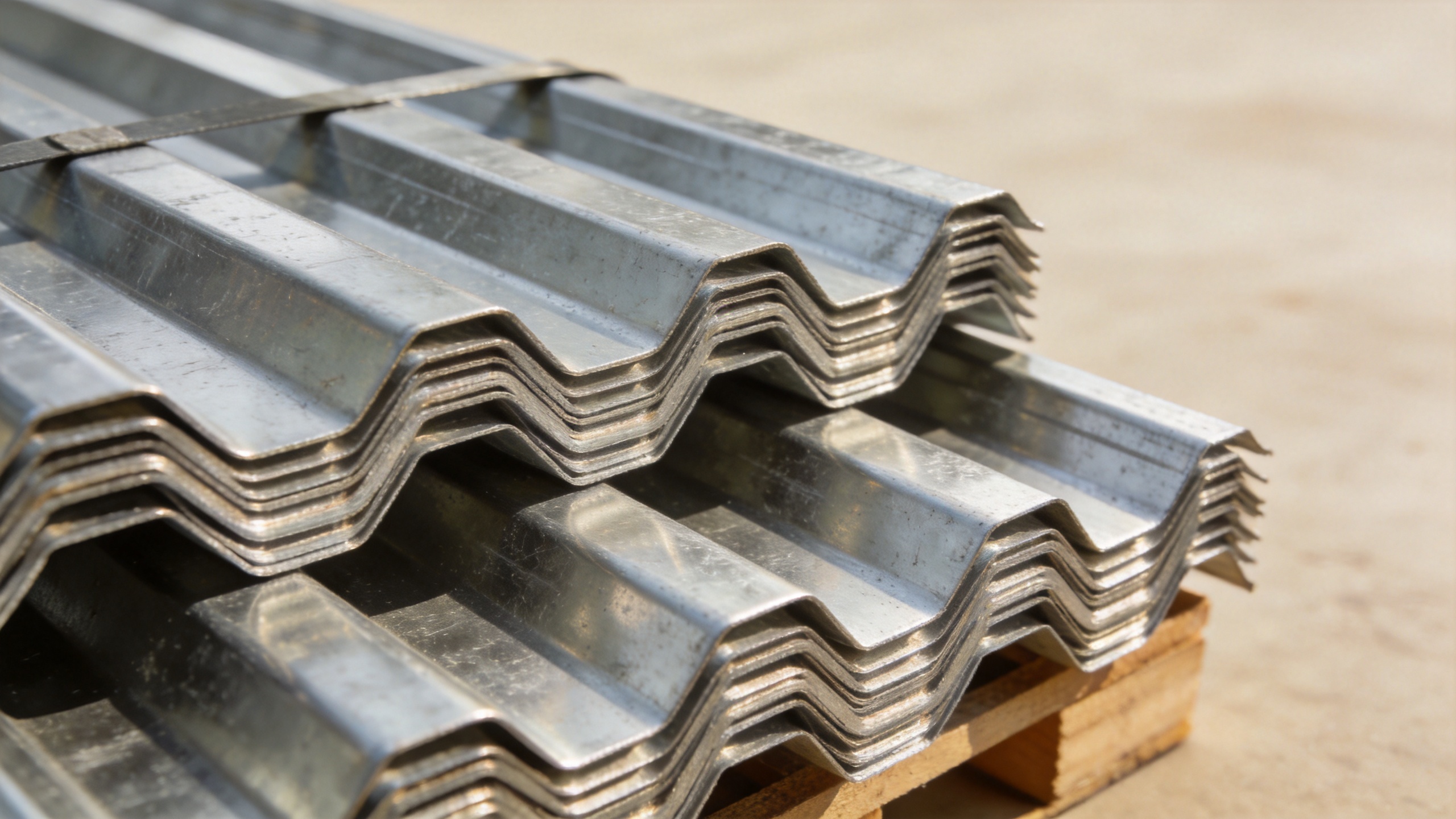
Note that gauge-to-mm conversions vary slightly depending on whether the measurement is taken before or after the zinc coating is applied. ASTM A653 specifies minimum base-metal thickness separately from total coated thickness, which is relevant when comparing bids from different suppliers.
GI Sheet Thickness Recommendations for Agricultural Buildings
Agricultural buildings cover a wide spectrum — from a simple open-sided storage shed to an enclosed poultry house with climate control or a large grain silo. Rather than starting with a gauge number and working backwards, the more reliable approach is to start with the application and structural requirements, then select the gi sheet thickness accordingly.
0.35–0.45 mm (Approximately 28–29 Gauge): Light-Duty Structures
This thickness range is appropriate for low-load applications: small open-sided shelters, temporary storage covers, shade structures for livestock, or secondary wall panels not exposed to significant wind pressure. Post-frame agricultural buildings in North America have traditionally used 29-gauge steel (average base-metal thickness 0.437 mm, minimum 0.361 mm per ASTM A653) as a cost-effective option where wind and snow loads are modest and the structure will be maintained regularly.
While this gauge handles light applications well, it is not the right choice for roofing on wider-span structures or buildings in high-humidity coastal environments without additional protective coatings. The risk of over-specifying for simple sheds is real — paying for 0.55 mm sheet when 0.40 mm is fully adequate adds unnecessary cost — but the opposite error on a building that needs to last 15–20 years is more damaging.
0.45–0.55 mm (Approximately 25–26 Gauge): Standard Agricultural Roofing and Cladding
For most roofed agricultural buildings — grain stores, poultry houses, equipment sheds, and covered livestock pens — a gi sheet thickness of 0.45 mm to 0.55 mm delivers the balance of structural performance, corrosion resistance, and cost that procurement managers and construction contractors typically require. The 26-gauge specification (approximately 0.45–0.50 mm) is widely cited as the industry standard for agricultural and residential metal roofing in North America, and similar profiles in the 0.47–0.55 mm range are used extensively across sub-Saharan Africa and South America.
At this thickness, corrugated and trapezoidal GI sheet panels can span reasonable purlin spacings (600–900 mm) without excessive deflection under normal roof live loads. Colour gi sheet in this thickness range is also available, where the prepainted surface adds UV resistance and further extends the coating service life — useful in high-UV tropical climates where bare galvanized surfaces weather more quickly.
0.55–0.80 mm (Approximately 22–24 Gauge): Heavy-Duty and Long-Span Agricultural Structures
Larger agricultural buildings — wide-span equipment halls, covered feed yards, multi-bay poultry complexes, or structures subject to significant snow accumulation — benefit from gi sheet in the 0.55–0.80 mm range. At 0.61 mm (24 gauge, ASTM A653), the sheet weighs approximately 4.79 kg/m², which increases the structural load but provides meaningfully greater stiffness and resistance to wind-driven uplift and hail impact.
GI coated sheet in this thickness bracket is often supplied as hot-dip galvanized corrugated roofing sheet with zinc coating weights of Z180 (180 g/m², or approximately 90 g/m² per side) or higher, which is recommended for buildings in coastal or high-humidity agricultural zones where zinc consumption rates are elevated. When specifying this thickness range, confirm whether the quoted price is for base-metal thickness or total coated thickness — the difference matters when comparing competing offers.
Component-by-Component Guidance
Roofing Panels
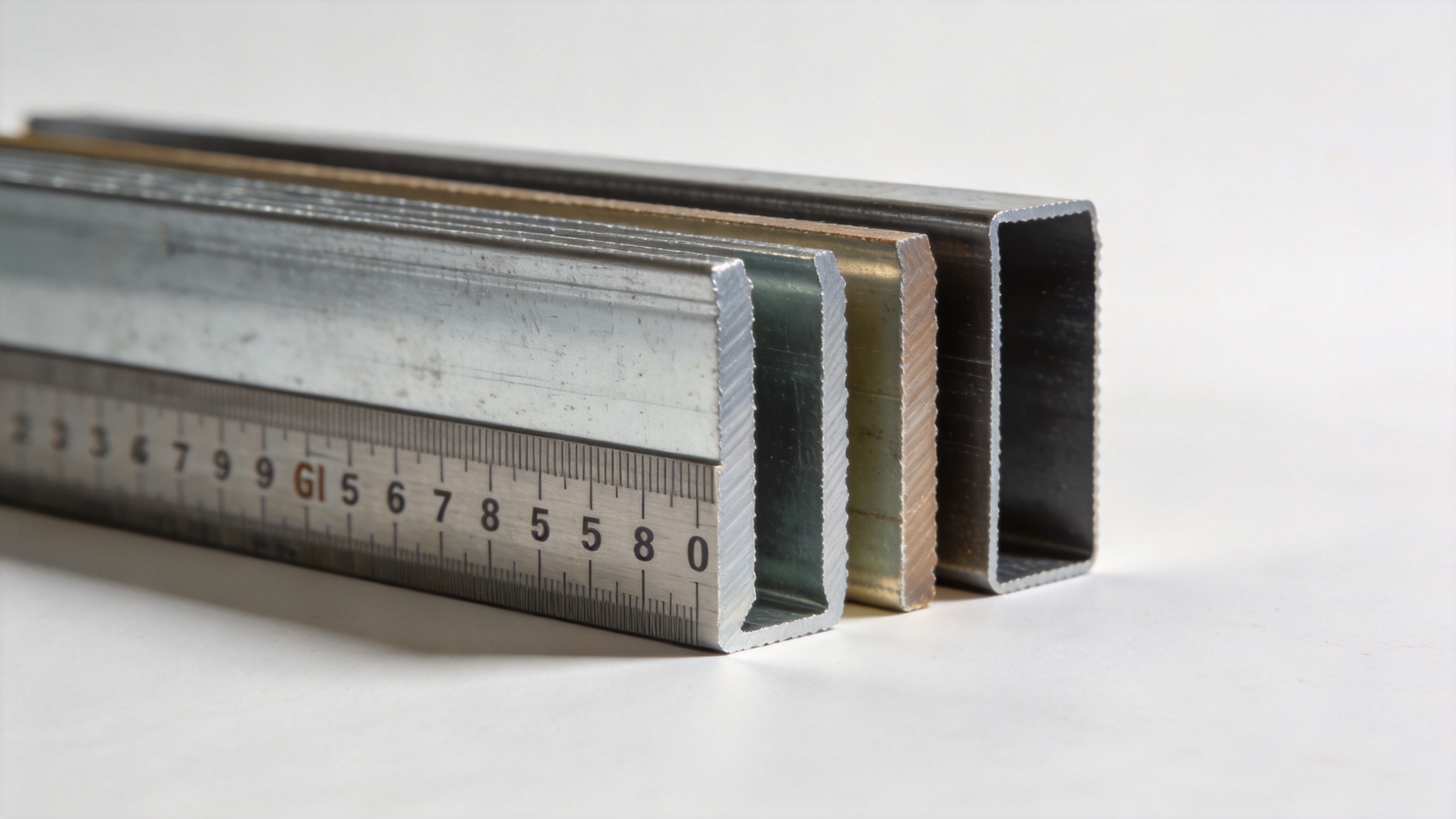
For most agricultural roofing applications, 0.45–0.55 mm gi sheet in corrugated or trapezoidal profiles covers the majority of use cases. In areas with heavy seasonal rainfall or hail, moving to 0.55–0.65 mm reduces the risk of deformation. Profile depth also affects structural performance — a deeper corrugation provides greater stiffness at the same nominal thickness.
Wall Cladding and Sidewalls
Wall panels in agricultural buildings are typically subjected to lower loads than roofing, so 0.35–0.50 mm gi sheet is frequently adequate for cladding purposes. Where animals or machinery will be in regular contact with the wall surface, 0.50–0.60 mm offers better impact resistance and is worth the modest cost premium. Colour gi sheet is often selected for sidewalls where aesthetics matter — for example, on visible frontages of commercial farm buildings or agri-industrial facilities.
Purlins and Secondary Framing
Cold-formed steel purlins and girts fabricated from GI coated sheet typically use thicker base material — 1.2 mm to 2.5 mm — than cladding panels. Structural calculations govern this selection more than general guidance, and a qualified structural engineer should sign off on purlin sizing for any permanent agricultural building.
Key Factors That Interact with Thickness Selection
- Zinc coating weight: Thickness and coating weight are separate specifications. A thin gi sheet with a high zinc coating weight (e.g., Z275 or Z350) may outperform a thicker sheet with lower coating weight in corrosive agricultural environments where ammonia from livestock operations accelerates zinc consumption.
- Span and purlin spacing: A thicker sheet allows wider purlin spacing, which can offset the higher material cost by reducing the number of structural members required.
- Profile geometry: Corrugated and trapezoidal profiles add rigidity. A 0.45 mm sheet in a deep trapezoidal profile can outperform a 0.55 mm flat sheet in terms of spanning capacity.
- Custom slit widths: Sourcing gi sheet with a custom slit width matched to your panel dimensions reduces on-site waste, which is particularly relevant on large-footprint agricultural buildings where material offcuts add up quickly.
Practical Takeaway for Agricultural Building Specifiers
If you are specifying gi sheet for a new agricultural building and need a starting point: 0.45–0.50 mm (26 gauge) for roofing and 0.40–0.50 mm for wall cladding covers most standard single-storey structures in moderate climates. Move to 0.55–0.65 mm for wide-span roofs, high-wind or snow-load zones, or buildings designed for a 20+ year service life without planned re-cladding. Colour gi sheet and gi coated sheet at these thicknesses are available in standard zinc coating grades (Z180, Z275) that meet ASTM A653, EN 10346, and JIS G3302 requirements.
Before placing an order, confirm the nominal thickness tolerance, the zinc coating weight per side, and whether the quoted specification is for base metal or total coated thickness. These three data points, alongside the mill test certificate, are what separate a reliable gi sheet procurement from one that causes problems after installation.