EN
EN

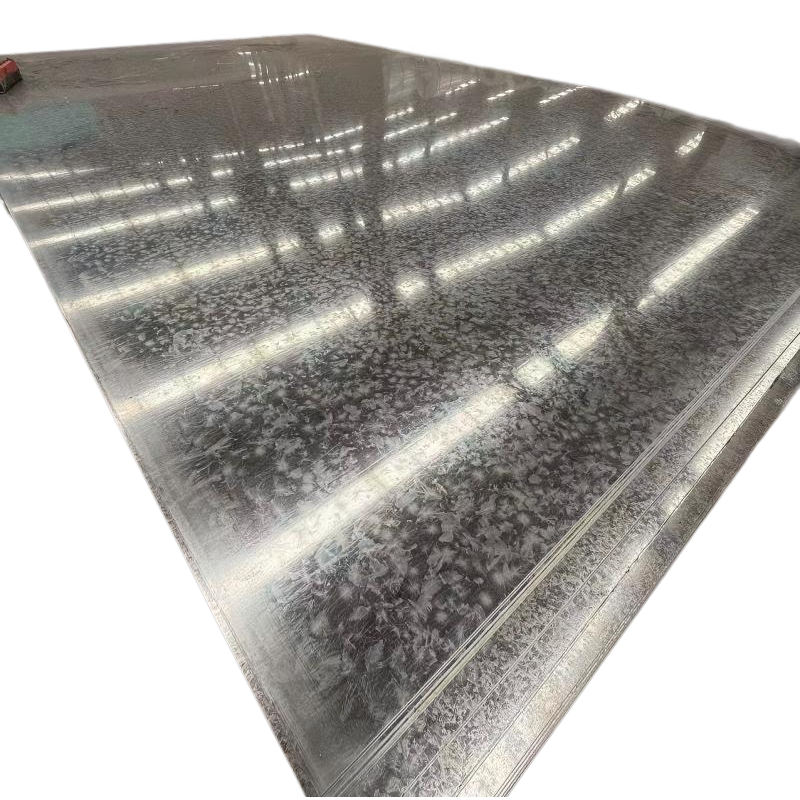
What Standards Should Qualified Galvanized Steel Coil Meet for Export
For procurement managers and importers sourcing galvanized steel coil from China, one of the most consequential questions isn't "what's the price?" — it's "does this material actually meet the standard I need for my market?" Over the years, we've found that buyers who run into quality disputes and customs clearance delays typically trace the problem back to the same root cause: the exporter and the buyer were operating against different standards without realizing it.
Qualified galvanized steel coil for export must satisfy specific dimensional tolerances, zinc coating weight requirements, mechanical property thresholds, and documentation protocols — all governed by the importing country's applicable standard. This article walks through the key benchmarks that a compliant product must hit, and what documentation you should require before accepting shipment.
Applicable International Standards by Export Market
The standard that governs a galvanized steel coil shipment depends entirely on the destination market. There is no single global specification; buyers in North America, Europe, and emerging markets in Africa or South America each operate against different systems.
ASTM A653: For the North American Market
In the United States and Canada, hot-dip galvanized steel sheet and coil is governed by ASTM A653/A653M. This standard defines coating designations using the G-series (G30, G60, G90, G115), where the number indicates ounces of zinc per square foot across both sides combined. G90, the most commonly exported grade for roofing and construction applications, specifies a minimum total coating of 0.90 oz/ft².
ASTM A653 also classifies base metal grades, including CS (Commercial Steel), FS (Forming Steel), DDS (Deep Drawing Steel), and HSLAS (High-Strength Low-Alloy Steel) — each with its own yield and tensile strength minimums. Provided the mill test report confirms the correct grade designation and coating weight, ASTM A653-compliant coils can clear US customs without issue.
EN 10346: For the European Market
For European buyers, the governing specification is EN 10346 (continuously hot-dip coated steel flat products). The zinc coating is expressed using the Z-designation system: Z60, Z100, Z140, Z180, Z275, Z350, and so on, where the number indicates grams of zinc per square meter across both sides combined. The standard also specifies base metal grades by formability: DX51D (commercial forming), DX52D (deep drawing), DX53D (special deep drawing), and structural grades S220GD through S550GD.
A critical compliance point for European exports is that EN 10346:2019 sets minimum coating mass requirements that differ by application. Z275 (equivalent to approximately G90 under ASTM) is the standard roofing and cladding grade, while Z350 and Z450 are specified for more aggressive corrosion environments.
GB/T 2518: China's Export Reference Standard
Chinese mills producing for export may issue mill test reports referencing GB/T 2518, China's national standard for continuous hot-dip zinc-coated steel sheet and strip. The coating designations under GB/T use a similar gram-per-square-meter basis as EN. Many international buyers accept GB/T 2518 compliance, particularly for shipments to Africa and Southeast Asia, provided the buyer's own national technical requirements don't explicitly mandate ASTM or EN certification.
JIS G3302: For the Japanese Market and Asia-Pacific
Buyers in Japan, South Korea, or markets where Japanese standards are referenced should verify compliance with JIS G3302. This standard uses an "F" suffix designation (e.g., F06, F08, F11, F14, F22) based on minimum coating weight in grams per square meter per side. The JIS F14 grade is broadly equivalent to Z275 in European terms.
Zinc Coating Weight: The First Compliance Gate
Coating weight is the most commonly verified parameter at port-of-entry inspections. The table below cross-references the major designation systems to help buyers confirm that a supplier's stated grade actually matches the specification required in their import market:
| ASTM A653 (oz/ft²) | EN 10346 Z-series (g/m²) | GB/T 2518 (g/m²) | Typical Application |
|---|---|---|---|
| G40 (0.40 oz/ft²) | Z120 | 120 | Indoor/low-humidity environments |
| G60 (0.60 oz/ft²) | Z180 | 180 | HVAC ductwork, light construction |
| G90 (0.90 oz/ft²) | Z275 | 275 | Roofing, cladding, general construction |
| G115 (1.15 oz/ft²) | Z350 | 350 | Coastal or high-humidity environments |
One common mistake we've observed among buyers sourcing for the first time: ordering "Z275 galvanized coil" from a supplier but receiving material where the mill test report references a GB/T equivalent without confirming the actual test measurement. Experienced purchasing managers stop asking "what is your grade?" and start asking "how do you control zinc coating weight consistency across batches, and can you show me the last three coil batch test records?"
Mechanical Property Requirements
Beyond coating weight, a qualified hot dipped galvanized steel coil must meet the mechanical property thresholds specified in the applicable standard. For CS (Commercial Steel) grade under ASTM A653, the typical requirement is a minimum yield strength of 230 MPa and minimum tensile strength of 270 MPa with elongation at fracture no less than 20%. Under EN 10346 for DX51D, the requirements are slightly different: no minimum yield strength is specified, but tensile strength must be between 270–500 MPa with a minimum elongation (A80) of 22%.
For structural applications, such as light gauge framing or purlin manufacture, buyers should explicitly request HSLAS grades (ASTM) or S-grade designations (EN), since standard commercial steel grades may not provide sufficient load-bearing capacity.
Documentation Required for Export Compliance
Meeting the technical standard is necessary, but not sufficient on its own. A shipment of galvanized steel coil cleared for export also requires a documentation package that satisfies the importer's customs authority and quality management protocols. The following documents are typically required:
- Mill Test Report (MTR / Material Certificate): Issued by the producing mill, confirming the heat/coil number, chemical composition, mechanical properties, and coating weight test results. The MTR must reference the applicable standard (e.g., ASTM A653, EN 10346, or GB/T 2518).
- Commercial Invoice and Packing List: Standard export documents that must accurately state the HS code, net and gross weight, coil dimensions, and coating specification.
- Certificate of Origin: Required for preferential tariff treatment in many markets. For Chinese-origin galvanized coil, this is typically issued by China Council for Promotion of International Trade (CCPIT) or local customs.
- Third-Party Pre-Shipment Inspection Report: For first-time importers or large-volume orders, pre-shipment inspection by SGS, Bureau Veritas (BV), or an equivalent body provides independent verification of coating weight, dimensional tolerance, and surface condition before the goods leave China.
Yuanhe Steel coordinates pre-shipment third-party quality inspections — buyers can request SGS or BV verification of coil thickness, coating weight, and surface quality before shipment departs. This is particularly important for buyers importing into markets where re-inspection at destination is costly or where customs authorities require pre-clearance documentation.
How to Assess a Supplier's Standard Compliance Capability
Not every supplier quoting compliance to ASTM or EN standards has equally strong process controls. Here are the verification checkpoints that experienced importers use before committing to a large order of hot dipped galvanized steel coils:
- Request the mill test report format in advance and check whether it matches the standard you need (ASTM vs EN vs GB/T).
- Ask whether coating weight is tested per-coil or per-heat; per-coil data provides stronger batch-level assurance.
- Confirm that the supplier can provide consecutive-batch MTRs, not just the most recent one — this exposes consistency issues over time.
- For regulated markets (EU anti-dumping environment, US Section 232 steel tariffs), ask whether the supplier has experience with customs compliance paperwork specific to your port of entry.
Provided the documentation package is complete and the MTR confirms the correct standard and coating grade, galvanized steel coil from China clears most markets without issue. The challenge is in systematically verifying these criteria before the goods are on the water, not after.
Summary: Export Qualification Checklist
A qualified galvanized steel coil for export should satisfy the following before shipment:
- Coating weight confirmed against the destination-market standard (ASTM A653, EN 10346, GB/T 2518, or JIS G3302)
- Mechanical properties verified by mill test report per the correct grade designation
- Complete documentation package: MTR, commercial invoice, packing list, and certificate of origin
- Third-party inspection recommended for first-time importers or high-value orders
- Supplier can provide consecutive-batch test records for coating consistency verification
If you're sourcing galvanized steel coil for export markets in North America, Africa, South America, or Europe and need to confirm that material from our facility meets your specific standard requirements, contact Leo Liu at Shenyang Yuanhe Steel Trading Co., Ltd. — we handle export documentation in-house and can coordinate SGS or BV pre-shipment inspection on request.