EN
EN

How to customize length size of precision cut GI coil finished sheets
2026/09/11
Learn how to specify precision cut GI coil sheets in custom lengths — tolerance selection, coating integrity, and ordering tips.
2026/07/21
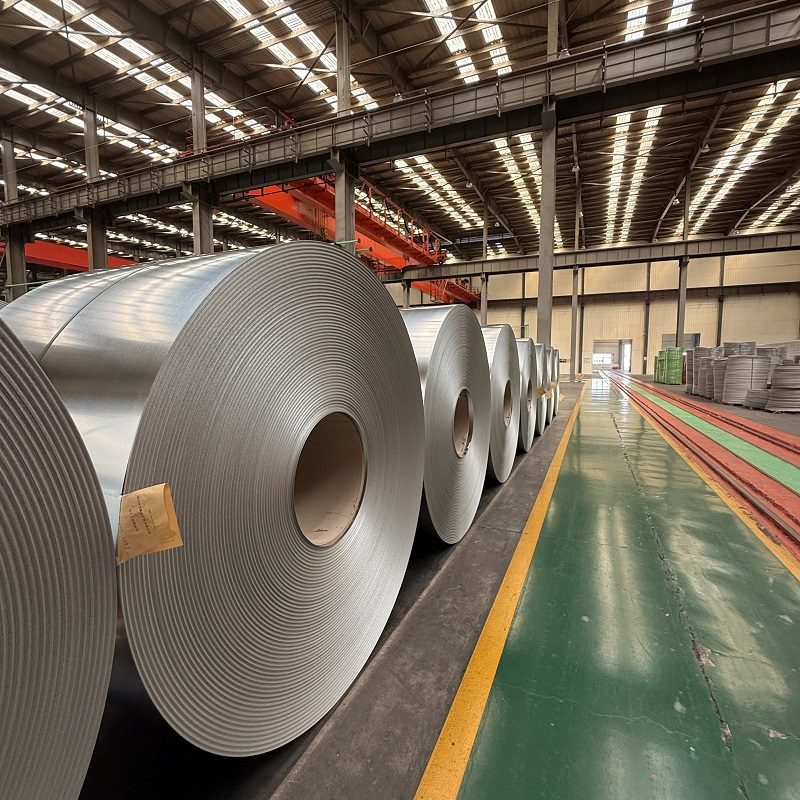
Galvanized steel coil, commonly referred to as GI coil, serves as one of the most versatile raw materials in modern metal processing. From construction components to automotive parts, GI coil feeds a wide range of production lines that transform flat-rolled galvanized steel into finished or semi-finished products. Heavy duty GI coil, characterized by thicker gauge and higher zinc coating weight, is specifically engineered for applications demanding structural integrity and extended corrosion resistance. Understanding which production lines consume heavy duty GI coil helps buyers specify the correct material grade, coating weight, and dimensional tolerance for their manufacturing operations. In our experience supplying GI coil to manufacturers across South American and Central Asian markets, material specification errors at the procurement stage are the leading cause of downstream production line stoppages and quality defects.
Heavy duty GI coil is generally distinguished from standard GI coil by its thickness and coating specifications. While standard GI coil covers thickness from 0.09 to 1.5 millimeters, heavy duty GI coil typically starts at 1.5 millimeters and extends to 3.0 millimeters or above. The zinc coating weight for heavy duty applications usually ranges from Z120 to Z275, conforming to ASTM A653, JIS G3302 SGCC, and DX51D+Z specifications. The higher coating weight provides the corrosion protection needed for structural and outdoor applications where the finished product is exposed to weathering without additional surface treatment. The substrate for heavy duty GI coil is produced through a cold-rolled based hot-dip galvanizing process, with skin pass treatment to ensure surface flatness and uniform spangle. These specifications make heavy duty GI coil suitable for production lines that require both formability and structural performance.
Roll forming is the most common production line consuming GI coil as raw material. These lines use a series of contoured rolls to progressively shape the flat coil into profiles such as corrugated roofing sheets, trapezoidal wall panels, C-section and Z-section purlins, and structural deck sections. Heavy duty GI coil with thickness above 1.5 millimeters is particularly suited for structural purlin and deck forming lines, where the finished profile must support significant load. The roll forming process requires GI coil with consistent thickness tolerance, typically plus or minus 0.02 millimeters, and flatness sufficient to prevent wave formation during feeding. Coil width must match the roll forming line tooling, with common widths including 1000, 1219, and 1250 millimeters. For heavy duty structural profiles, the yield strength of the GI coil substrate should meet a minimum of 250 megapascals to ensure the formed profile achieves its design load capacity.
ERW Pipe Welding Lines Using GI Coil as Feedstock
Electric Resistance Welded pipe production lines represent another major consumer of GI coil. These lines uncoil the galvanized steel, slit it to the required width, form it into a tubular shape through a series of forming rolls, and weld the seam using high-frequency electrical resistance. Heavy duty GI coil is essential for manufacturing structural pipes, scaffolding tubes, and fence posts where wall thickness exceeds 1.5 millimeters. The GI coil used for ERW pipe welding must have uniform edge quality after slitting, as irregular edges cause welding defects. The zinc coating must be evenly distributed to prevent coating buildup on the welding electrodes, which can cause arc instability. For pipe applications in corrosive environments, heavy duty GI coil with Z275 coating ensures that the finished pipe maintains adequate corrosion protection even after the welding process, which partially burns off the zinc coating at the weld seam.
Stamping and press lines use GI coil to produce appliance housings, automotive body panels, electrical enclosures, and hardware components. These lines require GI coil with excellent formability, meaning the substrate must have adequate elongation percentage and low yield-to-tensile ratio. Heavy duty GI coil is used for structural stampings such as vehicle chassis components and heavy equipment housings where impact resistance is critical. The galvanized coating on GI coil provides corrosion protection for the finished stamped part without requiring additional plating. However, the stamping die design must account for the zinc coating, as excessive die pressure can cause coating flaking. For deep drawing operations, the GI coil should have a coating weight appropriate to the drawing depth, with Z20 to Z120 sufficient for shallow draws and Z120 to Z275 for deeper draws where the coating must withstand greater surface deformation.
Before GI coil reaches the final manufacturing line, it often passes through cut-to-length and slitting lines that prepare the material in specific sheet sizes or narrower coil widths. These lines are critical in the supply chain, as they enable a single master coil of heavy duty GI coil to be divided into multiple widths and lengths for different end-use applications. The slitting process requires GI coil with clean, burr-free edges to prevent edge cracking in downstream forming operations. Cut-to-length lines demand flatness control to ensure the cut sheets meet the dimensional tolerance required by stamping and fabrication lines. A well-equipped processing facility with slitting, cutting, and flattening capabilities can significantly reduce lead times for buyers who require custom dimensions from standard heavy duty GI coil stock.
A structural pipe manufacturer in South America required heavy duty GI coil with 2.0 millimeter thickness, Z275 coating weight, and 1219 millimeter width for producing scaffolding tubes. The buyer initially sourced GI coil from a trading supplier that provided inconsistent thickness tolerance, causing frequent welding line stoppages due to seam misalignment. After switching to a direct supply of heavy duty GI coil with guaranteed thickness tolerance of plus or minus 0.02 millimeters and skin pass surface treatment, the manufacturer reduced welding line downtime by 18 percent and improved first-pass weld quality by 22 percent. This case illustrates how the dimensional and coating consistency of GI coil directly affects downstream production line efficiency. Suppliers such as Shenyang Yuanhe Steel, which maintains over 10,000 metric tons of standing GI coil inventory with thickness from 0.09 to 3.0 millimeters and coating weights from Z20 to Z275, can support manufacturers with material specifications tailored to their production line requirements. With in-house slitting, cutting, and flattening capabilities, and compliance with ASTM A653, JIS G3302 SGCC, and DX51D+Z standards, buyers can request custom dimensions and quality documentation before placing orders.
What thickness range qualifies as heavy duty GI coil?
Heavy duty GI coil typically refers to galvanized steel coil with thickness of 1.5 millimeters or above. Standard GI coil covers 0.09 to 1.5 millimeters, while heavy duty applications such as structural pipes and decking require 1.5 to 3.0 millimeters or thicker.
Which coating weight should I specify for outdoor structural GI coil applications?
For outdoor structural applications, Z120 is the minimum recommended coating weight. In corrosive or coastal environments, Z275 provides significantly longer service life. The coating weight should be specified based on the environmental exposure conditions and expected service life of the finished product.
Can the same GI coil be used for both roll forming and stamping lines?
Yes, but the specifications may differ. Roll forming lines typically require GI coil with consistent thickness and flatness, while stamping lines additionally require adequate elongation and formability. Consult your production line specifications and request mill test certificates to verify that the GI coil meets the mechanical property requirements for each application.
2026/09/11
Learn how to specify precision cut GI coil sheets in custom lengths — tolerance selection, coating integrity, and ordering tips.
2026/09/11
Learn why premium finish galvalume steel coil delivers better paint adhesion and visual consistency in finished building products. Request specs today.
2026/09/10
Learn why heavy coating galvalume steel coil provides superior corrosion resistance in harsh coastal settings and saves long-term maintenance costs.
2026/09/10
Learn how to test the bending performance of formable galvalume steel coil samples using T-bend testing to prevent cracking and scrap.
2026/09/10
Discover how multi specification galvalume steel coil simplifies purchasing, boosts productivity, and lowers costs for metal fabricators.
2026/09/10
Discover why hot dipped galvanized steel and hot dip galvanized checkered plate offer ideal corrosion resistance and strength for road guardrails.
Covering green transformation, product comparison, selection guide, and industry empowerment, helping you fully grasp the dynamics of the color steel industry.

Global climate action and Belt and Road cooperation are driving the color steel industry’s shift toward green, sustainable development.

Comparing PPGI and PPGL across performance, durability, and applications to help you select the optimal coated steel for your project.
A practical guide to selecting and applying color steel coils, ensuring optimal performance, durability, and cost-effectiveness for your projects.
Industry forum drives digital and green transformation, empowering steel sector development through innovation and collaboration.