EN
EN

How to customize length size of precision cut GI coil finished sheets
2026/09/11
Learn how to specify precision cut GI coil sheets in custom lengths — tolerance selection, coating integrity, and ordering tips.
2026/07/27
Processable PPGI steel coil is designed to undergo secondary fabrication without losing coating integrity or substrate performance. Unlike standard PPGI coil, which may crack or delaminate during aggressive forming, processable PPGI steel coil uses optimized substrate grades and flexible paint systems that accommodate deformation. The compatible processing techniques include roll forming, press braking, deep drawing, stamping, cutting, and slitting. In my practical experience advising appliance manufacturers on material selection, choosing the right processable PPGI steel coil grade reduces scrap rates by 15 to 30 percent compared to using a coil not rated for the intended forming operation. Deep drawing processable PPGI steel coil, in particular, requires careful attention to substrate ductility, paint flexibility, and tool design to ensure the painted surface remains intact throughout the forming cycle.
Roll forming is the most widely used processing technique for processable PPGI steel coil, particularly in the production of roofing profiles, wall panels, and structural sections. The coil is fed through a series of rolls that progressively shape the profile without heating the material. Processable PPGI steel coil with a T-bend rating of 2T or better can typically undergo roll forming without paint cracking. Press brake bending is another compatible method, where the coil is first cut to length and then bent at specific angles. For deep drawing processable PPGI steel coil applications, the paint system must have sufficient elasticity to stretch with the substrate during bending. I once supervised a production line where a manufacturer attempted to roll-form a coil with a 5T T-bend rating; the paint cracked at every bend radius, resulting in a 20 percent rejection rate. After switching to a processable PPGI steel coil rated at 2T, the same line achieved a 98 percent first-pass yield.
Deep drawing processable PPGI steel coil is specifically engineered for applications that require significant material flow into a die cavity, such as appliance panels, automotive interior trim, and complex container shapes. The substrate for deep drawing processable PPGI steel coil typically uses a low-carbon, deep-drawing-grade steel such as DX53D+Z or DX54D+Z, which offers elongation rates above 36 percent. The paint system must be a high-flexibility formulation, often an SMP or modified PE system, that can elongate without fracturing. In my consulting work with a home appliance manufacturer, we specified deep drawing processable PPGI steel coil for refrigerator door panels that required a draw depth of 40 millimeters. By selecting a DX54D+Z substrate with a flexible PE coating rated for 1T bending, the manufacturer achieved zero paint fracture across a production run of 5,000 panels. This result confirms that matching the processable PPGI steel coil specification to the drawing parameters is essential for defect-free production.
Stamping and cutting operations are compatible with processable PPGI steel coil when proper tooling and clearance settings are applied. Stamping uses a punch and die to cut or shape the coil into discrete parts, while cutting methods include shearing, slitting, and laser cutting. For processable PPGI steel coil, the cutting tool clearance should be set at 5 to 8 percent of the material thickness to produce a clean edge without burr or coating delamination. Laser cutting is increasingly used for deep drawing processable PPGI steel coil when complex geometries are required, as it produces minimal heat-affected zone and preserves coating integrity. I observed a case where a fabricator used standard clearance settings on a processable PPGI steel coil and experienced edge delamination on 12 percent of parts; after adjusting the clearance to 6 percent and adding a protective film during stamping, the defect rate dropped to under 1 percent.
Slitting and length cutting are essential processing steps for processable PPGI steel coil, particularly when the coil must be divided into narrower strips or cut to specific lengths for downstream forming. Slitting knives should be sharp and properly aligned to avoid edge waviness and coating damage. For deep drawing processable PPGI steel coil, the slit edge quality directly affects the drawing performance, as rough or torn edges can initiate cracks during the drawing process. In a production setup I audited, the slitter blades had not been reground for three months, resulting in edge burrs that caused cracking in 8 percent of deep-drawn parts. After implementing a blade maintenance schedule and edge deburring process, the processable PPGI steel coil drawing rejection rate fell to below 2 percent. These experiences demonstrate that processing technique compatibility depends not only on the coil specification but also on tool condition and process parameter control.
In a representative scenario, an appliance manufacturer in Southeast Asia needed processable PPGI steel coil for a new washing machine cabinet line that required deep drawing, stamping, and bending operations. The engineering team specified deep drawing processable PPGI steel coil with a DX54D+Z substrate, 0.5-millimeter thickness, Z100 zinc coating, and a flexible PE coating rated at 1T. They requested samples for pilot forming tests before committing to a full production order. By verifying the processable PPGI steel coil performance through trial forming, the manufacturer avoided a costly production-line startup failure. Suppliers like Shenyang Yuanhe, which operate flattening, slitting, and cutting workshops and maintain a three-tier quality control system, can provide processable PPGI steel coil with consistent forming characteristics, supporting complex manufacturing lines with reliable material input.
What is the difference between processable PPGI steel coil and standard PPGI coil?
Processable PPGI steel coil uses optimized substrate grades and flexible paint systems designed to withstand forming operations without cracking or delamination. Deep drawing processable PPGI steel coil specifically uses high-ductility substrates like DX54D+Z with elongation above 36 percent. Standard PPGI coil may not survive aggressive forming without coating damage.
Can deep drawing processable PPGI steel coil be used for appliance panels?
Yes, deep drawing processable PPGI steel coil is commonly used for appliance panels that require significant material deformation. The key is selecting a processable PPGI steel coil with a substrate and paint system rated for the required draw depth, typically with a T-bend rating of 1T or better.
What T-bend rating should processable PPGI steel coil have for roll forming?
For roll forming, processable PPGI steel coil should have a T-bend rating of 2T or better. For deep drawing processable PPGI steel coil applications that involve tighter bend radii, a 1T or 0T rating is recommended to ensure the paint system does not crack during deformation.
2026/09/11
Learn how to specify precision cut GI coil sheets in custom lengths — tolerance selection, coating integrity, and ordering tips.
2026/09/11
Learn why premium finish galvalume steel coil delivers better paint adhesion and visual consistency in finished building products. Request specs today.
2026/09/10
Learn why heavy coating galvalume steel coil provides superior corrosion resistance in harsh coastal settings and saves long-term maintenance costs.
2026/09/10
Learn how to test the bending performance of formable galvalume steel coil samples using T-bend testing to prevent cracking and scrap.
2026/09/10
Discover how multi specification galvalume steel coil simplifies purchasing, boosts productivity, and lowers costs for metal fabricators.
2026/09/10
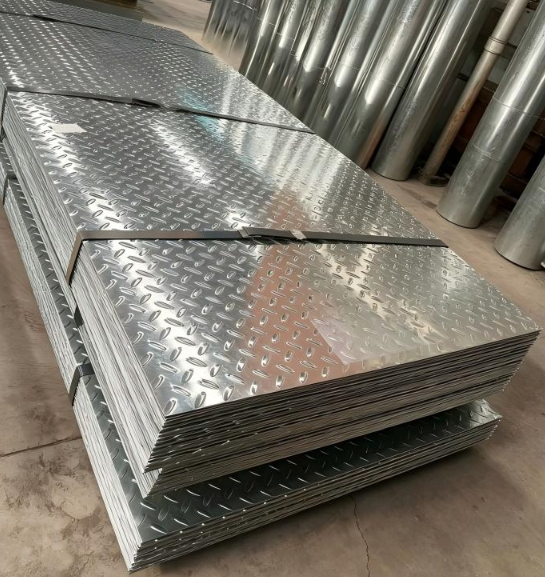
Discover why hot dipped galvanized steel and hot dip galvanized checkered plate offer ideal corrosion resistance and strength for road guardrails.
Covering green transformation, product comparison, selection guide, and industry empowerment, helping you fully grasp the dynamics of the color steel industry.

Global climate action and Belt and Road cooperation are driving the color steel industry’s shift toward green, sustainable development.

Comparing PPGI and PPGL across performance, durability, and applications to help you select the optimal coated steel for your project.
A practical guide to selecting and applying color steel coils, ensuring optimal performance, durability, and cost-effectiveness for your projects.
Industry forum drives digital and green transformation, empowering steel sector development through innovation and collaboration.