EN
EN

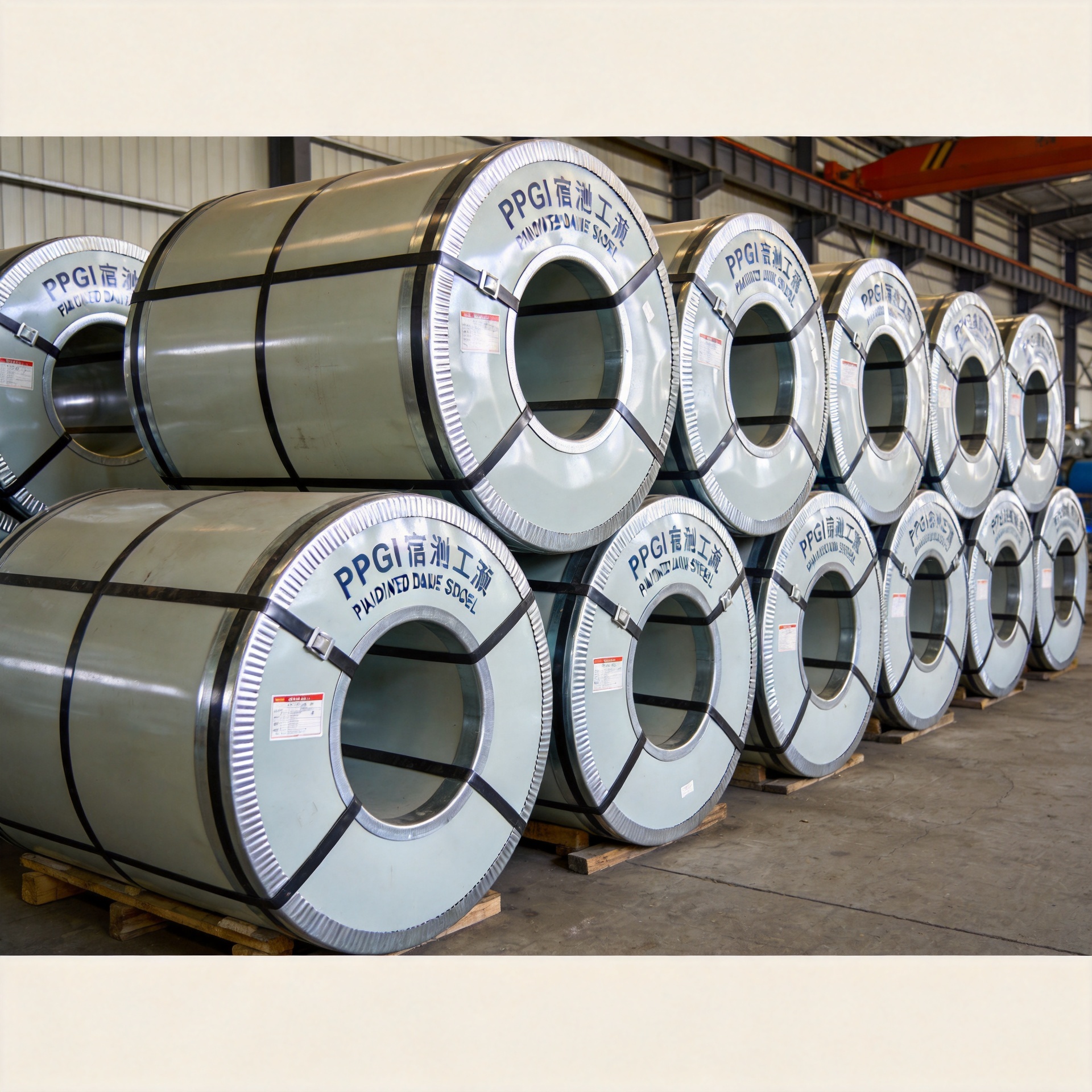
Storage Measures to Prevent PPGI Coating Chalking
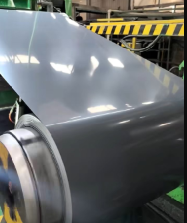
Anyone who has managed a warehouse full of prepainted steel coils knows that the real quality battle does not necessarily happen at the mill—it happens in the months between delivery and fabrication. PPGI (pre-painted galvanized iron) coils leave the production line with a carefully engineered organic coating system designed for years of reliable service, yet improper storage can trigger chalking before a single sheet ever reaches the roof. Understanding what drives this degradation and taking the right precautions during storage is one of those areas where experienced contractors gradually shift their thinking: they stop treating storage as a passive holding phase and start treating it as an active quality-preservation step.
What Is Chalking in PPGI Coatings?
Chalking is a surface degradation phenomenon in which the organic binder that holds pigment particles within the paint matrix breaks down, leaving loose, powder-like residue on the coating surface. On a standard PPGI coil, this manifests as a dull, faded appearance and a powdery white or gray film that rubs off when you run a gloved hand across the surface. While mild chalking is a normal long-term weathering outcome for exterior coatings after many years of field exposure, premature chalking in storage indicates that the coating has already started to fail—before installation.
The primary driver of chalking is UV radiation. Prolonged exposure to sunlight (or even indirect UV in open storage yards) breaks down the polymer binder in the paint film, causing pigment particles to decouple and surface. High humidity compounds the problem: moisture accelerates the oxidation of degraded binder fragments and can also trigger moisture-induced blistering and white rust beneath the paint layer. For a stable paint ppgi steel coil to perform as specified over a 15-to-25 year service life, the degradation clock should not be allowed to start ticking during storage.
Why Storage Conditions Matter More Than Many Buyers Expect
Being direct about a pattern that many procurement managers encounter only after their first chalking incident: standard PPGI coil packaging, while protective against physical damage and moisture ingress during transit, is not designed for indefinite open-yard storage. Coils shipped in seaworthy export packaging—strapped, wrapped, and labeled—arrive in good condition, but that packaging does not block UV radiation or regulate the micro-climate around the coil surface.
A walk along warehouse storage racks in a poorly managed yard often tells the story immediately. Coils stored near open loading doors or under translucent corrugated roofing show visibly duller surfaces than those stored deeper inside. The ones with moisture-absorbing desiccants still intact inside the inner ring tend to show better edge and end-face condition. These are not isolated observations—they reflect a consistent relationship between storage environment quality and coating performance outcome.
Key Storage Measures to Prevent PPGI Coating Chalking
1. Store Indoors in a Covered, UV-Protected Facility
The single most effective measure is keeping PPGI coils out of direct and indirect sunlight. An enclosed warehouse with opaque walls and roof eliminates the primary chalking driver entirely. If only semi-open sheds are available, position coils away from openings that allow direct sunlight penetration, and use UV-blocking tarpaulins or covers to shield exposed ends and surfaces. Avoid translucent or polycarbonate roofing materials directly above storage zones, as these transmit significant UV energy even when they block rain.
2. Maintain Temperature Within the 10°C–35°C Range
Extreme temperature fluctuations accelerate binder degradation and create condensation cycles that introduce moisture to the coil surface. Keep storage area temperatures between 10°C and 35°C where possible. In tropical climates where warehouse temperatures can exceed 40°C during the day, ensure adequate ventilation so heat does not accumulate around the coil stack. Conversely, in cold-climate storage, rapid temperature swings between cold nights and warm days are a common source of condensation on metallic surfaces.
3. Control Relative Humidity at or Below 70%
Humidity above 70% creates the conditions for moisture-related paint damage—blistering, delamination at cut edges, and accelerated chalking in already UV-stressed coating areas. Target a storage environment with relative humidity controlled to 40%–60% for optimal results, and maintain a hard upper limit of 70%. In high-humidity regions (tropical coastal areas or monsoon zones), this typically requires dehumidification equipment in enclosed warehouses. Silica gel desiccants placed inside packaging and refreshed regularly offer a supplementary layer of protection, particularly for coils stored in areas with variable seasonal humidity.
4. Maintain Original Packaging Until Ready for Processing
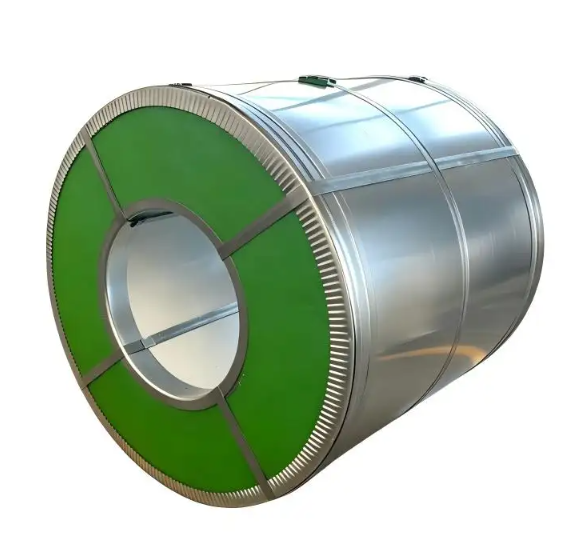
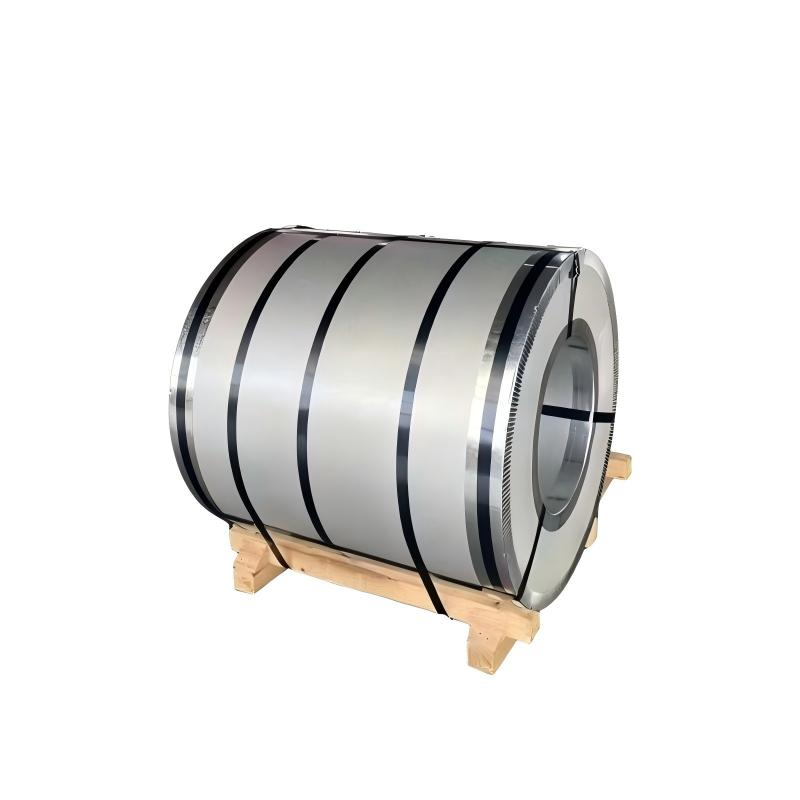
Manufacturers apply inner-ring packing, coil end caps, and moisture-barrier film to a standard PPGI coil for good reason: each layer addresses a specific vulnerability. Tearing or cutting into packaging to inspect the top coil layer and then re-wrapping incompletely is a common source of localized coating deterioration. Keep packaging intact until the coil is transferred to the roll-forming line or shearing station. If inspection is required before that point, perform it in a controlled indoor environment, document the coil condition, and reseal packaging immediately using the same film type or equivalent moisture-barrier material.
5. Stack Coils Correctly to Prevent Surface Contact and Deformation
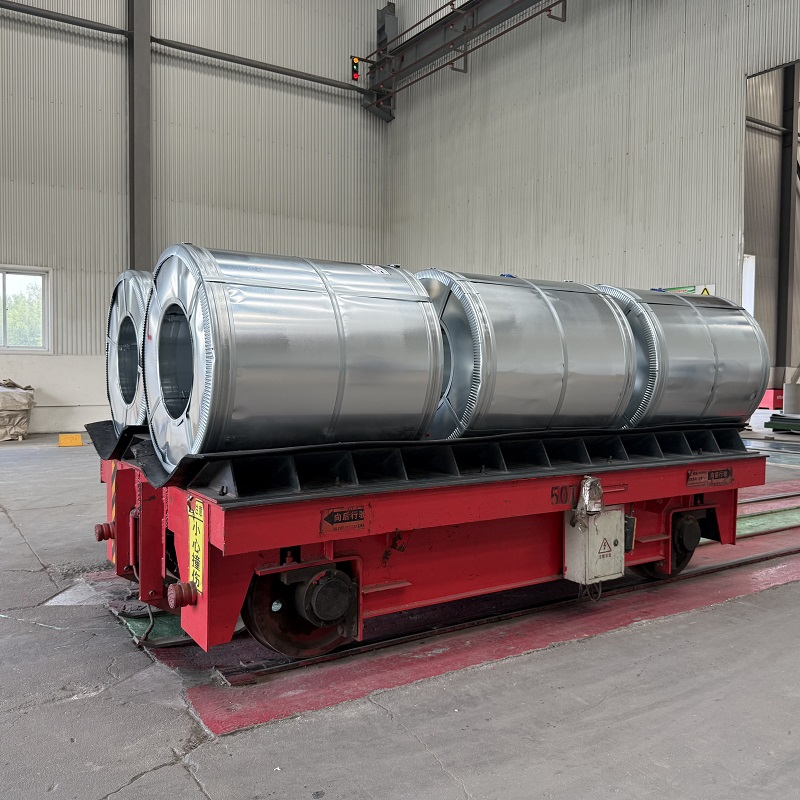
Improper stacking can trap moisture between coil surfaces and cause contact-pressure damage to the paint film. Store PPGI coils on dedicated coil saddles, V-shaped cradles, or flat wooden dunnage rated for the coil weight—not directly on concrete floors, which retain moisture and transmit it upward by capillary action. When vertical stacking is used, limit stack height according to the coil weight and inner diameter specifications to prevent coil distortion. Avoid stacking heavier coils on top of lighter or narrower ones without adequate cushioning between layers.
6. Protect Cut Edges and End Faces
Cut coil edges are the most vulnerable point on any PPGI product. The organic coating that protects the painted surface does not extend to slit or shear edges; these expose bare zinc and sometimes bare steel. When PPGI coils have been slit to narrower widths before storage, apply a zinc-rich touch-up primer to all cut edges within 24 hours. For coils awaiting longer-term storage after slitting, apply protective edge-sealing tape or a compatible edge primer designed for zinc-coated substrates. This measure is particularly important when stable paint ppgi steel coil products are destined for humid or coastal environments where edge rust can migrate under the paint film and trigger chalking propagation.
7. Conduct Periodic Visual Inspection During Storage
Long storage periods—anything beyond 3 to 6 months—warrant scheduled inspections of stored PPGI coils. Inspect for early signs of chalking (dull or powdery surface), white rust at exposed edges, condensation residue, and packaging integrity. Log inspection findings by coil lot and heat number. Early detection allows corrective action—repositioning to drier zones, resealing packaging, or prioritizing early-chalking lots for first-out processing—before the coating condition deteriorates to a point that affects finished product quality.
Selecting PPGI That Withstands Storage and End-Use Demands
Preventing chalking during storage also begins with selecting the right coating system for the intended environment and storage duration. PVDF (polyvinylidene fluoride) topcoats offer significantly higher UV and chalking resistance compared to standard polyester systems—if the application involves extended storage in sun-exposed warehouses or ultimate installation in high-UV environments, specifying PVDF over standard PE is a worthwhile investment. For buyers sourcing standard PPGI coil for roofing and cladding applications in tropical regions, confirming the coating weight (GSM), paint film thickness (microns), and topcoat resin type with the supplier before order placement gives you the technical baseline needed to match the product to both storage conditions and end-use performance requirements.
Conclusion
Chalking on PPGI coatings stored before installation is not inevitable—it is a manageable outcome tied directly to storage environment quality, packaging integrity, and handling discipline. Keeping PPGI coils in covered, UV-free, humidity-controlled warehouses, maintaining packaging until processing, protecting cut edges, and conducting scheduled inspections together form a storage protocol that preserves the coating system's intended service life. For buyers and project managers who have shifted from viewing storage as a passive waiting phase to treating it as an active quality-preservation responsibility, the payoff is straightforward: the coil that arrives on the roll-forming line performs the way the mill test certificate promised.