EN
EN

How to Achieve High Precision Cut PPGI Steel Coil for Automated Assembly Lines
When your roll-forming line or stamping press is calibrated to within fractions of a millimeter, the coil you feed into it cannot be treated as a secondary concern. Most buyers begin by asking their supplier what standard widths are available — or more precisely, they should begin by defining exactly what dimensional tolerance their automated assembly line requires, and then work backward to the coil specification. That shift in approach is where reliable precision cut PPGI steel coil sourcing actually begins.
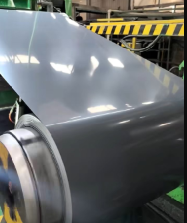
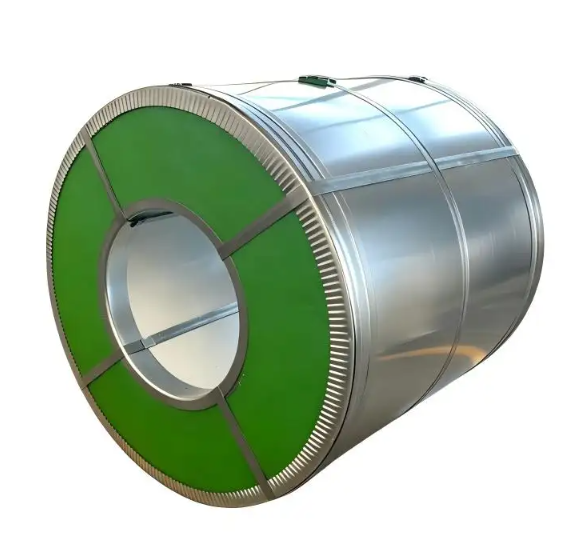
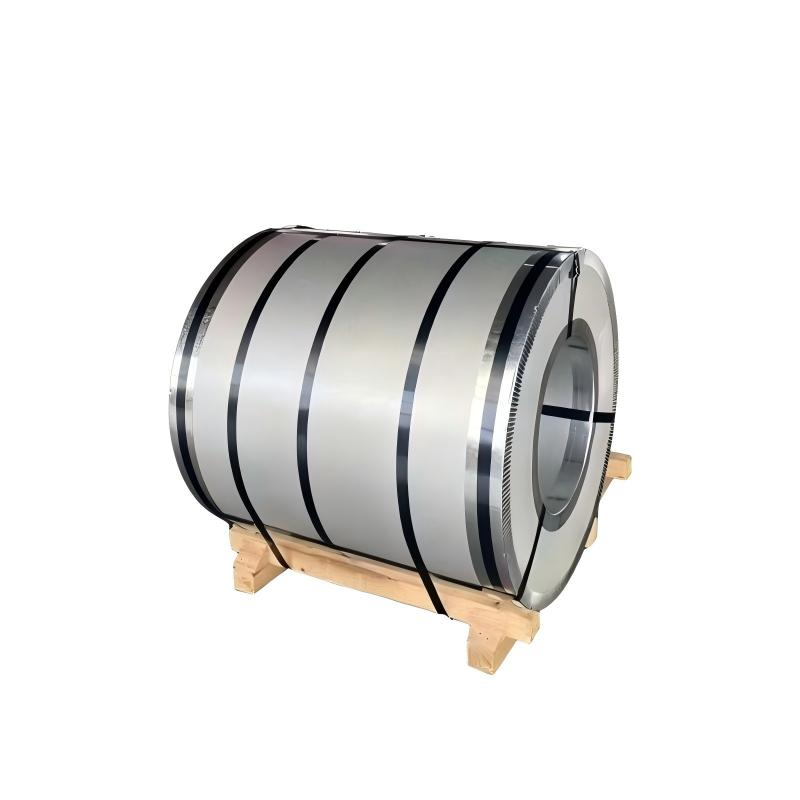
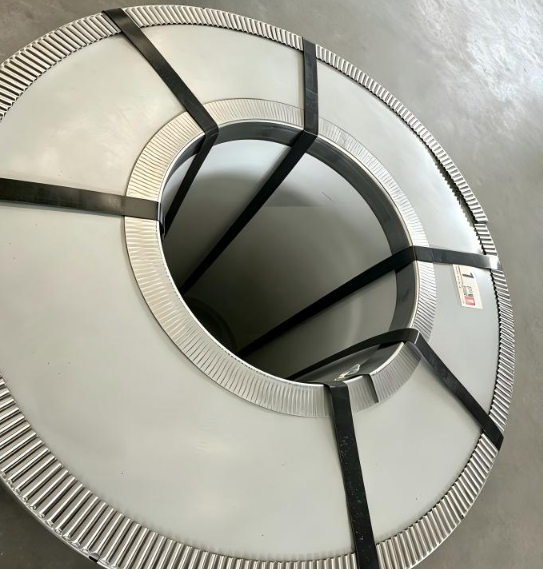
PPGI (Pre-Painted Galvanized Iron) coils are produced as continuous rolls with standard inner diameters of 508 mm or 610 mm, and width ranges typically from 600 mm up to 1,250 mm depending on the mill and paint line capacity. But for automated assembly — whether you are running a roofing panel line, a light-gauge steel framing system, or an appliance cladding operation — width deviation, edge burr height, and thickness consistency across the full coil are what separate usable material from production interruptions.
Why Standard Mill Widths Create Problems on Automated Lines
Experienced fabricators stop asking "what is your MOQ?" and start asking "how do you control width deviation across a full coil run?" That question goes to the heart of what precision cut PPGI steel coil actually means for automated assembly.
The two most common failure modes when running non-precision coil through automated equipment are both well-documented in the slitting industry:
- Width deviation and camber: Blade wear in the slitting process — or misaligned tooling — produces strips where the actual width varies by more than the equipment's feed tolerance. A leveling line configured for a nominal 200 mm strip cannot self-compensate for ±1.5 mm width variation without introducing alignment errors downstream.
- Thickness variation across the coil: Variations in base metal thickness — whether between coils in the same order or across a single coil — cause inconsistent forming results on roll-forming lines, leading to dimensional inaccuracies in finished panels or framing components. This is the kind of variance that shows up as scrap three shifts into a production run, not immediately on receipt.
Standard mill-width coil tolerances are not designed with automated assembly compatibility in mind. If your equipment is running at production speed, even ±0.3 mm of recurring width variation will force your team to stop and re-calibrate.
Key Specifications to Define Before Ordering
Rather than starting with a supplier's catalog, define your assembly line's dimensional requirements first, then communicate those as binding specifications. The parameters that matter for precision cut PPGI steel coil service include:
- Slit width tolerance: Industry-grade precision slitting services operate to ±0.127 mm (±0.005 inches) or tighter. Confirm your supplier's stated tolerance and verify whether it applies to the full coil or only to the first and last measurement point.
- Thickness tolerance: Specify the acceptable base metal thickness range — for example, ±0.02 mm for light-gauge framing applications. Request that the mill test report (MTR) includes per-coil thickness readings, not batch averages.
- Edge condition: Burr height after slitting should be specified in millimeters. For automated feeding systems, burr-free or low-burr edges reduce jamming risk and protect guide rollers. Clean edge precision cut PPGI steel coil is not a marketing term — it is a measurable output of controlled slitting tooling and maintenance schedules.
- Coil OD/ID and weight range: Coil weight and inner/outer diameter variability can cause compatibility issues with slitting, leveling, and roll-forming machinery calibrated for specific coil dimensions. Specify acceptable OD, ID, and maximum coil weight based on your decoiler's rated capacity.
- Coating weight and paint adhesion: For PPGI running through roll-forming or stamping, coating delamination at the bend zone is a failure that becomes visible after installation, not during fabrication. Specify minimum coating weight (for example, Z100 or Z120 for the zinc base) and require documented paint adhesion test results.
How Supplier Slitting Capability Affects Your Output Quality
Not all slitting lines are equivalent, and the gap between a standard trading company's processing capability and a specialist precision cut PPGI steel coil service matters when you are feeding material into automated equipment.
Provided the supplier's slitting equipment is maintained and calibrated to the required tolerance, and provided the base coil from the mill meets your specified thickness range, high accuracy precision cut PPGI steel coil can be delivered with width deviation of ±0.1 mm to ±0.2 mm depending on strip width and material thickness. That qualification matters: slitting tolerance is a joint function of equipment condition and incoming coil quality — a supplier who does not control incoming coil quality cannot reliably deliver precision output.
When evaluating a precision cut PPGI steel coil supplier, ask for:
- Mill test reports (MTRs) tied to specific coil heat numbers — not generic batch certificates — so you can trace any dimensional issue back to its origin.
- Third-party pre-shipment inspection reports (SGS, BV, or equivalent) confirming coil thickness, coating weight, and dimensional compliance before the material leaves China.
- Slitting tolerance documentation specifying whether stated tolerances are based on nominal width or absolute width limits.
Matching PPGI Specifications to Your Assembly Line Requirements
The right PPGI specification for an automated assembly line is not necessarily the highest coating weight or the thinnest base metal. It is the specification that your equipment can process consistently and that your finished component requires structurally.
For PPGI coil used in roofing panel lines, typical specifications include base metal thickness of 0.3 mm to 0.6 mm, slit widths matched to your roll-former's forming width (often in the 200–900 mm range), and a polyester or SMP paint system with minimum 20 micron top coat thickness. For light-gauge framing, the base metal grade (commonly DX51D or equivalent) and yield strength range matter as much as the width tolerance.
Yuanhe offers custom-slit coil widths and customer-specified coating weights for PPGI coils, which means downstream fabricators can order material dimensioned to their line requirements rather than cutting from standard mill widths and absorbing the waste. That matters for material utilization, and it matters for automated assembly line uptime.
For buyers running multiple product formats on the same line — for example, switching between roofing panel widths or framing stud dimensions — having a supplier who can process custom slit widths against a confirmed order removes the in-house slitting step and the dimensional variability it introduces.
What to Ask Your Supplier Before Placing a Precision Cut Order
A useful shortlist for qualifying a precision cut PPGI steel coil service before committing to a production-volume order:
- What is your stated slit width tolerance, and is it verified on a per-coil or per-batch basis?
- Can you provide MTRs with per-coil thickness readings (not batch averages)?
- What is your process for managing slitting blade condition — how frequently are blades changed or inspected?
- Do you offer third-party pre-shipment inspection for dimensional compliance?
- What is your capacity for custom slit widths below 300 mm?
Answers to these questions will differentiate a supplier set up for precision cut PPGI steel coil service from one that is repositioning standard coil trading as precision processing.
If your automated assembly line has specific dimensional requirements for PPGI coil — width, thickness, edge condition, coating weight, or OD/ID — share your specification sheet when requesting a quote. Yuanhe's team can confirm compatibility with your assembly line requirements and provide MTR documentation for verification before shipment. Contact Leo Liu at [email protected] or call +86-18642064006 to discuss your precision cut order requirements.