EN
EN

What Production Capabilities Should a Professional PPGI Steel Coil Factory Have for Global Export
Experienced purchasing managers stop asking "what is your MOQ?" and start asking "how do you control zinc coating weight consistency across production batches?" That shift marks the difference between a qualified PPGI steel coil factory and a supplier that trades under a factory label. For buyers sourcing prepainted galvanized steel coils for North American, African, European, or South American projects, examining a factory's production capabilities is the most important qualification step there is.
Below are the five core production capabilities an export-ready PPGI steel coil factory should be able to demonstrate — not as a box-ticking exercise, but as a framework for understanding why each one shapes the quality and reliability of every coil that reaches your job site.
1. A Continuous Color Coating Line Built for Consistency
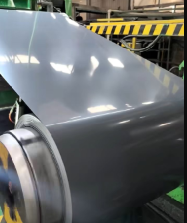
The foundation of any credible color coated steel manufacturer is a continuous color coating line. This passes base steel through cleaning, chemical treatment, primer application, topcoat application, and curing ovens in a fixed sequence. The word "continuous" matters here — batch-applied coatings cannot achieve the surface uniformity that high-volume export buyers need.
Provided the coating line runs automated air-knife control and real-time coating weight monitoring, zinc coating weights can be held reliably within the Z40 to Z275 g/m² range. Paint topcoat dry film thickness typically comes in at 15 to 25 microns for standard polyester systems, with PVDF systems requiring tighter oven temperature control to reach the 25-micron-plus range suited to high-UV environments in Africa and South America. Any factory that cannot document its oven temperature profiles and per-run coating weight records is not export-ready in any meaningful sense.
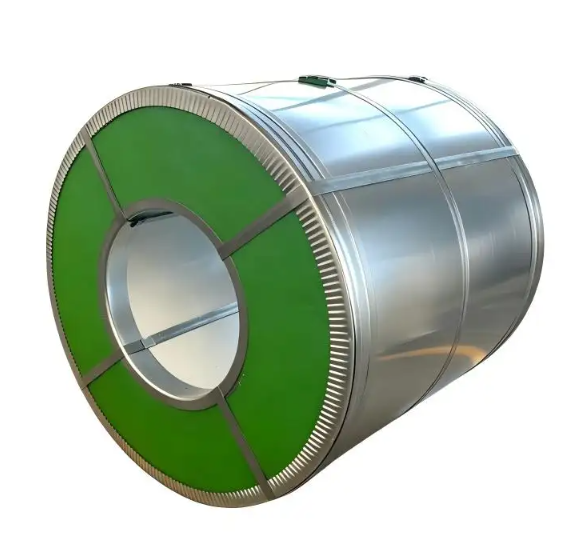
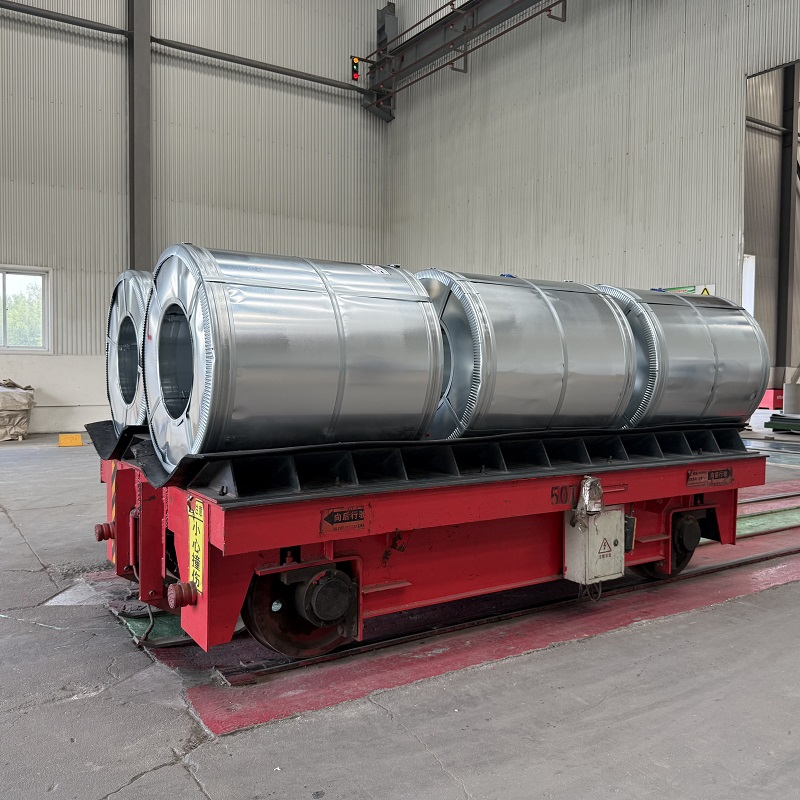
The professional coil coating line should handle base metal thicknesses from 0.10 mm to 3.00 mm and widths from 600 mm to 1,250 mm at minimum, with coil weights running 3 to 5 MT per coil. Those numbers determine whether a factory can cover the range of roofing, cladding, and fabrication applications global buyers bring to the table. Learn more about our PPGI coil product range and available specifications.
2. Multi-Standard Compliance and Certification
An iso certified metal factory designation carries weight, but it is not a complete qualification on its own. For global export, a PPGI steel coil factory should be able to produce and certify material against at least two international standards: ASTM A755 for the US market, EN 10169 for Europe, JIS G3312 for Japan-specified projects, and GB/T 12754 as the Chinese domestic reference. Buyers sourcing across multiple markets at once cannot afford a supplier that only works to one standard.
ISO 9001:2015 quality management certification sets the process backbone — document control, corrective action procedures, calibration records, and audit trails. ISO 14001 environmental management has become relevant to European and North American buyers who face sustainability reporting requirements. Both should be current and issued by an accredited third-party registrar, not self-declared.
It took several premature paint delamination incidents before many buyers recognized that PPGI coating performance depends on the quality of the cold-rolled substrate and the process controls applied during coating — not just the certificate on the wall. Before placing any order, ask a prospective factory for a sample mill test report (MTR). An export-oriented factory will have these available without delay for any recent production run.
3. In-Process Quality Control Equipment
A production line is only as dependable as the quality control infrastructure alongside it. A professional PPGI steel coil factory should run coating weight testing — typically X-ray fluorescence (XRF) or coulometric stripping instruments — at intervals through the line to confirm that zinc coating mass meets specification on every coil, not just the first one off a shift.
Color measurement using spectrophotometers is equally critical for prepainted gi steel coil output. Batch-to-batch color consistency, measured in delta-E (ΔE) values, determines whether coils from different shipments can go up side-by-side on a building facade without visible color drift. Construction projects across Africa and South America regularly need consistent color across deliveries separated by three to six months — a factory running without spectrophotometric controls cannot reliably deliver that.
Other in-line QC capabilities that indicate a mature production operation: T-bend and cupping tests for paint adhesion and formability, pencil hardness testing for topcoat scratch resistance, and salt spray chamber testing for corrosion certification. Some of these run at batch level rather than per coil, but a factory that cannot produce test records on request has a documentation gap that shows up during project specification reviews.
4. Export-Oriented Processing and Packing Infrastructure
A factory's production capabilities don't stop at the coating line. An export-ready PPGI steel coil factory needs downstream infrastructure to get coils to ports in a condition that survives long-haul sea freight to Africa, the Americas, or Europe. This includes slitting lines for narrow-width production, cut-to-length capacity for sheet buyers, and packing workflows built for ocean shipping rather than domestic truck delivery.
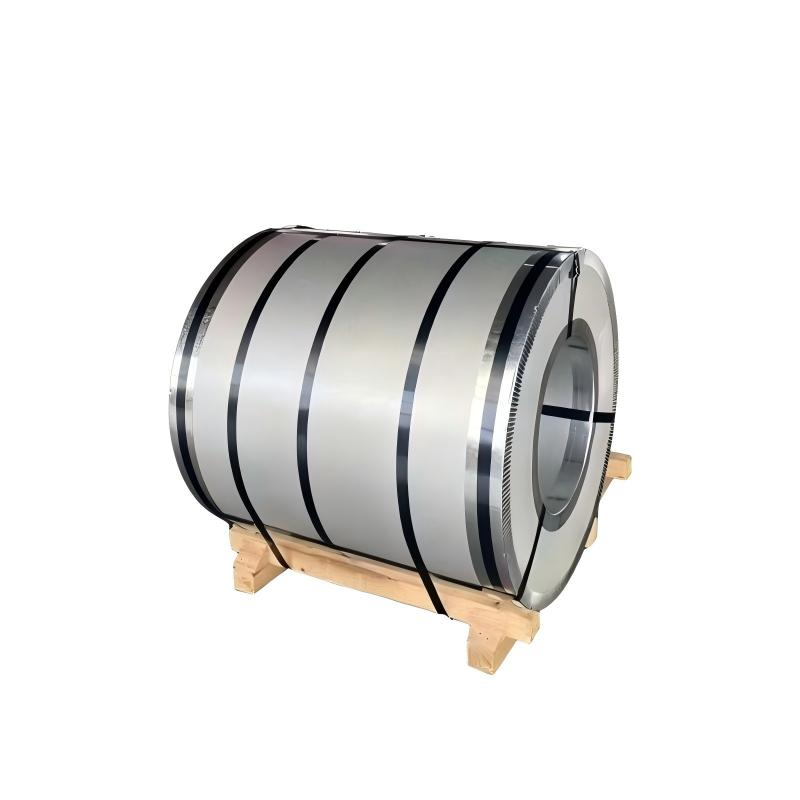
Sea freight packing for coated steel coils requires moisture-resistant wrapping with inner and outer kraft paper, silica gel desiccant placement, wooden pallet or saddle support, and steel banding at set intervals. A factory accustomed to domestic delivery cannot simply repurpose that packing practice for a 45-day tropical route to West Africa or South America. Transit moisture damage is among the most common sources of quality claims on arrival — and almost entirely preventable when the factory has real export packing procedures in place.
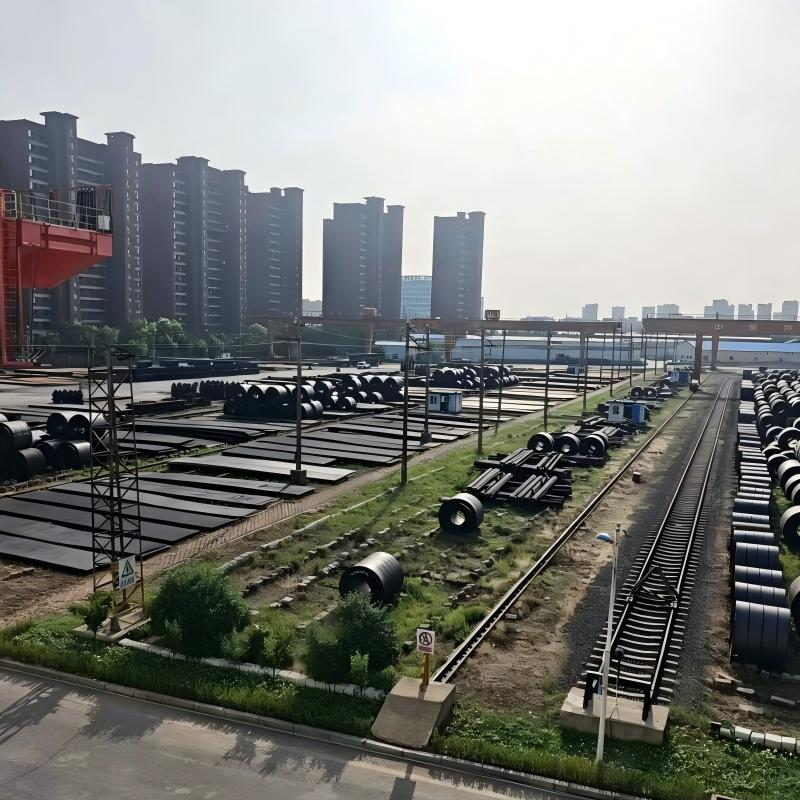
Factory location also matters. Suppliers in northeast China, particularly near Shenyang, have reasonable access to Dalian port — one of the country's larger bulk cargo terminals — which cuts inland freight time and cost compared to routing coils from eastern or southern China through Tianjin or Shanghai. For buyers doing total delivered cost comparisons, that difference is worth putting into the calculation. Explore our GI coil products and export capabilities for reference on what an export-ready supplier arrangement looks like.
5. Documentation and Pre-Shipment Verification Capability
Everything above only delivers value if it can be documented and independently verified. For global export, buyers should require that a factory is able to coordinate pre-shipment third-party inspection through SGS, Bureau Veritas, or Intertek. A factory that refuses third-party inspection access — for any reason — is not export-ready, regardless of what the website says.
Documentation requirements include: mill test reports tied to specific coil heat numbers, packing lists with actual measured coil weights, certificates of origin from authorized issuing bodies, commercial invoices in USD with itemized product specifications, and bills of lading coordinated with the freight forwarder. Buyers in North America or Europe will often need RoHS compliance declarations and origin traceability documentation on top of these.
Not every ISO-certified factory has built the export documentation workflows that large-volume international buyers need. Import/export buyers consistently report that a complete and accurate documentation package matters as much as the product itself — clearance delays from incomplete paperwork translate into real project timeline costs that rarely get reimbursed.
What This Means for Your Supplier Evaluation
Qualifying a PPGI steel coil factory for global export is not a single-point check. The production line configuration, certification scope, QC infrastructure, export packing workflows, and documentation capability need to work as a system. A gap in any of these areas tends to surface eventually — as a product quality issue, a logistics problem, or a compliance dispute.
For buyers in North America, Africa, South America, and Europe, a supplier that has built all five into standard operations is the baseline for a reliable procurement relationship. Not a premium. The minimum.