EN
EN

Optimal Storage Humidity Range for Finished Galvanized Steel Coil
Once the zinc coating leaves the mill intact, how long it stays that way depends on conditions in transit and storage — not on the coating specification itself. Procurement teams routinely spend considerable attention on coating weight when sourcing galvanized steel coil, but the variable that causes the most preventable damage between delivery and installation is relative humidity. A few weeks in a poorly controlled warehouse can consume months of coating service life before the material ever reaches a project site.
What Is the Optimal Humidity Range for Storing Galvanized Steel Coil?
For finished galvanized steel coil, relative humidity (RH) should stay consistently below 60%. In tropical or coastal environments where coils may sit in storage for extended periods, a tighter operating range of 40% to 50% RH is more appropriate. Cargo handling guidelines for steel sheet in coils specify an RH ceiling of 40–50%, which reflects how conservatively practitioners treat this material in high-risk climates. The 60% figure is a practical upper limit, not a target.
When humidity rises above 60% for sustained periods and moisture becomes trapped between coil wraps in a low-airflow environment, white rust formation becomes likely. White rust — also called wet storage stain — is a deposit of zinc oxide and zinc hydroxide on the coil surface. It does not immediately compromise the base steel, but it means the protective zinc layer is being consumed ahead of schedule, reducing what remains before the coil goes into service.
Why Zinc Coating Is Particularly Sensitive to Moisture
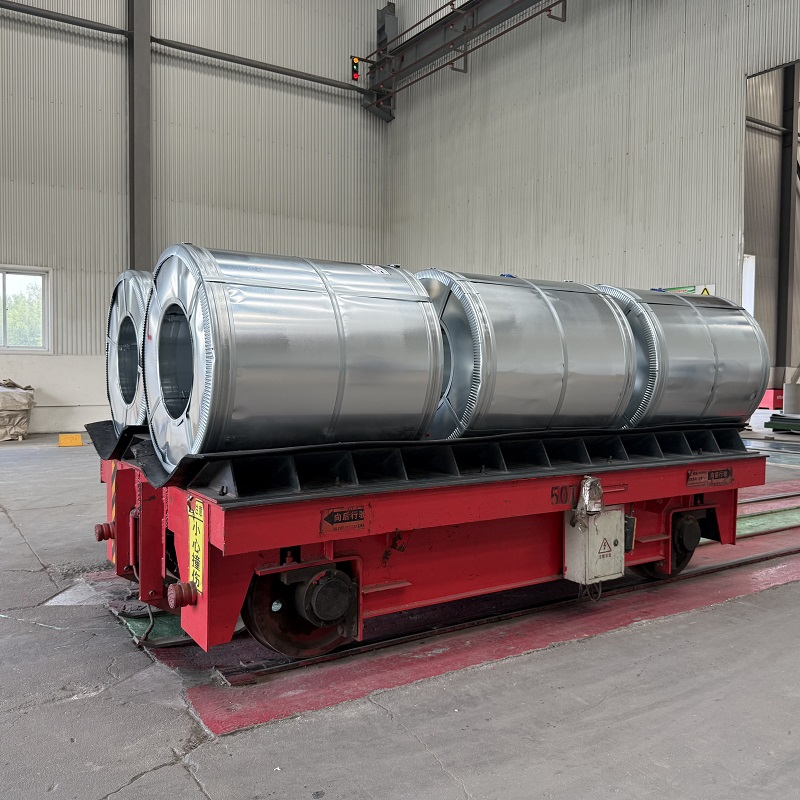
Hot-dip galvanizing produces a metallurgically bonded zinc layer that, under normal open-air conditions, gradually converts to a stable zinc carbonate patina. That patina forms the long-term protective barrier. In storage, however, the open-air equilibrium is absent. Tightly wound and wrapped galvanized steel coil cannot exchange carbon dioxide with the atmosphere, so any moisture condensing on the surface reacts in an oxygen-limited environment and forms porous zinc oxide rather than the protective patina.
Warehouse operators often assume that sealed protective wrapping handles the moisture problem. That holds true only when the wrapping is applied to completely dry coil and the packaging material stays intact through the storage period. Temperature swings, handling punctures, or gradual packaging degradation can allow condensation to form inside the wrap — putting coils at the same risk as unprotected stock, even in a warehouse that looks climate-controlled on paper.
Storage Conditions That Work Together With Humidity Control
Humidity is rarely the only factor. The following conditions interact directly with RH levels to determine how coils hold up in storage:
- Temperature consistency: Moving coils from a cold environment into a warmer warehouse causes condensation on the cold metal surface. Allowing coils to sit undisturbed for a period before unwrapping gives the temperature time to equalize and eliminates this condensation source.
- Ventilation: Airflow through the storage area prevents humidity from pooling around stacked coils. A ventilated warehouse at 55% RH will generally preserve coils better than a sealed space at 50% RH with no air movement.
- Coil positioning: Placing coils directly on concrete floors exposes outer wraps to ground moisture and blocks air circulation beneath the coil body. Wooden dunnage, steel racks, or purpose-built coil cradles address both issues.
- Packaging inspection on arrival: Outer wrapping should be checked for damage, tears, or moisture ingress before coils go into storage. Any coil with compromised packaging in a high-humidity facility should be prioritized for early use or repackaged.
Practical Steps for Humidity Management in Your Facility
Reliable humidity control in most warehouse environments does not require a purpose-built climate chamber. For standard storage in temperate climates, these steps are generally sufficient:
- Monitor daily. Install hygrometers at multiple points — near floor level and in corners where air circulation is weakest. Daily readings allow early action before conditions cross the 60% threshold.
- Use dehumidifiers in high-risk zones. In coastal markets, tropical climates, or during rainy seasons, ventilation alone will not maintain safe RH levels. Industrial dehumidification units sized for the storage volume are the most reliable solution.
- Allow acclimatization after transit. When receiving galvanized steel coil that has traveled through significant temperature changes — particularly on long ocean voyages to Africa or South America — leave coils wrapped and undisturbed in the covered facility for 24 to 48 hours. This lets the metal temperature adjust before the packaging is opened.
- Rotate inventory on a first-in, first-out basis. Systematic rotation prevents coils from accumulating storage time beyond what the facility's humidity control can reliably support.
How Yuanhe Prepares GI Coil for Long-Haul Transit and Storage
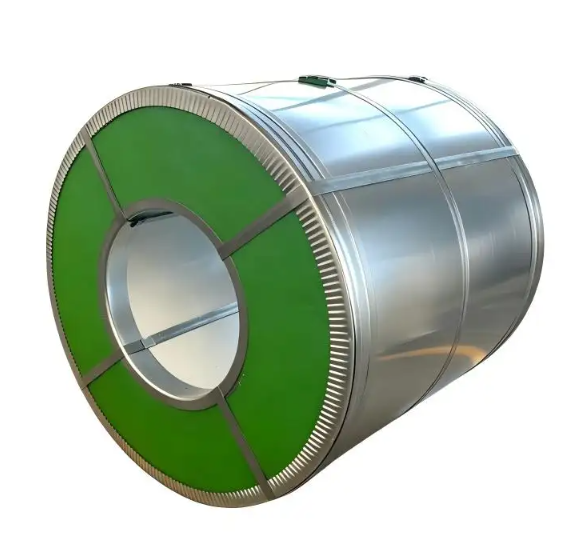
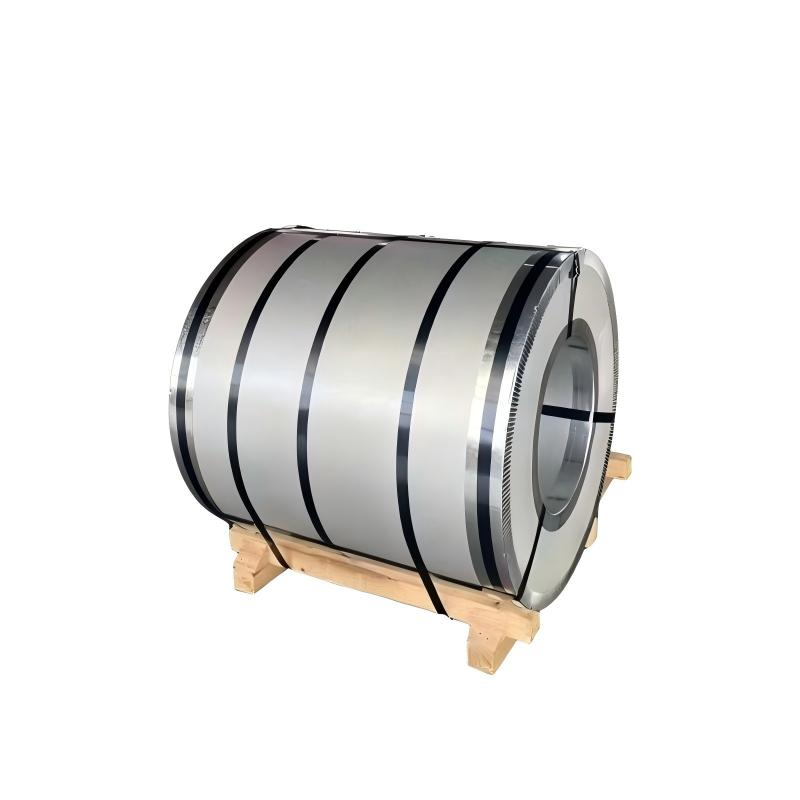
At Shenyang Yuanhe Steel Trading Co., Ltd., finished galvanized steel coil is packed with moisture-resistant inner wrapping and outer kraft paper reinforced with steel banding, configured for sea freight to tropical and humid markets in Africa, South America, and Southeast Asia. The packaging is designed to maintain integrity through the full transit duration, reducing condensation-induced white rust risk on arrival.
For buyers with urgent timelines, Yuanhe holds ample stock GI coil inventory across commonly specified widths and coating weights, which cuts lead times without changing the packaging standard. Stock PPGI steel coil in standard specifications is also available for buyers sourcing color-coated material ready to ship.
Third-party pre-shipment inspection is available on request, covering coating weight verification and packaging condition checks before goods leave China. Mill test reports accompany every shipment, providing the incoming quality documentation buyers need at the receiving end.