EN
EN

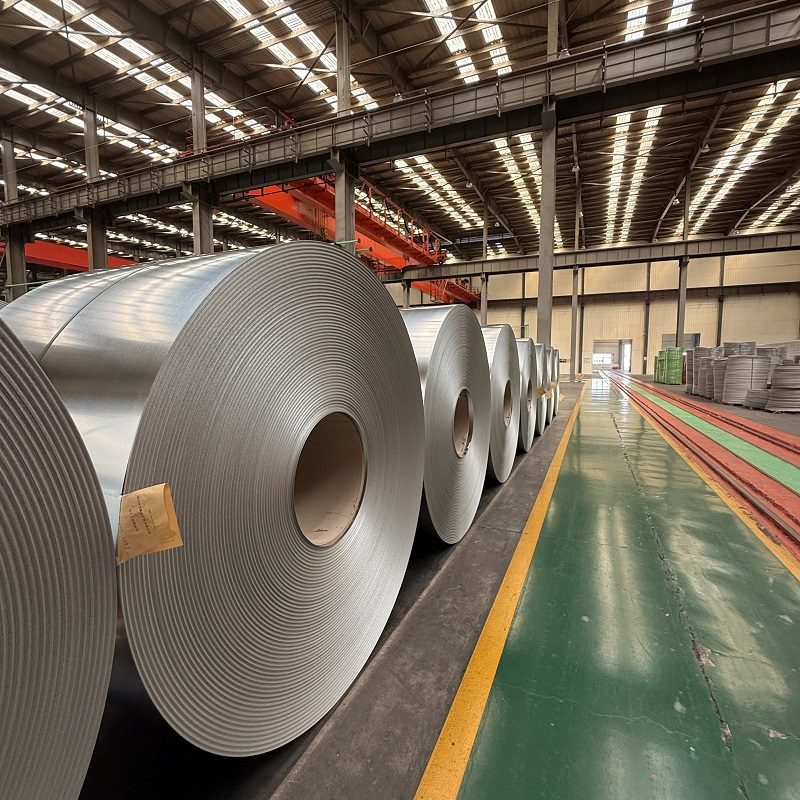
Main RAL Color Series Widely Used for PPGI Rolls
When sourcing prepainted galvanized iron, color specification is rarely a simple afterthought. For procurement engineers and distributors working with ppgi coils, selecting the right RAL color upfront prevents costly batch inconsistencies, mismatched deliveries, and downstream fabrication rework. The RAL color system, originally developed in Germany in 1927 as a standardized reference for industrial coatings, has become the dominant color language across the global ppgi market, especially in regions such as Europe, Africa, and South America where construction codes and architectural preferences align closely with RAL designations.
This article walks through the main RAL color series applied to ppgi rolls, explaining how each color group maps to real construction applications, what to look for when specifying, and where color consistency challenges tend to surface.
Understanding the RAL Classification System for PPGI
The RAL system organizes colors into numbered families, each covering a distinct hue range. For ppgi procurement, the relevant groups are:
- RAL 1000 series – Yellows and beiges
- RAL 3000 series – Reds and wine tones
- RAL 5000 series – Blues
- RAL 6000 series – Greens
- RAL 7000 series – Greys
- RAL 8000 series – Browns and earthy tones
- RAL 9000 series – Whites and blacks
Each four-digit RAL number corresponds to a precisely defined hue, making it a reliable specification tool between buyers, ppgi manufacturers, and end-use fabricators. When you place an order referencing RAL 9003, any qualified ppgi rolling mill understands the exact pigment target without requiring a physical sample.
RAL 9000 Series: The Dominant White and Near-White Tones
In practice, across multiple roofing procurement cycles, the RAL 9000 series represents the single most ordered color family for ppgi rolls. Within this group, a few specific codes account for the majority of volume:
- RAL 9002 (Grey White) – Arguably the most widely specified ppgi color globally. Its soft off-white tone suits residential roof panels, wall cladding, and prefabricated building systems across warm and temperate climates. RAL 9002 ppgi coil is particularly common in African and Latin American markets where light-reflective surfaces reduce interior heat load.
- RAL 9003 (Signal White) – A brighter, cleaner white favored for industrial building envelopes, cold storage facilities, and modern commercial construction. Buyers in Northern Europe frequently specify RAL 9003 ppgi for façade panels.
- RAL 9006 (White Aluminium) – A metallic-appearance white used for decorative or semi-industrial applications. Less common in standard ppgi rolls but available on request from most ppgi coil wholesale factory operations.
- RAL 9016 (Traffic White) – Common in modular building and container conversion applications where ppgi panels are used.
Worth flagging to first-time buyers: RAL 9002 and RAL 9003 look similar in digital swatches but read as noticeably different on large ppgi panel surfaces. Confirming the intended RAL code before order placement—rather than describing the color as "white"—avoids a common batch acceptance dispute.
RAL 3000 Series: Reds for Roofing Sheets and Rural Construction
Red-toned ppgi rolls occupy a consistent share of demand in markets where tile-profile metal roofing is culturally prevalent—much of Sub-Saharan Africa, Southeast Asia, and parts of South America. Key codes within this series include:
- RAL 3005 (Wine Red) – A deep burgundy red, widely used on corrugated and trapezoidal profile roofing sheets made from ppgi coil in residential and agricultural construction.
- RAL 3009 (Oxide Red) – An earthy red sometimes specified for older-style architecture and rural buildings where a weathered appearance is acceptable.
- RAL 3011 (Brown Red) – Similar application profile to RAL 3009, popular in markets where warm-toned ppgi roofs blend with natural surroundings.
Red ppgi coils require particular attention to substrate quality. On lower-grade base steel, paint adhesion in high-pigment-load reds can vary noticeably between production batches, which is why specifying a consistent zinc coating weight (for example, Z80 or Z100 per EN 10327) alongside the RAL number helps lock in a more predictable color outcome.
RAL 5000 Series: Blues for Industrial and Architectural Projects
Blues are specified less frequently than whites or reds in the general ppgi market, but they hold a firm position in industrial building applications, logistics warehouses, and architectural cladding projects. Notable codes include:
- RAL 5005 (Signal Blue) – A standard mid-blue used for industrial facility cladding and equipment housings clad in ppgi.
- RAL 5010 (Gentian Blue) – A deeper blue favored in commercial building façade panels and prefabricated steel structures.
- RAL 5015 (Sky Blue) – A lighter, brighter blue seen in sports facilities, schools, and government buildings in tropical climates where ppgi cladding is common.
When ordering blue-toned ppgi, buyers should confirm whether the target building code or developer specification calls out a specific RAL number—confusing RAL 5005 with RAL 5010 on a façade project can result in a visible color mismatch if different shipments are used for adjacent panels.
RAL 7000 Series: Greys for Industrial Structures
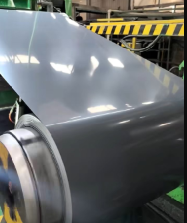
Grey ppgi coils serve industrial building cladding, commercial storage facilities, and heavy-duty roofing where neutral, low-maintenance aesthetics are preferred. Common specifications include:
- RAL 7035 (Light Grey) – One of the most widely produced grey tones in the ppgi market, used for warehouse cladding, electrical enclosures, and commercial building envelopes.
- RAL 7016 (Anthracite Grey) – A near-black dark grey gaining popularity in contemporary architectural projects, particularly in European markets where ppgi façade panels are used.
- RAL 7047 (Telegrey 4) – A cool, medium grey used in prefabricated industrial building systems.
RAL 6000 Series: Greens for Agricultural and Rural Buildings
Green ppgi coils are most common in agricultural structures—grain storage buildings, livestock sheds, and rural processing facilities. The most frequently ordered codes are:
- RAL 6005 (Moss Green) – A dark green used for agricultural buildings and rural construction where subdued coloring blends with natural landscapes.
- RAL 6019 (Pastel Green) – A lighter green sometimes specified for residential roofing in tropical regions where ppgi panels are popular.
Specifying RAL Colors When Ordering PPGI Coils
Whether you are sourcing from a ppgi coil wholesale factory or placing a direct mill order with a ppgi manufacturer, precise color specification protects you at multiple points in the supply chain. A solid application-first specification usually covers the following points:
- State the RAL number exactly – Do not use generic color descriptions like "red" or "light grey." Reference the specific four-digit RAL code on your ppgi purchase order.
- Specify gloss level – PPGI coil paint finishes typically range from 20% to 80% gloss. Roofing panels often use 25-35% gloss; architectural cladding may specify 40-60%.
- Confirm paint type – Polyester (PE), high-durability polyester (HDP), polyvinylidene fluoride (PVDF), and silicone-modified polyester (SMP) have different color stability and UV resistance profiles for ppgi applications.
- Request color tolerance limits – Ask the ppgi manufacturer to specify the Delta-E tolerance for the batch. A Delta-E below 1.5 is generally imperceptible; above 3.0 becomes visually noticeable on adjacent panels.
- Ask for a pre-production color sample – Especially for large-volume ppgi orders, a pre-shipment sample confirms the production batch matches the agreed RAL target before full production runs.
A supplier with deep PPGI category expertise—rather than a diversified general metal trader—is typically better positioned to provide consistent color batches and flag substrate-related color variance risks before production starts. Custom coil widths and customer-specified coating weights also allow fabricators to reduce material waste, making precise ppgi color specification worthwhile from the outset.
Color Consistency: The Challenge Most Buyers Underestimate
Color batch inconsistency tends to be one of the more stubborn quality problems in ppgi procurement. Even within a single RAL number, ppgi production batches can vary slightly due to pigment supplier changes, coating line temperature variation, or substrate surface finish differences. On a small residential roof this may not be visible, but on a large warehouse cladding project with multiple delivery lots, visible color banding across ppgi panels can trigger significant commercial disputes.
Mitigation steps worth building into procurement practice include requesting mill test reports with colorimetry data for each ppgi coil lot, requesting consistent mill sourcing across a single project order where possible, and scheduling pre-shipment third-party inspection with a color verification step when the project scale justifies it.
Conclusion
The RAL color system gives buyers, fabricators, and ppgi manufacturers a shared reference language that works across borders and supply chains. The 9000 series (whites), 3000 series (reds), 5000 series (blues), 7000 series (greys), and 6000 series (greens) cover the bulk of standard construction and industrial applications for ppgi rolls. Getting the RAL number right—and pairing it with clear gloss, paint type, and tolerance specifications—is one of the most reliable ways to protect color consistency from the rolling mill all the way to the finished building.