EN
EN

Is Hot Dipped Galvanized Steel Resistant to Industrial Acid Rain Erosion?
When evaluating materials for industrial construction or structural applications in areas affected by acid rain, the question of coating durability comes up early and often. From a procurement standpoint, I've seen buyers assume that hot dipped galvanized steel offers uniform protection in all corrosive environments — and that assumption can lead to costly problems down the line. The honest answer is more nuanced: hot dipped galvanized steel does provide meaningful resistance to industrial acid rain, but its effectiveness depends on the severity of the environment and the zinc coating weight specified.
Understanding How Hot Dipped Galvanized Steel Is Made
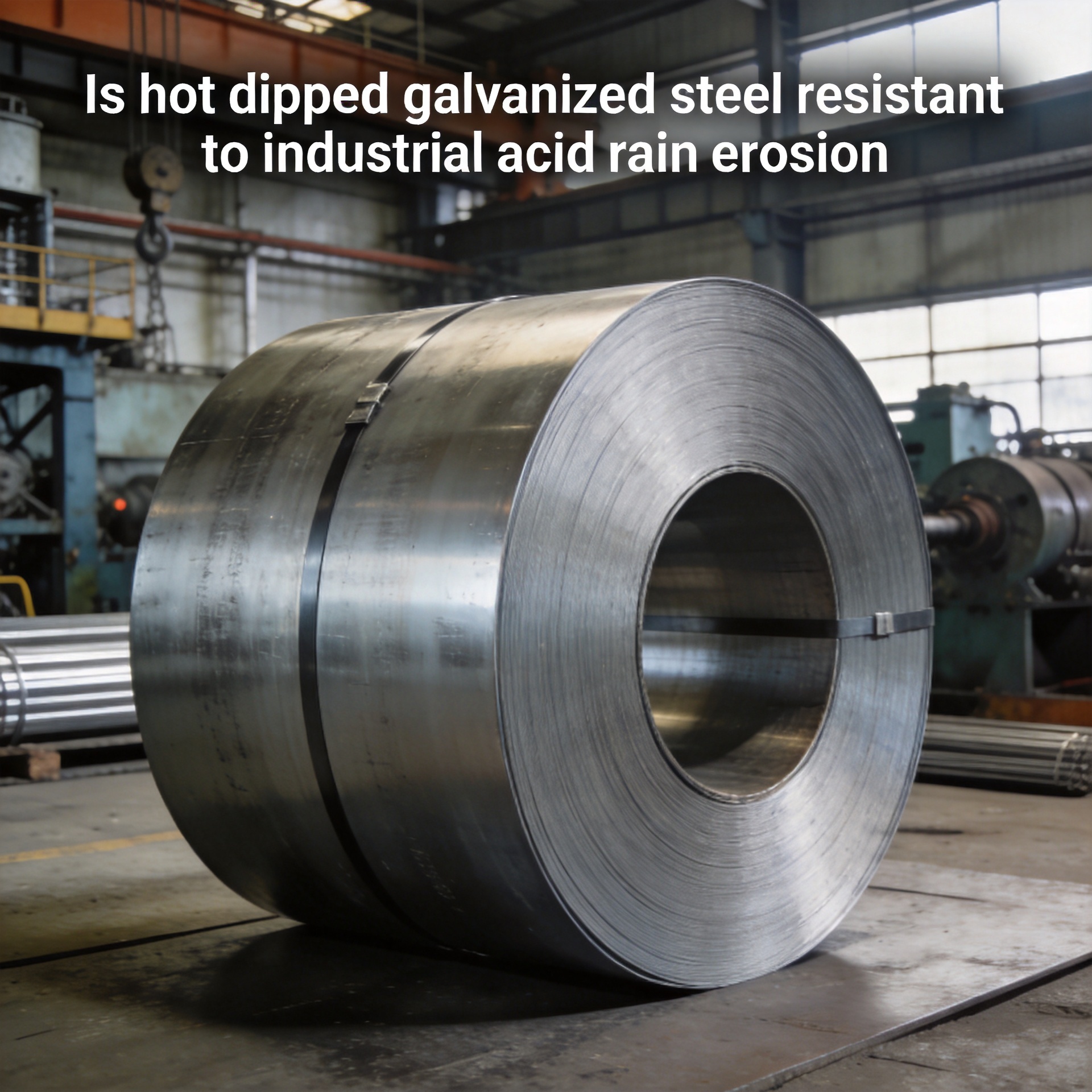
Hot dipped galvanized steel — also known as hot dipped galvanised steel in British-standard markets, is produced by immersing cleaned steel into a bath of molten zinc at approximately 450–460°C. The result is a metallurgically bonded zinc-iron alloy layer topped by a pure zinc outer layer. This is fundamentally different from electroplated zinc coatings, which are thinner and bond through electrical deposition rather than diffusion.
The zinc coating produced by hot dip galvanizing typically ranges from 45 to 86 micrometers in thickness — equivalent to Z275–Z600 grades under EN 10346 or ASTM A653, compared to just 5–25 micrometers for electroplated (electrogalvanized) products. That thickness difference is critical when acid rain enters the picture.
How Industrial Acid Rain Attacks Zinc Coatings
Acid rain in industrial zones is primarily generated by sulfur dioxide (SO₂) and nitrogen oxides (NOₓ) mixing with atmospheric moisture. When this reaches the surface of hot dip galvanized material, the chemistry becomes a key factor. Zinc maintains stable protective behavior in a pH range of approximately 6 to 12.5. Below pH 6 — a threshold regularly encountered in heavily industrialized zones — the corrosion rate of zinc accelerates substantially.
The underlying mechanism: SO₂ reacts with moisture and zinc to form zinc sulfate (ZnSO₄), which is significantly more soluble than the zinc carbonate (ZnCO₃) patina that normally forms as a stable protective layer in milder atmospheres. When that carbonate layer cannot build up effectively, the zinc coating is consumed faster than expected. In environments with persistent acid rainfall, buyers who spec a standard Z120 coating and assume "galvanized means protected" have sometimes found premature coating failure within five to eight years instead of the expected twenty.
The ISO 9223 Framework: Matching Coating to Corrosivity Category
The most reliable framework for specifying hot dipped galvanized steel in corrosive environments is ISO 9223, which classifies atmospheric corrosivity from C1 (very low — indoor controlled) through C5 (very high — industrial and marine). Industrial zones affected by acid rain with elevated SO₂ concentrations typically fall in the C3 to C4 range, with the most aggressive heavy-industrial corridors reaching C5.
Service life typically varies by corrosivity category as follows, using a standard Z275 zinc coating as the reference:
- C2 (low corrosivity): 70–100+ years before first maintenance
- C3 (medium — typical outdoor industrial): 30–50 years
- C4 (high — industrial with moderate SO₂ or chlorides): 15–25 years
- C5 (very high — severe industrial/marine): 8–15 years
The takeaway is practical: hot dipped galvanized steel remains viable even in C4 environments, but the zinc coating weight must match the corrosivity category. Specifying Z120 in a C4 environment that calls for Z275 or Z350 is a procurement decision that will show its consequences within a single project cycle.
When Hot Dipped Galvanized Steel Is — and Is Not — Enough
For structures in C3 industrial environments where acid rain is present but not severe (pH 5–6), hot dipped galvanized steel with a Z275 or higher coating is generally a sound choice. The zinc layer is thick enough to sustain the acid-accelerated consumption rate and still deliver a decades-long service life. The key condition is that the coating weight is correctly specified upfront — not selected purely on cost.
However, for applications in C4–C5 zones — near industrial smelters, chemical processing facilities, or heavily trafficked urban corridors with concentrated vehicle emissions — HDG steel alone may not be the complete answer. In these environments, procurement teams have a few options: increase the coating weight to Z350 or higher, apply a duplex coating system (HDG steel followed by a protective topcoat), or consider alternative materials such as Galvalume (55% aluminum-zinc alloy) which demonstrates superior resistance in high-SO₂ atmospheres compared to standard zinc coatings.
Cut edges and drilled holes on galvanized sections are typically a vulnerability in acid rain environments. Zinc's sacrificial protection extends cathodically to adjacent bare steel, but the effective protection radius is limited — typically around 1–5 mm from the edge. For heavily cut or perforated components, edge sealing compounds or zinc-rich paint touch-up is a practical step often overlooked during site installation.
Practical Guidance for Procurement Decisions
Procuring hot dipped galvanized steel for acid-rain-affected projects requires a systematic approach. The coating weight, the service life expectation, and the site corrosivity classification must be aligned before a purchase order is issued.
Before specifying hot dipped galvanized steel for a project in an industrial acid rain zone, the following steps help avoid costly over- or under-specification:
- Classify the site corrosivity. Request local SO₂ concentration data or reference regional environmental monitoring reports. Map this to an ISO 9223 category before finalizing the specification.
- Define the required service life. A 15-year maintenance cycle tolerance calls for a different coating weight than a 50-year maintenance-free requirement.
- Verify coating weight on the mill test report (MTR). The zinc coating specification must appear in the MTR tied to the specific coil heat number — not only on a general product catalog page. When procuring through a trading company, ask for the mill-certified MTR before accepting the shipment.
- Consider the full structure, not just the coil. Fabricated structural sections often have areas of thin coverage at bends and welds. Post-fabrication inspection of zinc thickness is advisable for C4–C5 applications.
Supplier and Sourcing Considerations
When sourcing hot dipped galvanised steel for environments affected by industrial acid rain, the coating weight specification should be treated as a non-negotiable procurement input — not a negotiating variable. Buyers who accept a supplier's offer to "substitute equivalent product" without verifying the coating weight against the project spec have encountered situations where Z120 or Z180 materials arrive on-site against a Z275 or higher requirement.
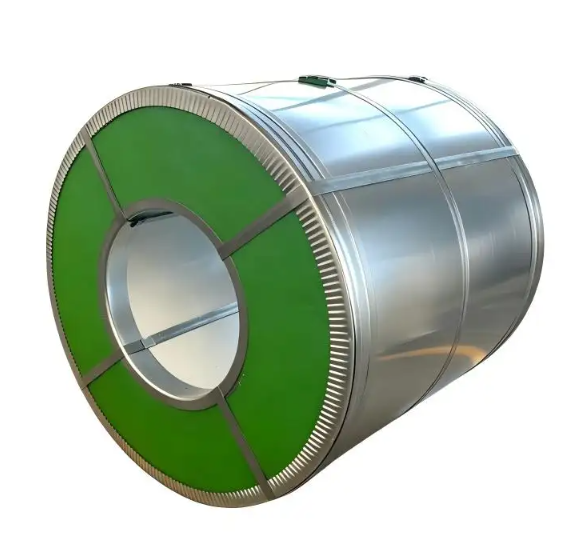
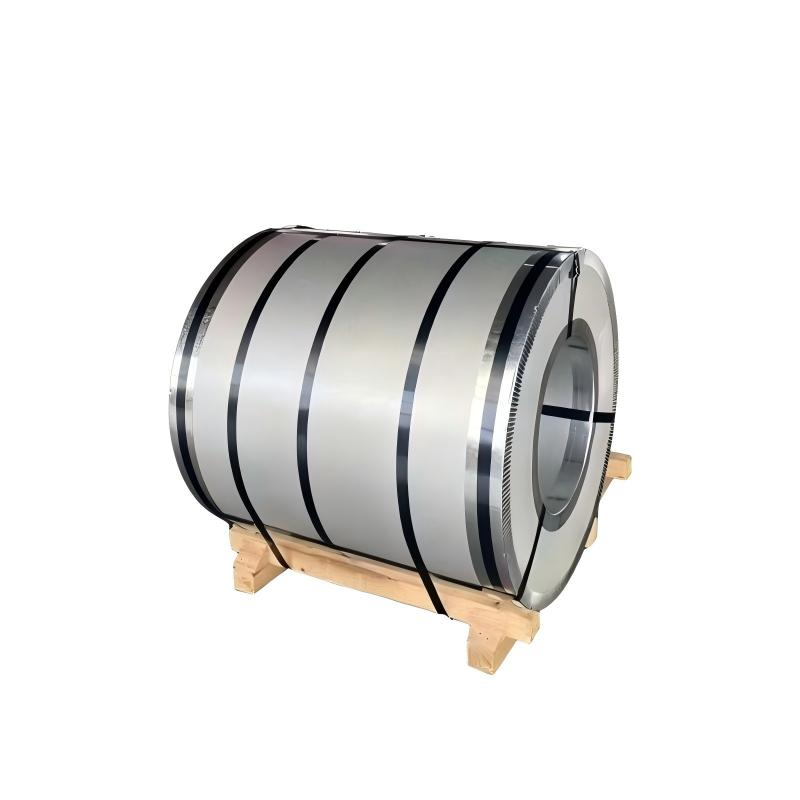
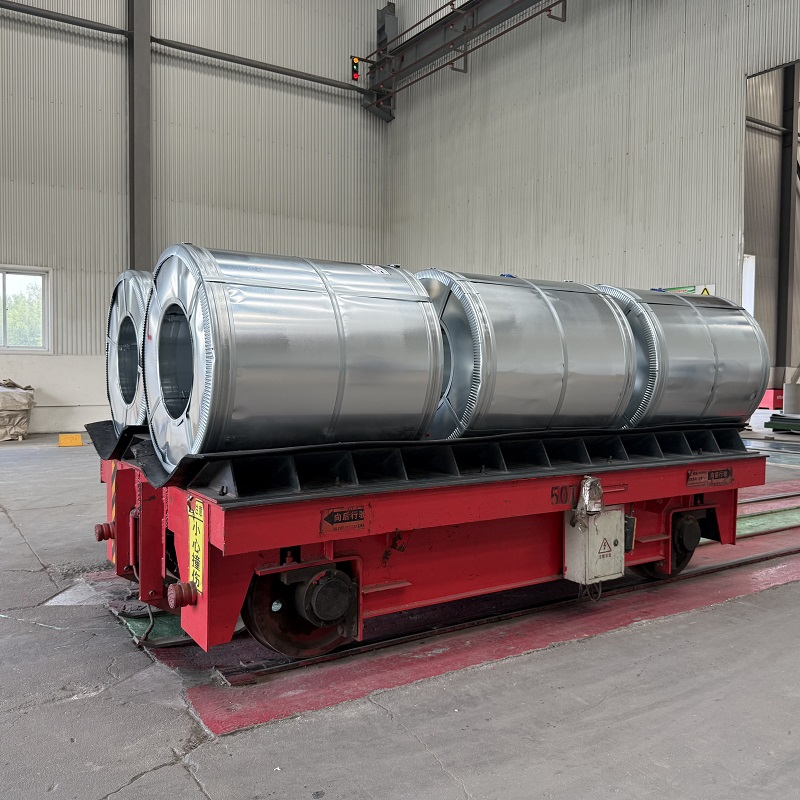
Shenyang Yuanhe Steel Trading Co., Ltd. supplies hot dipped galvanized steel coils (GI coils) sourced from certified Chinese mills, with coating weights available across the Z80–Z600 range and documented through mill test reports. For buyers in industrial zones where acid rain is a known factor, the team can advise on appropriate coating weight selection based on the application environment and target service life — and coordinate third-party pre-shipment inspection (SGS, BV, or equivalent) to verify coating weight and mechanical properties before goods leave China.
Contact our team at [email protected] or reach out via our Alibaba storefront to discuss coating weight specifications for your next project.
Conclusion
Hot dipped galvanized steel does resist industrial acid rain erosion — within limits defined by the corrosivity category of the environment and the zinc coating weight specified. In C3 environments, a properly specified Z275 coating delivers decades of reliable service. In C4–C5 heavy industrial environments with sustained acid rain exposure, higher coating weights, duplex systems, or material upgrades to Galvalume warrant consideration. The key is treating the coating specification as an engineering decision, not a default — and verifying it through certified mill documentation before acceptance.