EN
EN

How to customize length size of precision cut GI coil finished sheets
2026/09/11
Learn how to specify precision cut GI coil sheets in custom lengths — tolerance selection, coating integrity, and ordering tips.
2026/08/06
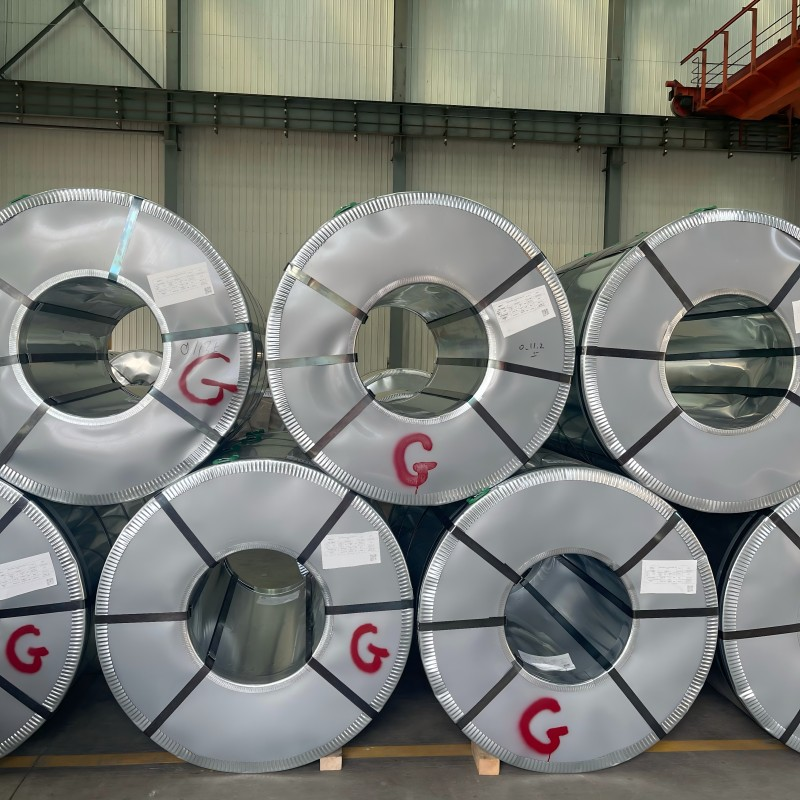
Why Uniform Zinc Coating Layer Matters for GI Coil Performance
The protective performance of a GI coil depends fundamentally on the uniformity of its zinc coating layer. A uniform zinc layer gi coil provides consistent corrosion protection across the entire strip surface, eliminating weak points where premature rusting can initiate. When the zinc coating varies significantly across the width or length of a hot dipped galvanized coil, areas with thinner coating become anodic relative to thicker areas, accelerating localized corrosion through galvanic coupling. According to ASTM A653/A653M, the standard specification for steel sheet coated by the hot-dip process, coating thickness must meet minimum requirements not only as an average but also at any single test point. This means that a GI coil with adequate average coating weight but poor uniformity can still fail specification. For buyers sourcing material for outdoor structural applications, marine environments, or agricultural buildings, verifying coating uniformity is not optional — it is a procurement prerequisite.
Standard Test Methods for Measuring Zinc Coating Uniformity
Several established test methods exist for evaluating the coating uniformity of a GI coil, each with different precision levels and operational considerations. The most widely used approach combines three complementary techniques. First, the magnetic thickness gauge method (per ASTM E376) provides rapid, non-destructive point measurements across the coil surface. A uniform zinc layer gi coil should show readings within 10 percent of the specified coating weight at all test locations. Second, the weigh-galvanize-strip method (ASTM A90) offers the most accurate coating weight determination by chemically stripping the zinc from a known sample area and measuring the mass loss. Third, the microstructural cross-section method (ASTM A123) reveals the actual coating morphology, including the iron-zinc alloy layers and free zinc layer thickness, under optical microscopy. Reputable manufacturers of hot dipped galvanized coil routinely perform all three methods during quality control, providing buyers with comprehensive data.
Sampling Strategy for Reliable Coating Uniformity Assessment
A critical but often overlooked aspect of testing is the sampling plan. Even the most precise measurement method produces misleading results if samples are taken from non-representative locations. For a standard GI coil, the recommended sampling protocol involves taking test specimens from at least five positions: the head end, tail end, both edge zones (approximately 50 mm from each edge), and the center of the coil. Each position should be tested at a minimum of three points across the strip width. This produces a coating distribution map that reveals whether the uniform zinc layer gi coil meets the cross-strip uniformity requirement. Edge-to-center variation in hot dipped galvanized coil is particularly important because the edges of the strip often receive different coating thickness due to surface tension effects during the galvanizing process. A well-controlled galvanizing line with air knife adjustment can minimize this variation to within 5 percent, while poorly controlled lines may show variations exceeding 20 percent.
Practical Case: Coating Uniformity Verification in a Roofing Project
A practical example from a roofing material procurement project in Central Asia demonstrates the importance of coating uniformity testing. The buyer specified GI coil with a Z275 coating weight (275 grams per square meter total both sides) per ASTM A653. The supplier provided a mill test certificate showing an average coating weight of 282 g/m2, which appeared compliant. However, when the buyer's third-party inspection team performed point measurements using a magnetic gauge at five cross-strip positions on three randomly selected coils, they discovered that edge readings were as low as 198 g/m2 — well below the Z275 minimum at individual test points. This non-uniform zinc layer gi coil would have resulted in edge corrosion within the first two years of service. The buyer subsequently required the supplier to implement air knife optimization and provide point-by-point coating maps for every shipment. This case illustrates that average coating weight alone is insufficient; uniformity verification is essential.
Interpreting Test Results and Acceptance Criteria
When evaluating test results for a GI coil, buyers should apply both average and single-point criteria. The table below summarizes common acceptance thresholds based on ASTM A653 and EN 10346 standards. It is important to note that coating designation systems differ between standards — ASTM uses Z followed by triple-digit weight (e.g., Z180, Z275), while EN uses the same format but with metric gram values. A uniform zinc layer gi coil should meet the minimum single-point requirement at all test locations, not just the average. Additionally, the surface finish (regular spangle, minimized spangle, or spangle-free) can affect perceived coating uniformity, though it does not change the actual coating weight. Buyers should also request the Struvite test (ammonium chloride solution) to check for bare spots, which indicate coating discontinuities that thickness measurements alone cannot detect.
Supplier Evaluation: What Quality Documentation to Request
For buyers who need to verify that their GI coil supplier consistently produces uniform zinc layer gi coil, several documents and practices provide assurance. Request the galvanizing line log showing air knife pressure settings and line speed for the production batch, as these parameters directly influence coating uniformity. Ask for the statistical process control chart for coating weight, which should show the process operating within control limits. A manufacturer with a three-tier quality control system, such as Shenyang Yuanhe, which operates galvanizing lines with inline coating weight gauging and maintains traceable test records, can provide the documentation depth that critical applications require. Buyers should also consider sending an independent inspector to witness coil sampling and testing at the mill, particularly for high-volume orders or projects with stringent warranty requirements. Verifying that the hot dipped galvanized coil supplier performs cross-strip coating mapping on every coil — not just batch samples — remains the most effective safeguard against non-uniform coating issues.
Frequently Asked Questions
What is the acceptable variation in zinc coating thickness across a GI coil?
For a uniform zinc layer gi coil, individual point measurements should not deviate more than 10 percent from the specified coating weight. ASTM A653 requires that the triple-spot average meets the minimum, but many buyers impose stricter single-point minimums, typically 85 percent of the specified coating weight, to ensure adequate protection at all locations.
Can I use a magnetic thickness gauge instead of the strip-and-weigh method?
A magnetic gauge is suitable for rapid screening and field verification but has lower accuracy than the strip-and-weigh method (ASTM A90). For acceptance testing of a GI coil, the strip-and-weigh method on representative samples is recommended, supplemented by magnetic gauge measurements for cross-strip uniformity mapping.
How does line speed affect zinc coating uniformity?
Line speed directly influences coating thickness and uniformity in hot dipped galvanized coil production. Higher line speeds require higher air knife pressures to control coating thickness, which can increase cross-strip variation if not properly tuned. Optimal line speed for uniform coating typically ranges from 60 to 120 meters per minute depending on strip thickness and zinc bath composition.
Zinc Coating Acceptance Criteria (ASTM A653 vs EN 10346)
|
Coating Designation |
Min Average (g/m2) |
Min Single Point (g/m2) |
Typical Service Environment |
|
Z90 / Z100 |
90 |
76 |
Indoor, dry |
|
Z180 / Z180 |
180 |
153 |
Indoor, humid |
|
Z275 / Z275 |
275 |
234 |
Outdoor, moderate |
|
Z350 / Z350 |
350 |
298 |
Outdoor, harsh/marine |
2026/09/11
Learn how to specify precision cut GI coil sheets in custom lengths — tolerance selection, coating integrity, and ordering tips.
2026/09/11
Learn why premium finish galvalume steel coil delivers better paint adhesion and visual consistency in finished building products. Request specs today.
2026/09/10
Learn why heavy coating galvalume steel coil provides superior corrosion resistance in harsh coastal settings and saves long-term maintenance costs.
2026/09/10
Learn how to test the bending performance of formable galvalume steel coil samples using T-bend testing to prevent cracking and scrap.
2026/09/10
Discover how multi specification galvalume steel coil simplifies purchasing, boosts productivity, and lowers costs for metal fabricators.
2026/09/10
Discover why hot dipped galvanized steel and hot dip galvanized checkered plate offer ideal corrosion resistance and strength for road guardrails.
Covering green transformation, product comparison, selection guide, and industry empowerment, helping you fully grasp the dynamics of the color steel industry.

Global climate action and Belt and Road cooperation are driving the color steel industry’s shift toward green, sustainable development.

Comparing PPGI and PPGL across performance, durability, and applications to help you select the optimal coated steel for your project.
A practical guide to selecting and applying color steel coils, ensuring optimal performance, durability, and cost-effectiveness for your projects.
Industry forum drives digital and green transformation, empowering steel sector development through innovation and collaboration.