EN
EN

How to customize length size of precision cut GI coil finished sheets
2026/09/11
Learn how to specify precision cut GI coil sheets in custom lengths — tolerance selection, coating integrity, and ordering tips.
2026/08/25
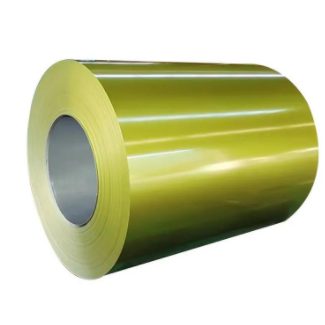
A trading manager in Uzbekistan once forwarded us a competitor's spreadsheet: three “standard” PPGI coils quoted at 5.95 tons total, with no width, no thickness, no coating weight — only an invoice number and a lump weight. Were 5.95 tons of steel actually going to arrive at the port scale? Nobody could say until unloading day. Scenarios like this are why every buyer of ppgi coil should be able to verify a theoretical weight calculation in under two minutes. The mathematics is simple, the industry conventions are few, and the protection it gives you against short-weight claims and vague quotations is immediate. Here is the complete method, illustrated with worked numbers from a real export order.
Steel weight follows from volume multiplied by density, and for coil the volume reduces to width × thickness × length. The standard calculation used across GB, JIS, ASTM and EN commercial practice is:
Theoretical weight (kg) = width (mm) × thickness (mm) × length (m) × 7.85 ÷ 1000
Mixing millimeters with meters is intentional and standard: with width in mm, thickness in mm and length in meters, dividing by 1000 returns kilograms directly. The 7.85 constant is the density of plain carbon steel in g/cm³. For ppgi coil, most commercial practice keeps 7.85, because the paint film adds only 15–25 microns per face while the zinc coating sits within the substrate tolerance. Precision buyers can add the coating explicitly — a z60 coating contributes about 0.06 kg/m² and paint roughly 0.03–0.05 kg/m² per face. For everyday ordering, the simple formula lands within about 1.5% of the weighbridge, which is close enough to audit any quotation you receive for a standard PPGI coil.
A distributor in Kenya ordered three PPGI coils for corrugated roofing: 0.4 mm thickness, 1000 mm width, z60 coating, 508 mm inner diameter. Applying the formula, weight per meter of strip equals 1000 × 0.4 × 1 × 7.85 ÷ 1000 = 3.14 kg/m. Each coil was quoted as 3,140 kg theoretical weight, which implies exactly 1,000 meters per coil. The distributor rebuilt the calculation independently before paying — one column of arithmetic — and confirmed the quotation was internally consistent.
|
Order item |
Value |
|
Width × thickness |
1000 mm × 0.4 mm |
|
Weight per meter |
3.14 kg/m |
|
Quoted length per coil |
1,000 m |
|
Theoretical weight per coil |
3,140 kg |
|
Weighbridge results at discharge |
3,121 / 3,148 / 3,152 kg |
|
Deviation from theoretical |
−0.60% / +0.25% / +0.38% |
When the coils landed at Mombasa, actual net weights came in at 3,152, 3,148 and 3,121 kg — deviations of +0.38%, +0.25% and −0.60% against theoretical, comfortably inside the ±3% tolerance common in international steel trade. Because both sides had used the same formula and the same ordered dimensions, settlement took minutes instead of weeks of correspondence.
|
Thickness |
Meters per ton at 1000 mm width |
Meters per ton at 1200 mm width |
|
0.30 mm |
425 m |
354 m |
|
0.40 mm |
318 m |
265 m |
|
0.50 mm |
255 m |
212 m |
|
0.60 mm |
212 m |
177 m |
|
0.80 mm |
159 m |
133 m |
|
1.00 mm |
127 m |
106 m |
|
1.20 mm |
106 m |
89 m |
Roofing buyers use this table constantly. A 10-ton order of 0.4 mm standard PPGI coil at 1000 mm width delivers roughly 3,180 meters — enough coverage for a mid-sized workshop roof. Fabricators of appliance panels read the same table in reverse: given a panel program needing 6,000 meters of 0.5 mm × 1000 mm strip, the coil weight to order is 6,000 × 3.925 = 23,550 kg, or about 23.5 tons. Either direction, the conversion takes seconds once the formula is familiar.
Four factors create the gap between calculation and scale. First, thickness tolerance: a 0.40 mm strip rolled at 0.392 mm runs about 2% light along its entire length, often within standard rolling tolerance. Second, coating weight: heavier zinc or a thick paint film adds mass that the base-steel calculation ignores, which is why painted coils frequently weigh slightly more than theoretical. Third, edge condition: camber, out-of-square cutting and slitting burr all change the true width delivered. Fourth, scale calibration at the loading point. International practice expects ±3% between theoretical and actual for a single coil and much tighter across a full shipment; most contracts settle pricing on theoretical weight while actual weight governs the freight bill.
Q1: Does one ton of PPGI coil include the weight of paint and zinc?
Yes — a scale weighs everything. Theoretical formulas built on 7.85 slightly underestimate painted coil; adding 2–4% for zinc coating and paint film brings most calculations within 0.5% of actual weight.
Q2: Why do suppliers quote by theoretical weight instead of scale weight?
Because pricing happens before production: theoretical weight is derivable from ordered dimensions at quotation time, while actual weight exists only after the coil is wound. Most contracts then reconcile at loading against weighbridge figures.
Q3: Does the coil inner diameter affect the weight I pay for?
No. The ID — commonly 508 or 610 mm — changes only packaging, not paid weight: you pay for strip, not the coil eye. But ID does matter for your decoiling equipment, so specify it alongside width and thickness.
Accurate weight math is easiest when dimensions and tolerances are controlled from the mill forward. Shenyang Yuanhe Steel quotes PPGI, PPGL, GI and GL coils from z20 to z275 coating weight, 0.09–1.5 mm thickness (up to 3.0 mm on GI) under GB, JIS, ASTM and EN standards, backed by more than 10,000 tons of standing stock in Liaoning, three-tier inspection with calibrated weighing before loading, and 6–14 day delivery to customers across Southeast Asia, the Middle East, Central Asia, Africa and South America.
2026/09/11
Learn how to specify precision cut GI coil sheets in custom lengths — tolerance selection, coating integrity, and ordering tips.
2026/09/11
Learn why premium finish galvalume steel coil delivers better paint adhesion and visual consistency in finished building products. Request specs today.
2026/09/10
Learn why heavy coating galvalume steel coil provides superior corrosion resistance in harsh coastal settings and saves long-term maintenance costs.
2026/09/10
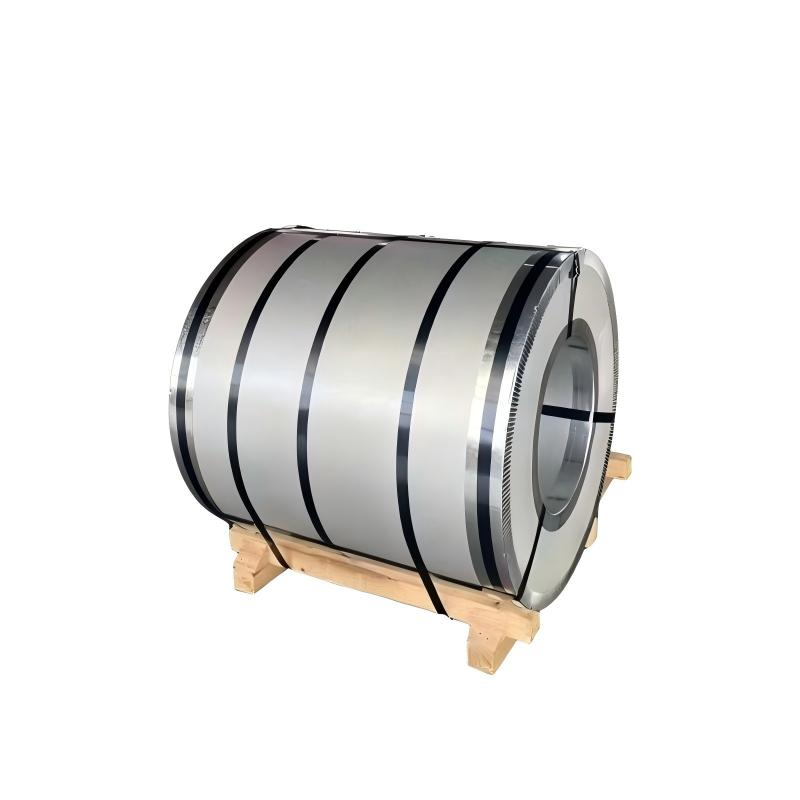
Learn how to test the bending performance of formable galvalume steel coil samples using T-bend testing to prevent cracking and scrap.
2026/09/10
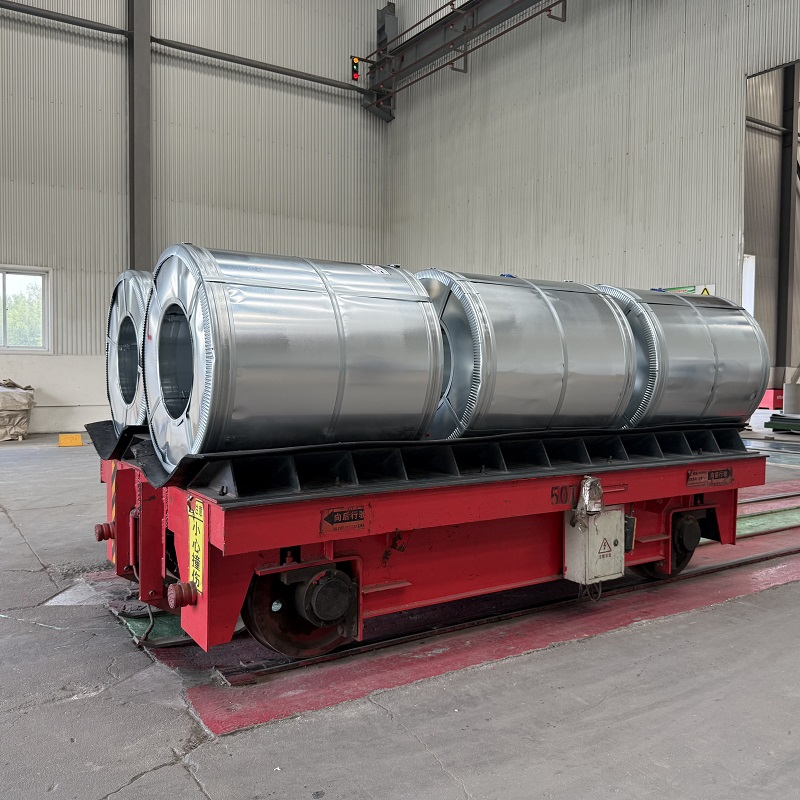
Discover how multi specification galvalume steel coil simplifies purchasing, boosts productivity, and lowers costs for metal fabricators.
2026/09/10
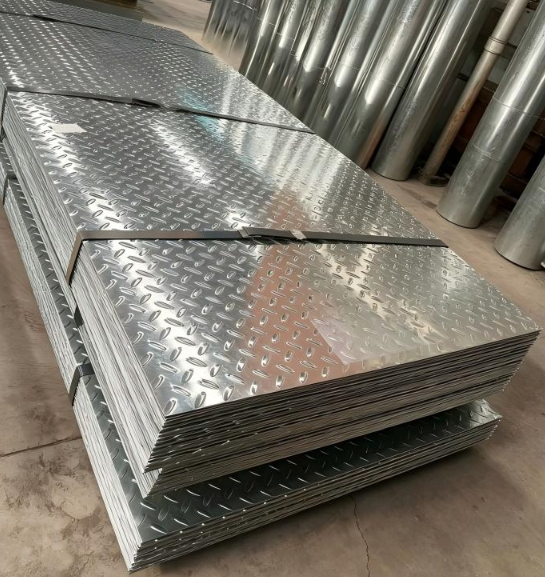
Discover why hot dipped galvanized steel and hot dip galvanized checkered plate offer ideal corrosion resistance and strength for road guardrails.
Covering green transformation, product comparison, selection guide, and industry empowerment, helping you fully grasp the dynamics of the color steel industry.

Global climate action and Belt and Road cooperation are driving the color steel industry’s shift toward green, sustainable development.

Comparing PPGI and PPGL across performance, durability, and applications to help you select the optimal coated steel for your project.
A practical guide to selecting and applying color steel coils, ensuring optimal performance, durability, and cost-effectiveness for your projects.
Industry forum drives digital and green transformation, empowering steel sector development through innovation and collaboration.